A species
Volvox
Volvox carteri
A spinning green ball of cells, with its babies growing inside
You and the volvox meet in the Eukaryotes branch, shown at about 1.8 billion years ago (on 28 July, in a calendar from life's shared ancestor to today).
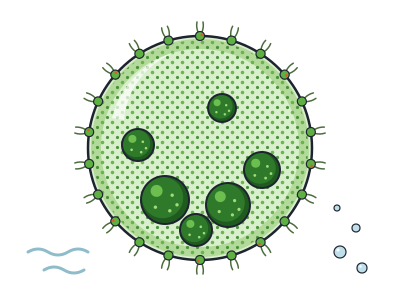
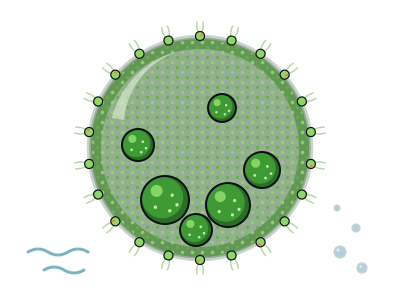
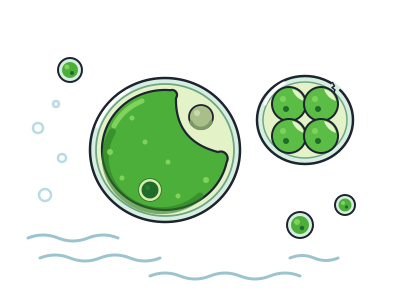
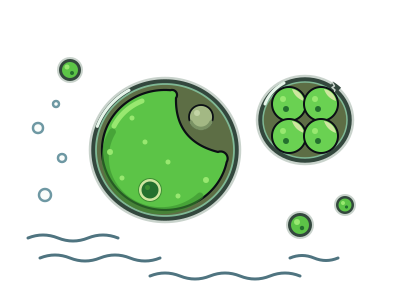
Picture a hollow green ball, about the size of a grain of sand, slowly spinning through pond water. It is made of about 2,000 tiny cells, all working together. In its back half, darker green baby balls grow. Each one is a small copy of its parent.
Volvox is a green alga, not an animal. Each tiny cell on its surface looks a lot like Chlamydomonas, a relative that lives as a single cell on its own. Volvox is a living example of cells like that working together as one body. Every surface cell has two hair-like flagella. They all beat together, so the whole ball rolls and spins as it swims. A tiny eyespot on each surface cell helps the colony swim towards light, which it uses to make its own food.
The cells also share the work. The small surface cells do the swimming, but they can never divide, and in the end they die. About a dozen big cells just under the surface are the only ones that make the next generation. Each one splits again and again to form a baby ball. At first the baby is inside out, so it flips itself the right way round. When the babies hatch, the parent's leftover surface cells grow old and die.
Seen over 300 years ago
In 1700, the microscope pioneer Antonie van Leeuwenhoek saw Volvox balls in ditch water. He wrote that they never stopped turning, and he watched one parent open up and let its young out.
Ready for dry times
When summer heat starts to dry out its pond, Volvox switches to making eggs and sperm. The fertilised eggs become tough resting cells that can survive drought and winter, then start new colonies later.
Named for rolling
The name Volvox comes from a Latin word meaning 'to roll'. It suits a ball that turns steadily as it moves.
Next to it on the tree
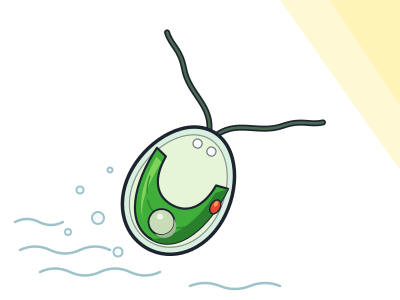
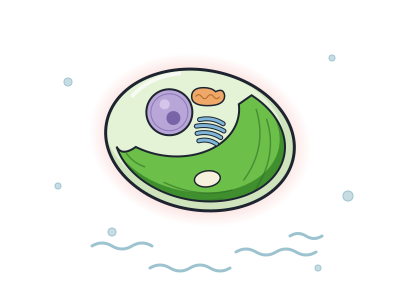
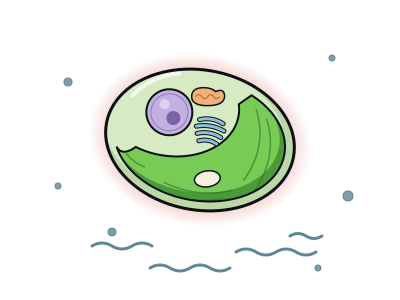
- ChlamydomonasA single green cell that swims with two whip-like tails and steers using a red eyespot.
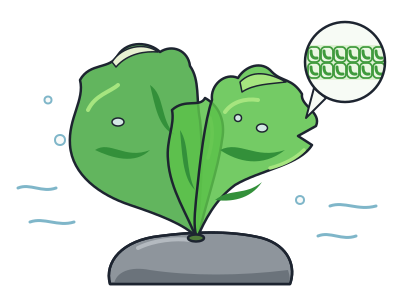
- Sea lettuceA seaweed only two cells thick that you can find on almost any rocky shore.
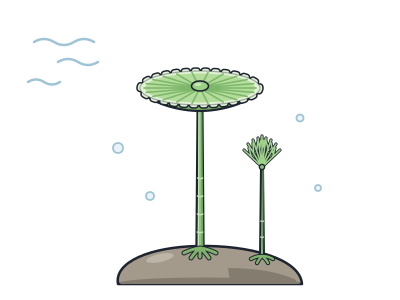
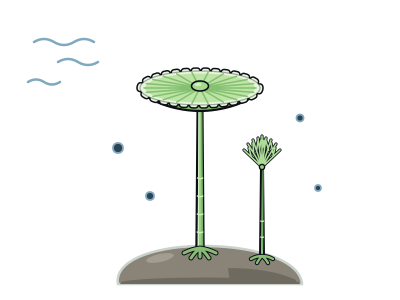
- Mermaid's wineglassA single cell as tall as your finger, topped with a tiny umbrella.
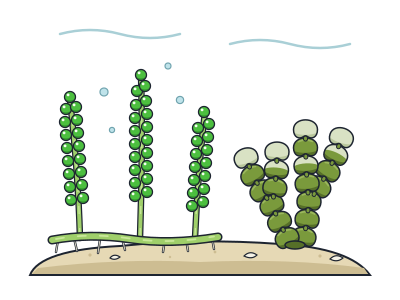
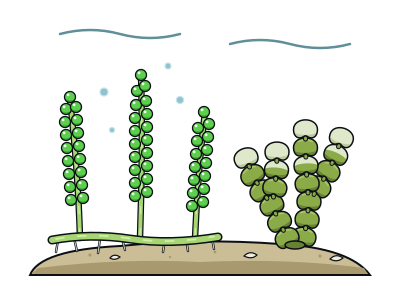
- Bubble and grape seaweedsSeaweeds that can grow a metre long while being one giant cell with millions of nuclei.
- ChlorellaA single green ball of a cell, sold as a health powder and studied as space-station food.
- OstreococcusThe smallest known free-living cell with a nucleus, about a micron across.
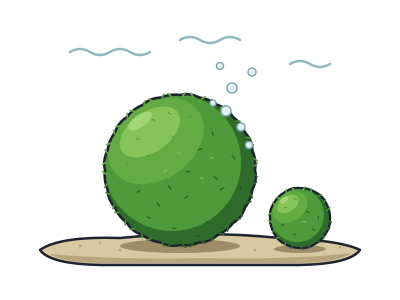
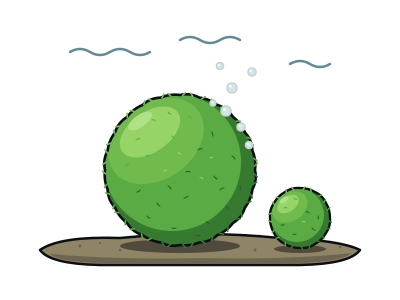
- Marimo moss ballVelvety green balls that roll on lake floors in Japan and live as pets in jars.