A species
Marimo moss ball
Aegagropila linnaei
Soft green balls that roll along lake floors and live as pets in jars
You and the marimo moss ball meet in the Eukaryotes branch, shown at about 1.8 billion years ago (on 28 July, in a calendar from life's shared ancestor to today).
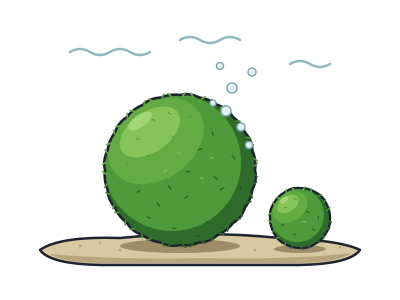
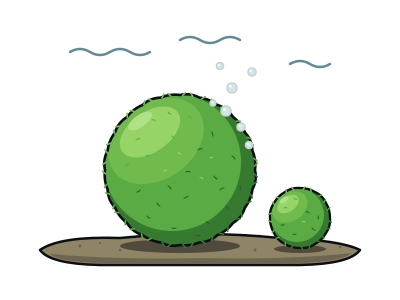
These soft, velvety green balls roll slowly across lake floors in Japan, and smaller ones live as pets in glass jars around the world. Despite the name, they are not moss at all. They are a freshwater green alga. That makes them much closer relatives of sea lettuce and pond algae than of true mosses.
Each ball is a tightly packed tangle of thousands of very fine, branching green threads. Wind makes waves, and the waves push the balls gently along the bottom. This rolling keeps them round. Because every side gets its turn in the light, a healthy ball stays green all over.
The biggest ones live in Lake Akan in Hokkaido, Japan, about 2 to 3 metres down. There, giants can reach about 30 cm across, roughly the size of a basketball. Balls bigger than about 10 cm are hollow inside, with a living green shell about 4 to 5 cm thick. Like trees, they have yearly growth rings, and a giant may be 20 or more years old.
Marimo are now found in only about half of the lakes where they once lived, mainly because of pollution. Japan made the marimo a Natural Monument in 1921 and a Special Natural Monument in 1952.
Up by day, down by night
Marimo can float during the day and sink at night. In light, photosynthesis makes tiny oxygen bubbles that get caught in the threads and lift the ball. An inner body clock helps too: balls rose faster when the light came on at their usual dawn time.
Stowaways in pet shops
In 2021, invasive zebra mussels were found hiding in moss balls sold in pet shops across the USA. By late April they had been reported in 46 states, and the balls were taken off shop shelves. People were told never to tip them, or their water, into rivers or lakes.
A tiny water cycle
Water inside a giant marimo swaps with the lake water outside about every 105 hours, slowly letting out nutrients from bits breaking down inside. Researchers suggested this might be the smallest nutrient cycle on Earth.
Next to it on the tree
- ChlamydomonasA single green cell that swims with two whip-like tails and steers using a red eyespot.
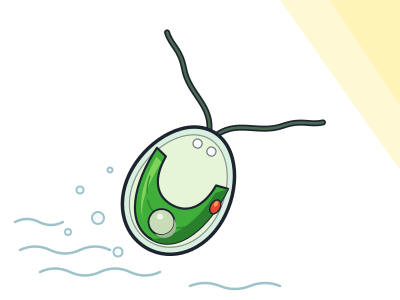
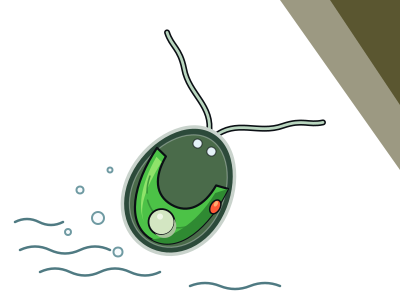
- VolvoxThousands of cells form a spinning green ball, with baby balls growing inside.
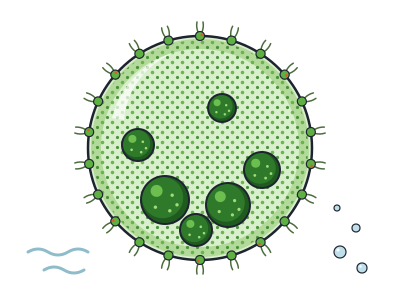
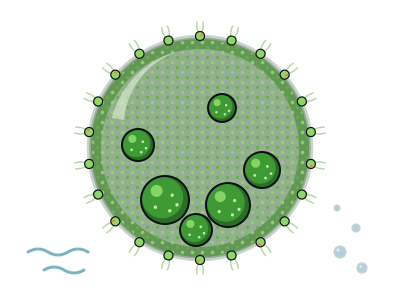
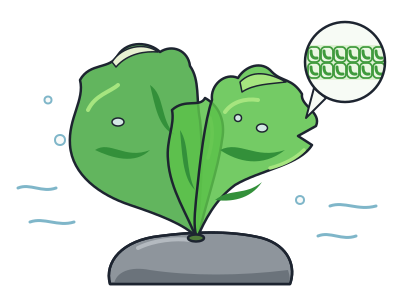
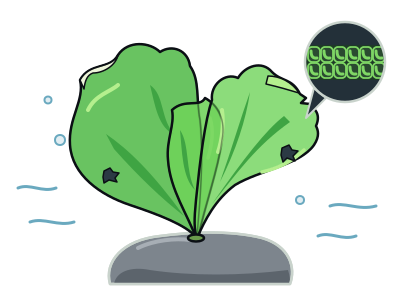
- Sea lettuceA seaweed only two cells thick that you can find on almost any rocky shore.
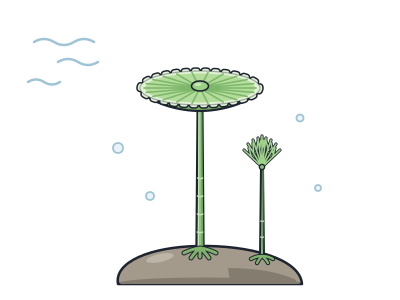
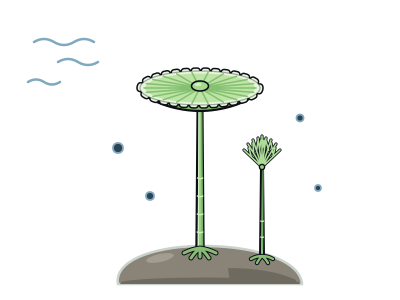
- Mermaid's wineglassA single cell as tall as your finger, topped with a tiny umbrella.
- Bubble and grape seaweedsSeaweeds that can grow a metre long while being one giant cell with millions of nuclei.
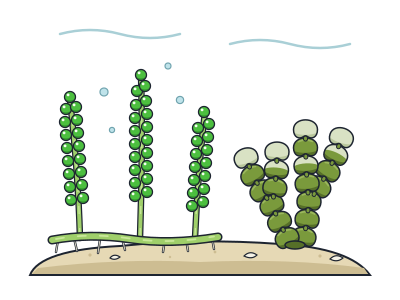
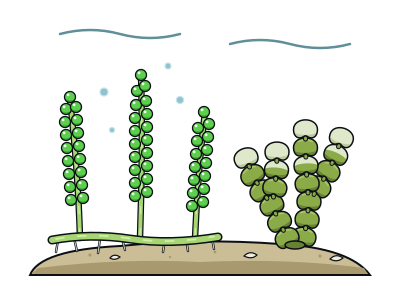
- ChlorellaA single green ball of a cell, sold as a health powder and studied as space-station food.
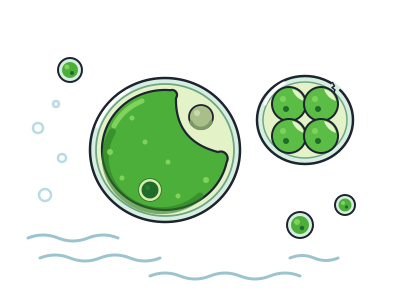
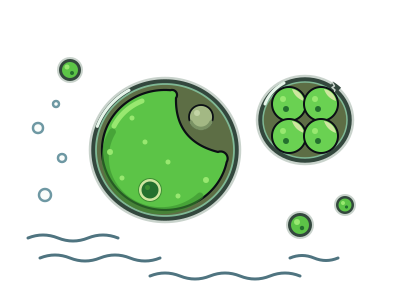
- OstreococcusThe smallest known free-living cell with a nucleus, about a micron across.