A species
Chlorella
Chlorella vulgaris
A single green ball of a cell, sold as a health powder and tested as food in space
You and the chlorella meet in the Eukaryotes branch, shown at about 1.8 billion years ago (on 28 July, in a calendar from life's shared ancestor to today).
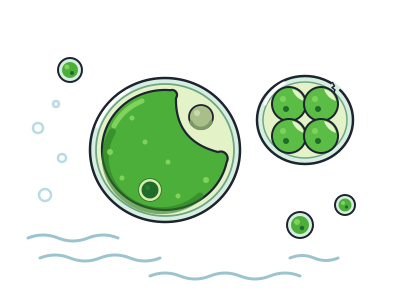
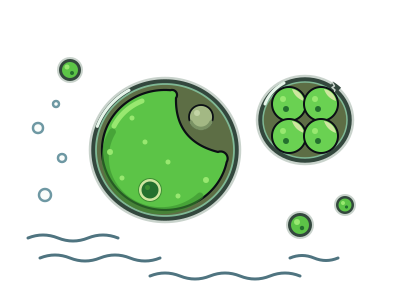
This tiny green ball is a whole living thing made of just one cell. People dry it into a green powder sold in health-food shops. Scientists have even grown it on the International Space Station to see whether it could help feed astronauts.
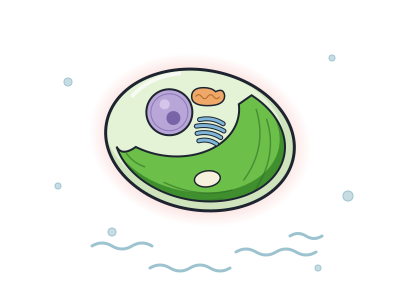
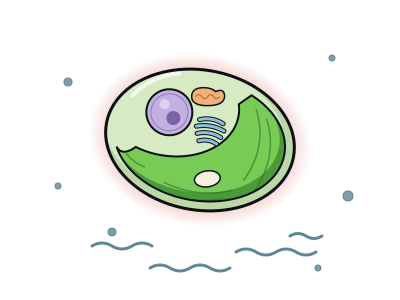
Each cell is only about 2 to 10 micrometres across. That is about a tenth of the width of a human hair, or less. It has no tail, so it cannot swim and just drifts. Inside sits one cup-shaped chloroplast. It holds the same two green pigments found in land plants, a clue that this little ball belongs on the green-plant branch of the tree. To make more of itself, a cell splits into about 2 to 8 daughter cells inside its own wall, then releases them. No mating is needed.
In the 1940s and 1950s, scientists hoped it might help end world hunger. The dream faded. It tasted unpleasant, it grew far less well outdoors than in the lab, keeping it clean was costly, and ordinary crops kept improving. In 2019 an experiment on the space station grew it to test whether it could turn the carbon dioxide astronauts breathe out into oxygen and food.
Despite its 'superfood' fame, the American Cancer Society says studies do not show that it prevents or treats any disease.
Too tough to digest
Our bodies cannot break down whole cells because their walls are so tough. Most supplements are made from cells whose walls have been cracked open by machines.
Packed with protein
Dried products are about 59% protein by weight. Soybeans are only about 33%.
A Nobel Prize helper
Melvin Calvin won a Nobel Prize in 1961 for working out how plants turn carbon dioxide into sugar. He did it by feeding this alga a special traceable form of carbon and following where it went.
Next to it on the tree
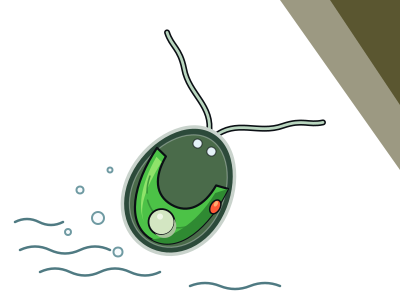
- ChlamydomonasA single green cell that swims with two whip-like tails and steers using a red eyespot.
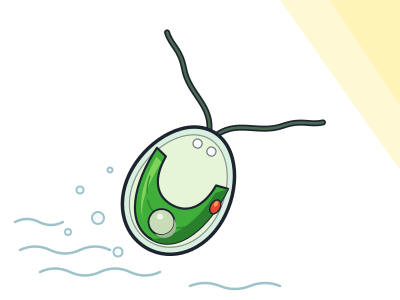
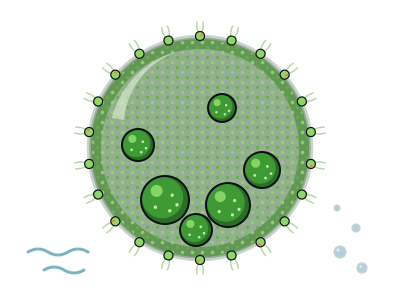
- VolvoxThousands of cells form a spinning green ball, with baby balls growing inside.
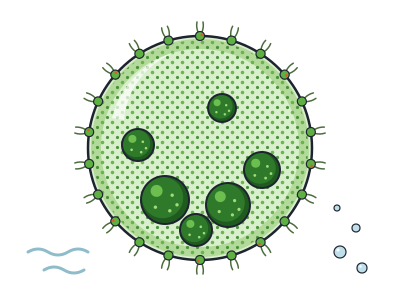
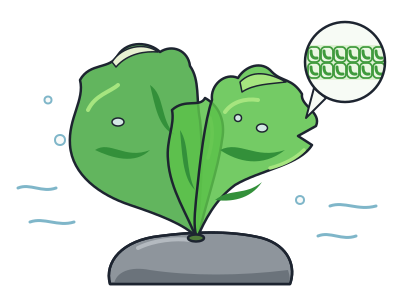
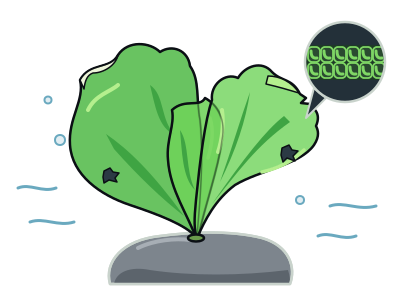
- Sea lettuceA seaweed only two cells thick that you can find on almost any rocky shore.
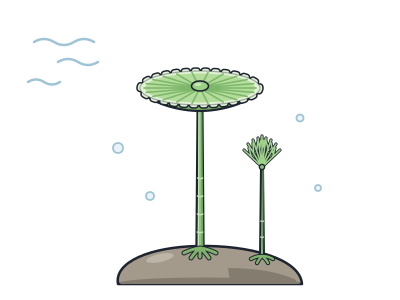
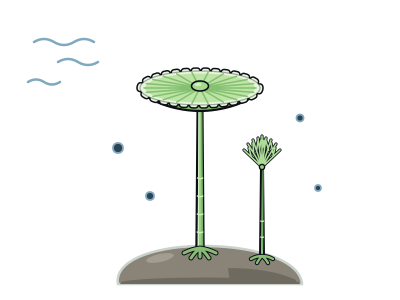
- Mermaid's wineglassA single cell as tall as your finger, topped with a tiny umbrella.
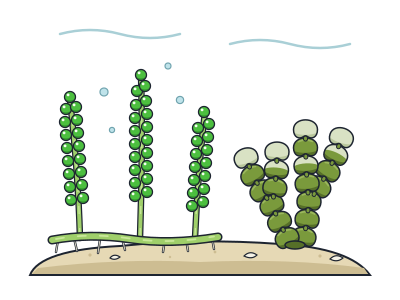
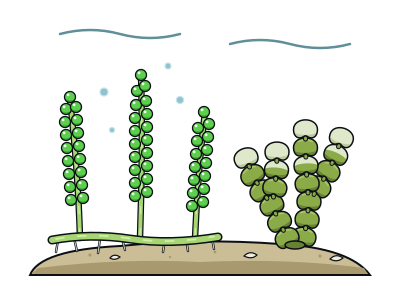
- Bubble and grape seaweedsSeaweeds that can grow a metre long while being one giant cell with millions of nuclei.
- OstreococcusThe smallest known free-living cell with a nucleus, about a micron across.
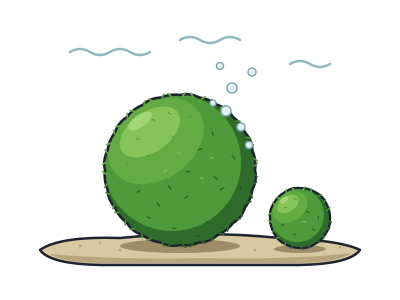
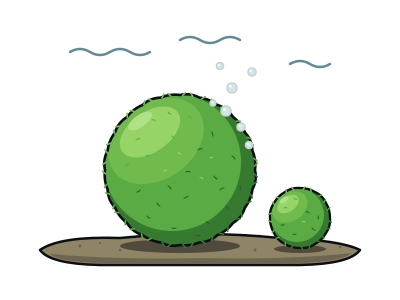
- Marimo moss ballVelvety green balls that roll on lake floors in Japan and live as pets in jars.