A species
Ostreococcus
Ostreococcus tauri
The smallest known free-living cell with a nucleus, and a tiny green distant relative of land plants.
You and the ostreococcus meet in the Eukaryotes branch, shown at about 1.8 billion years ago (on 28 July, in a calendar from life's shared ancestor to today).
Picture a living cell so small that more than 1,000 of them in a row would stretch only about one millimetre. This green alga is the smallest known free-living cell with a nucleus. It is about a micron across, roughly the size of many bacteria. Unlike bacteria, it keeps most of its DNA inside a nucleus, just as plant and animal cells do.
It is a distant relative of sea lettuce, pond algae and even land plants. It belongs to a group that branched off early in the green plant family.
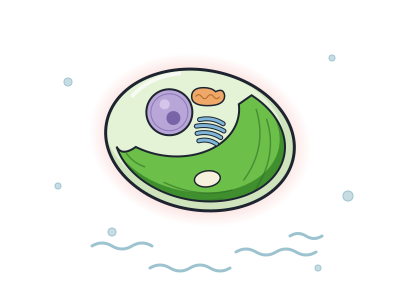
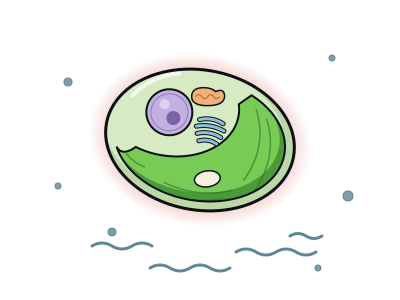
Its cell is about as simple as a cell gets. It has one nucleus, one mitochondrion and one chloroplast for catching sunlight, and no cell wall or tail for swimming. It just drifts in sunlit seawater around the world. Its full set of DNA is small too. When scientists read it in 2006, its genes were packed more tightly than in any other free-living cell with a nucleus known at the time. That comes from shrinking and streamlining, not from being a leftover of early life.
It was first described in 1994 from a salty lagoon on France's Mediterranean coast, where it was the most common of the tiny plankton.
A simple body clock
Scientists study it to learn how daily body clocks work. At the heart of its clock are just two key genes switching each other on and off. Land plants run their clocks with many more genes that overlap in what they do.
Night-time attackers
Large viruses infect it. They stay fairly quiet during the day and become far more active at night. Some infected cells burst during the night, but even more burst the next morning.
Glows without dye
Its green and other pigments make it glow naturally under the right light. That is how scientists first spotted it, using a machine that counts cells by their glow.
Next to it on the tree
- ChlamydomonasA single green cell that swims with two whip-like tails and steers using a red eyespot.
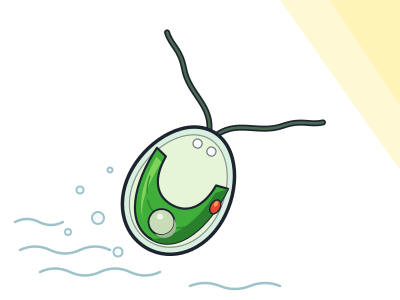
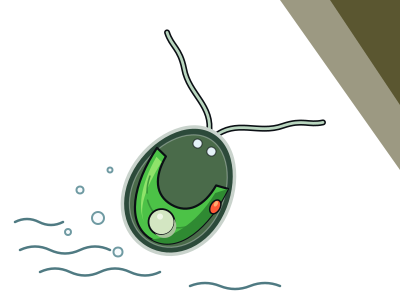
- VolvoxThousands of cells form a spinning green ball, with baby balls growing inside.
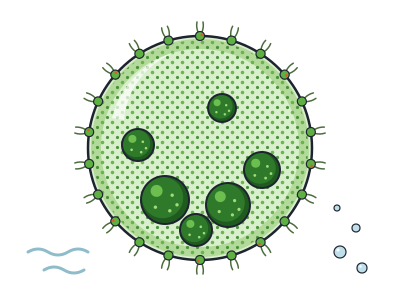
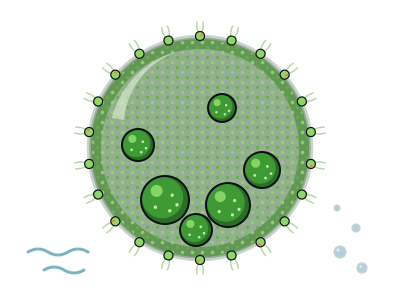
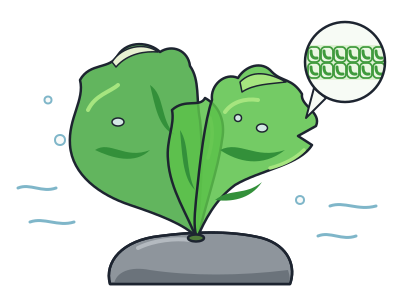
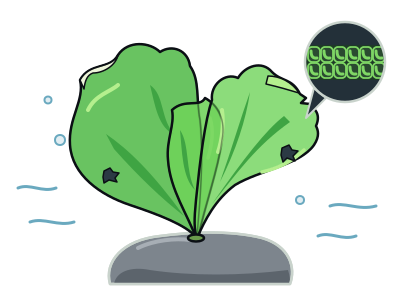
- Sea lettuceA seaweed only two cells thick that you can find on almost any rocky shore.
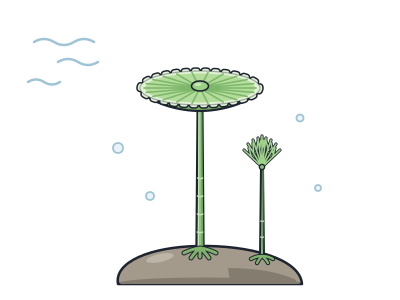
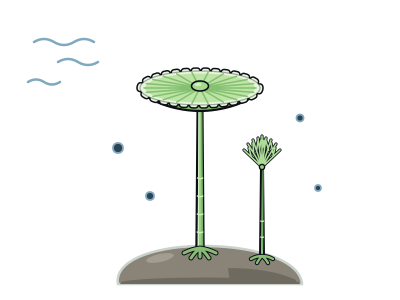
- Mermaid's wineglassA single cell as tall as your finger, topped with a tiny umbrella.
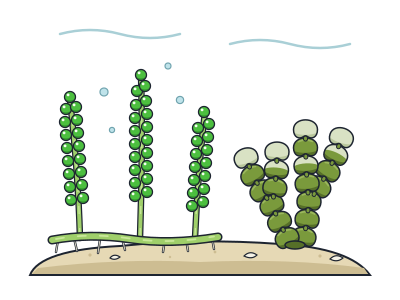
- Bubble and grape seaweedsSeaweeds that can grow a metre long while being one giant cell with millions of nuclei.
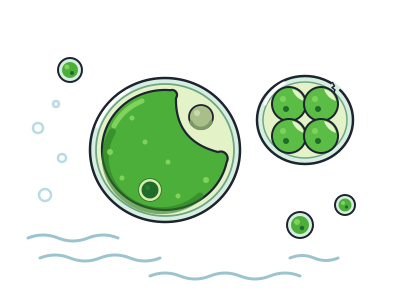
- ChlorellaA single green ball of a cell, sold as a health powder and studied as space-station food.
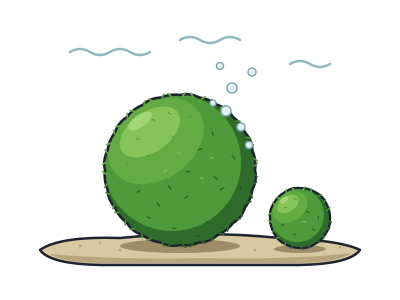
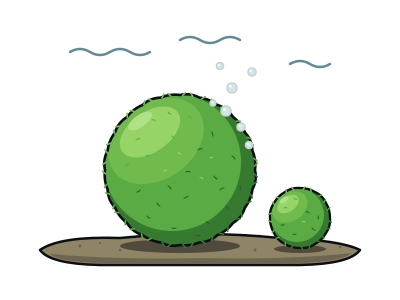
- Marimo moss ballVelvety green balls that roll on lake floors in Japan and live as pets in jars.