A species
Sea lettuce
Ulva lactuca
A seaweed only two cells thick, found on almost any rocky shore.
You and the sea lettuce meet in the Eukaryotes branch, shown at about 1.8 billion years ago (on 28 July, in a calendar from life's shared ancestor to today).
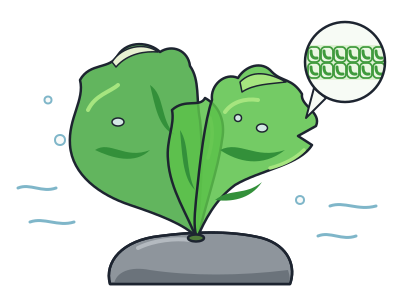
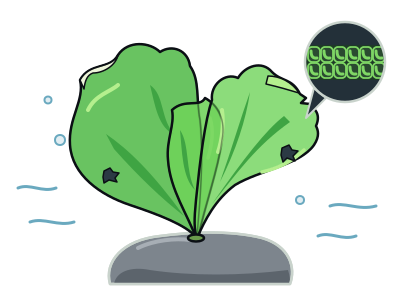
Sea lettuce is a seaweed only two cells thick. That is why it looks see-through when you hold it up to the light. Even so, it feels surprisingly tough, a bit like waxed paper. On many coasts, such as those of Britain and Ireland, seaweed sold as sea lettuce can be found on almost any rocky shore at low tide. Look for bright green, crumpled sheets in rock pools and on rocks, like lettuce leaves dropped in the sea.
Its family links may surprise you. Sea lettuce belongs to the same branch of green algae as the pond algae Chlamydomonas and Volvox. Land plants grew out of a different branch of green algae, so sea lettuce is only a distant cousin of the trees and grass on land.
Its 'leaf' is not a real leaf. It has no veins or roots, and barely any stem. It is just a flat, wavy sheet, usually up to about 30 cm across, held to the rock by a tiny disc called a holdfast. It can live at every level of the shore between the tides, and it even copes with estuaries, where river water mixes with the sea.
Sea lettuce lives a two-stage life, but the two generations look almost exactly alike. Only a microscope shows the difference: its spores swim with four tiny whip-like tails, while its sex cells have two.
White edges
When a frond releases its reproductive cells, its edges turn white, because only the empty cell walls are left behind.
Seaside food
People eat sea lettuce in soups, salads and seasonings, and California Sea Grant says it has more calcium than whole milk. Wild fronds can soak up heavy metals and pollution, though, so it isn't safe to pick just anywhere.
Broken bits grow back
A piece torn off by the waves can grow into a whole new sea lettuce, with no need for spores or sex cells.
Next to it on the tree
- ChlamydomonasA single green cell that swims with two whip-like tails and steers using a red eyespot.
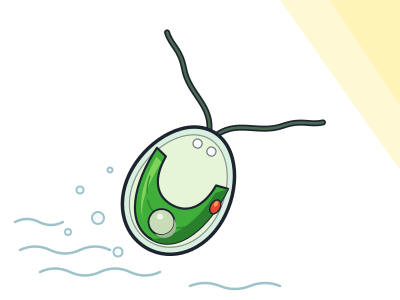
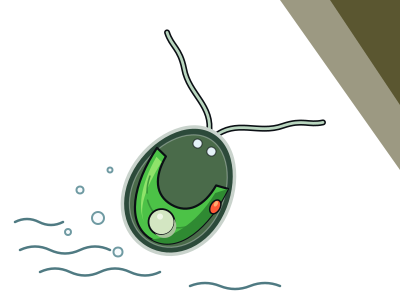
- VolvoxThousands of cells form a spinning green ball, with baby balls growing inside.
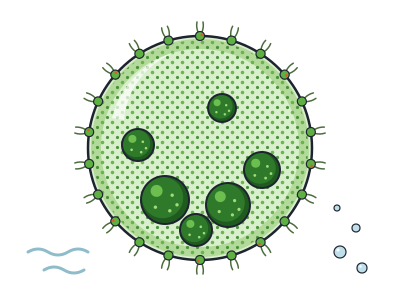
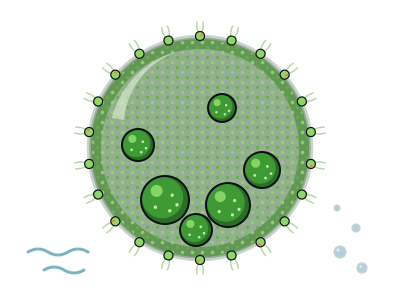
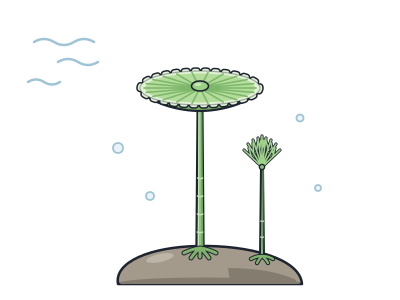
- Mermaid's wineglassA single cell as tall as your finger, topped with a tiny umbrella.
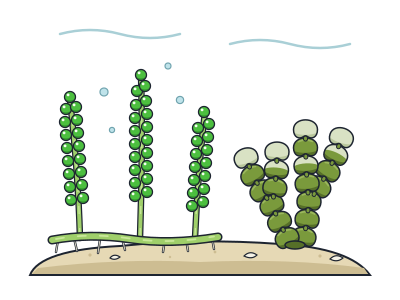
- Bubble and grape seaweedsSeaweeds that can grow a metre long while being one giant cell with millions of nuclei.
- ChlorellaA single green ball of a cell, sold as a health powder and studied as space-station food.
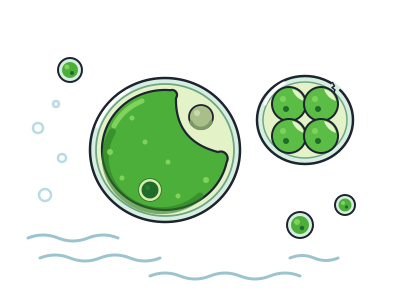
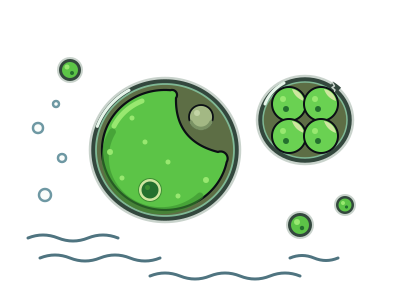
- OstreococcusThe smallest known free-living cell with a nucleus, about a micron across.
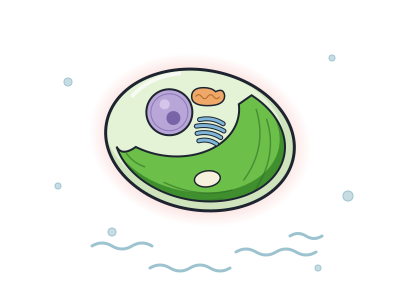
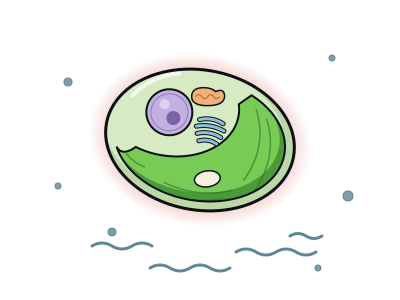
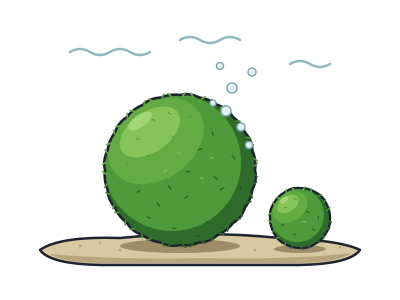
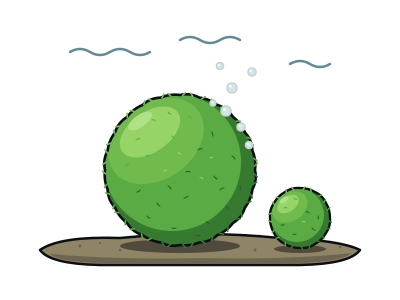
- Marimo moss ballVelvety green balls that roll on lake floors in Japan and live as pets in jars.