A species
Chlamydomonas
Chlamydomonas reinhardtii
A single green cell that swims with two tails and steers with a red eyespot
You and the chlamydomonas meet in the Eukaryotes branch, shown at about 1.8 billion years ago (on 28 July, in a calendar from life's shared ancestor to today).
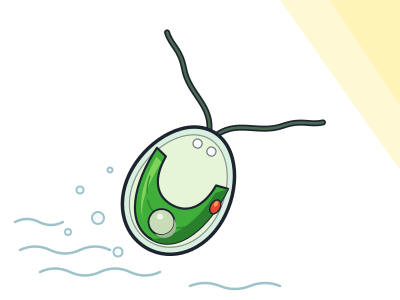
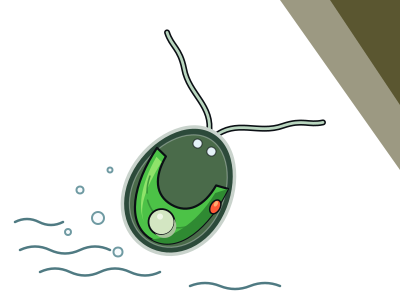
Picture a single green cell, far too small to see, swimming through a puddle. Two thin, whip-like tails called flagella stick out from its front end. It sweeps them back together like a swimmer doing breaststroke, then brings them forward again, so it is pulled along head first. As it moves, it spins steadily, about once or twice a second, and follows a gentle corkscrew path.
On its side sits one tiny orange-red eyespot. It is not a real eye. It has no lens and cannot make a picture, but it can tell which side the light is coming from. Because the cell spins, the eyespot sweeps round and round, checking for light. When light hits it, the cell pulls a little harder with one tail than the other and turns. It swims towards light it can use to make food, and away from light that is too strong.
Most of the cell is filled by one big, cup-shaped green chloroplast, the part that turns sunlight into food. Its close relative Volvox, shown beside it on the tree, is a ball made of many cells that look a lot like this one. Volvox evolved from an ancestor much like this little swimmer. Surprisingly, the two have about the same number of genes for making proteins, roughly 14,500 each. Volvox built its many-celled body mostly by reusing the same genetic parts list.
Born in a potato field
The lab strain used by scientists around the world comes from cells collected in 1945 from a puddle in a potato field near Amherst, Massachusetts, in the USA.
Plus and minus
It has two mating types, called plus and minus, which look alike. When two cells of opposite types join, they form a tough resting cell that can wait out bad conditions.
A star of the lab
Its full set of genes was published in 2007. Scientists use it as a model to study how photosynthesis works, how flagella beat and how living things sense light.
Next to it on the tree
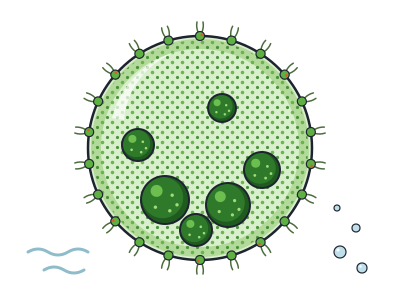
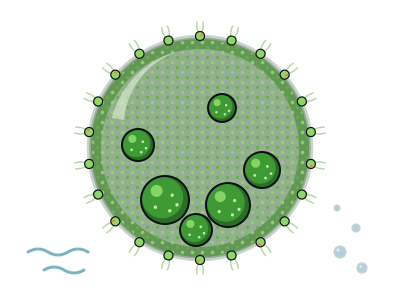
- VolvoxThousands of cells form a spinning green ball, with baby balls growing inside.
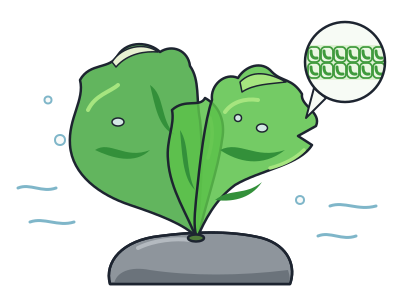
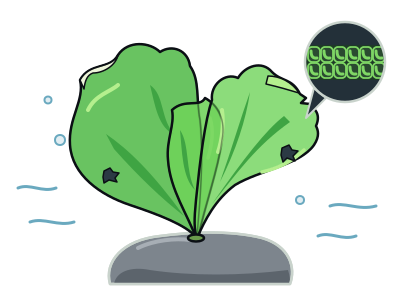
- Sea lettuceA seaweed only two cells thick that you can find on almost any rocky shore.
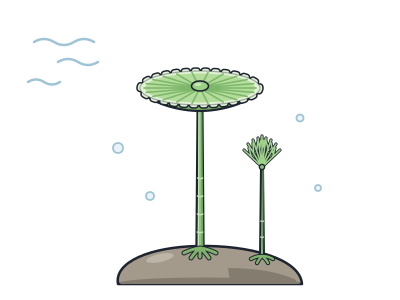
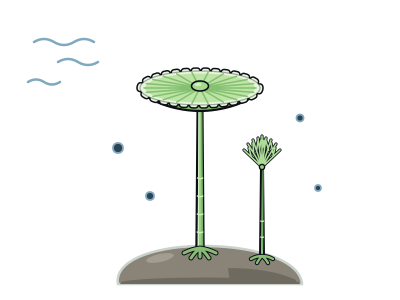
- Mermaid's wineglassA single cell as tall as your finger, topped with a tiny umbrella.
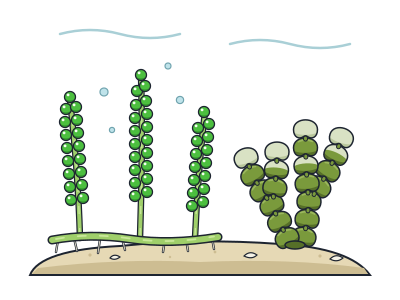
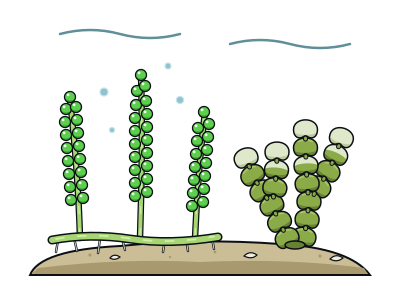
- Bubble and grape seaweedsSeaweeds that can grow a metre long while being one giant cell with millions of nuclei.
- ChlorellaA single green ball of a cell, sold as a health powder and studied as space-station food.
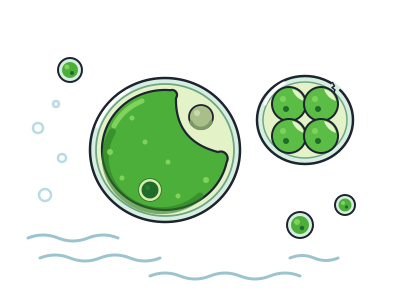
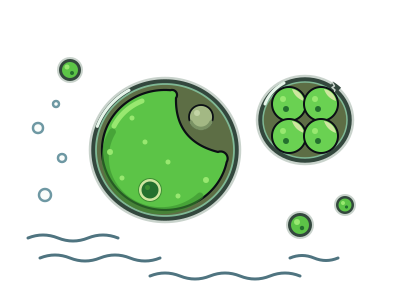
- OstreococcusThe smallest known free-living cell with a nucleus, about a micron across.
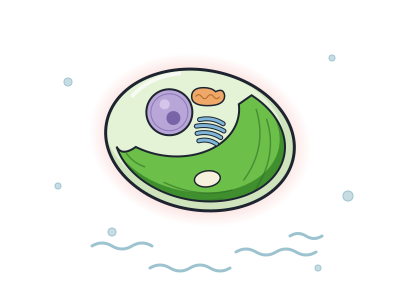
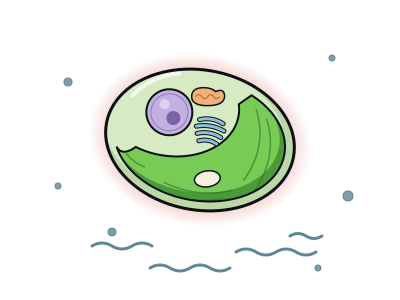
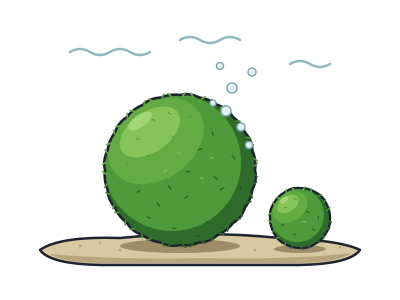
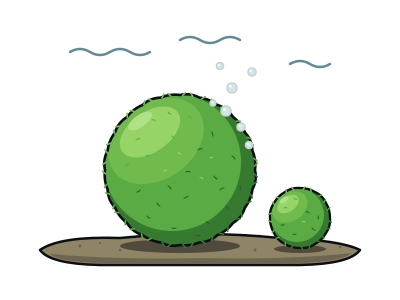
- Marimo moss ballVelvety green balls that roll on lake floors in Japan and live as pets in jars.