An extinct species
Proterocladus †
Proterocladus antiquus
Tiny branching threads from a billion years ago, the oldest known green seaweed.
Lived about 1,000–950 million years ago.
You and the proterocladus meet in the Eukaryotes branch, shown at about 1.8 billion years ago (on 28 July, in a calendar from life's shared ancestor to today).
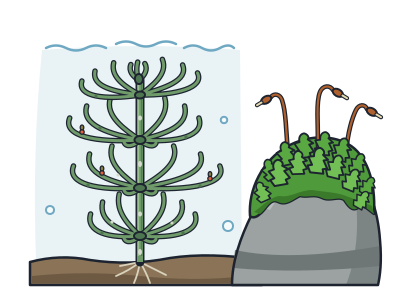
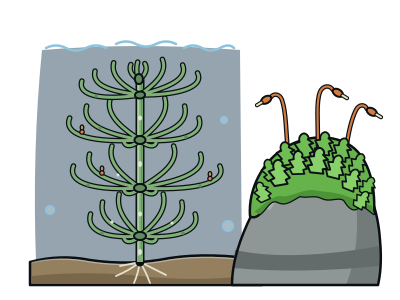
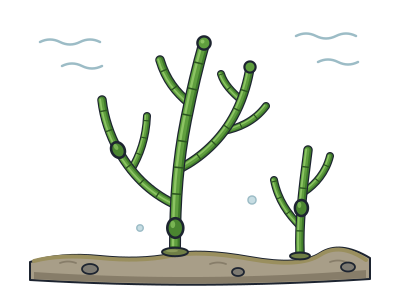
About a billion years ago, before there were any animals and long before plants grew on land, tiny branching threads grew on the floor of shallow seas. They are the oldest known green seaweed. That puts them in the same big family as today's green seaweeds, pond algae and even the grass and trees outside your window.
This seaweed lived about 1,000 to 950 million years ago. Each one was only about 2 millimetres long, roughly the size of a grain of rice. The seas around it held mostly bacteria and other microbes.
Its fossils were found in rocks near the city of Dalian in north China. They are thin, dark films on mudstone and shale, and scientists study them under a microscope. The fossils show a thread made of a single row of long, tube-like cells. Side branches grew off it, sometimes with smaller branches of their own. At the bottom, a small disc held it to the seafloor.
The fossils have lost their colour. Scientists think it was green and made its food from sunlight only because it looks like living green algae. The find pushed the fossil record of green seaweeds back by about 200 million years.
More than a thousand fossils
Scientists counted 1,028 fossils of this species, so it is known from many specimens, not just one lucky find.
Red seaweed probably came first
It is not the oldest seaweed of all. A red seaweed fossil from about 1.05 billion years ago is probably even older.
Cooked in the rock
After burial the fossils were 'cooked' under thick layers of sediment. The rocks were once seafloor but are now on dry land.