A species
Chili pepper
Capsicum annuum
A fiery fruit that burns mammals but not birds
You and the chili pepper meet in the Eukaryotes branch, shown at about 1.8 billion years ago (on 28 July, in a calendar from life's shared ancestor to today).
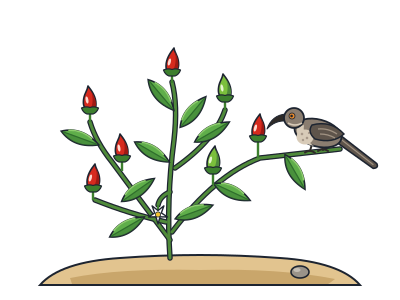
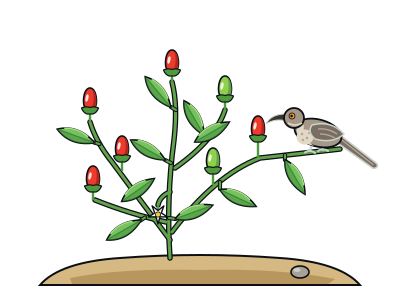
Bite a hot chilli and your mouth burns. That burn is the plant's defence. It comes from a chemical called capsaicin, and it puts off mammals such as mice and rats. Birds are different. They cannot feel the burn at all, so they happily eat the small red fruits.
This matters for the seeds. Scientists studied wild chillies in the desert of southern Arizona, USA. In tests, rodents that ate chilli seeds chewed up most of them, and the rest were too damaged to sprout. Birds passed the seeds out whole, and the seeds could still sprout. Birds often dropped the seeds under shrubs, which is a very useful spot for a young chilli. So the heat helps the plant choose who carries its seeds.
Birds still feel real heat, like a hot surface. Their pain sensor is just missing the part that capsaicin switches on.
The chilli's family is surprising too. Despite the name 'pepper', it is not closely related to black pepper. Its real relatives are the tomato and the potato in the nightshade family. Mild bell peppers, jalapeños and cayenne all belong to this one species. Bell peppers have no heat at all.
Not in the seeds
The heat isn't made in the seeds. It is made in tiny yellow sacs on the white, spongy tissue that holds the seeds. The seeds only pick some up by touching that tissue.
Shape-shifter
No other chilli varies as much in fruit size, shape and colour. Its fruits range from tiny round berries to long, thin cayennes and fat, blocky bells.
Not really annual
Its scientific name means 'annual', but the plant can live for several years in places without frost.
Next to it on the tree
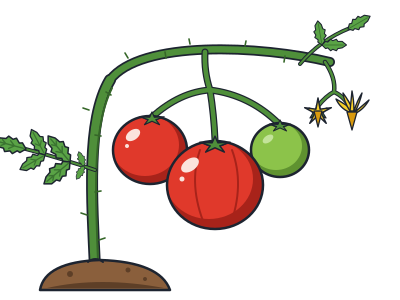
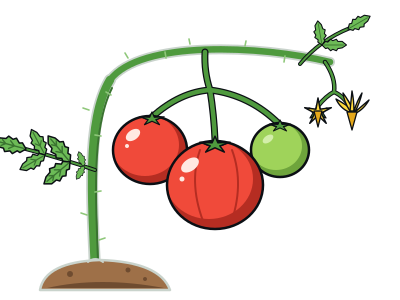
- TomatoEuropeans once feared tomatoes as poisonous because of their nightshade cousins.
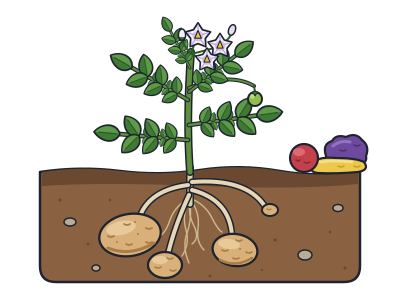
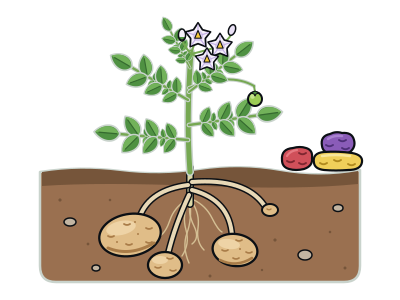
- PotatoThousands of varieties from the Andes; the swollen underground stems fed Europe's population boom.
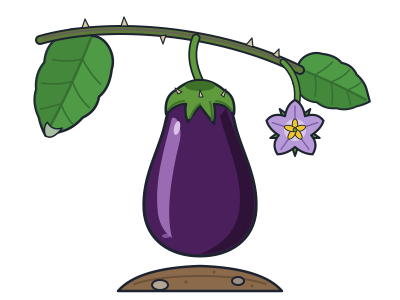
- AubergineA purple berry and close cousin of the tomato and potato.
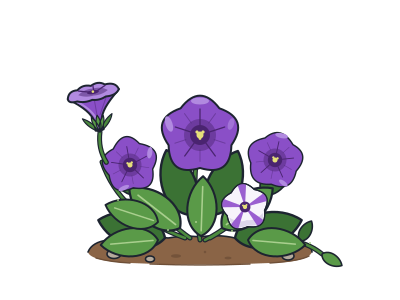
- PetuniaA favourite bedding flower that is a tobacco relative from South America.