A species
Aubergine
Solanum melongena
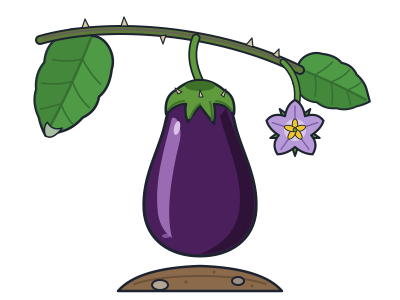
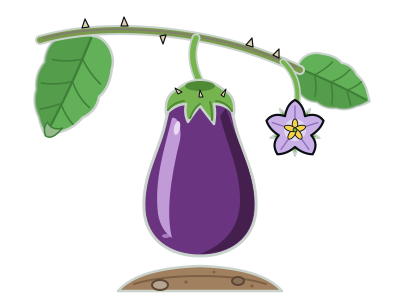
A shiny purple berry, and a cousin of the tomato and potato.
You and the aubergine meet in the Eukaryotes branch, shown at about 1.8 billion years ago (on 28 July, in a calendar from life's shared ancestor to today).
Pick up an aubergine and you are holding a berry. To a botanist, its glossy fruit is the same kind of fruit as a tomato. It belongs to the nightshade family, along with tomatoes, potatoes and chilli peppers. The aubergine, tomato and potato are even closer than that. All three belong to the same large group of about 1,300 species. Tomato and potato are each other's closest relatives, so the aubergine is a slightly more distant cousin to both.
The surprise is where it comes from. Tomatoes, potatoes and chillies all come from the Americas, and the family's oldest branches grow in South America. The aubergine's story is different. Most of its closest wild relatives live in Africa. People first farmed it in Asia, somewhere in the region of India and China. Its wild ancestor is a prickly plant from tropical Asia. In the wild, the fruits are less than 3 cm across.
The plant is a bushy herb that usually grows to about knee to shoulder height. Its stems often have small prickles, and its big leaves are fuzzy underneath. Its star-shaped flowers are purple or white, with a cone of bright yellow stamens in the middle. Farming has made the fruit much bigger: a typical shop aubergine is about 12 to 15 cm long.
Elephants as gardeners
In Africa, elephants and impalas eat the fruits of the aubergine's wild relatives. They spread the seeds across the savannah.
Two names, one plant
The name 'eggplant' comes from white varieties that look like hen's eggs. The name 'aubergine' comes from an Arabic word that goes back through Persian to Sanskrit, an ancient language of India.
A tiny touch of nicotine
Aubergines contain tiny traces of nicotine. You would need to eat about 20 of them to get as much as there is in one cigarette.
Next to it on the tree
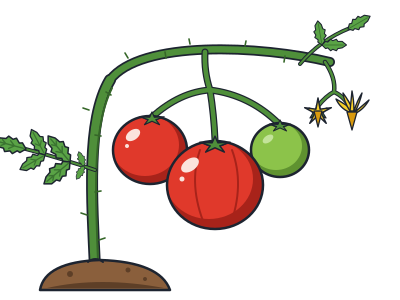
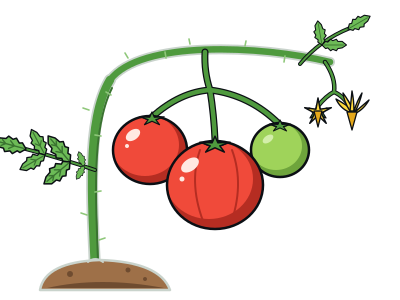
- TomatoEuropeans once feared tomatoes as poisonous because of their nightshade cousins.
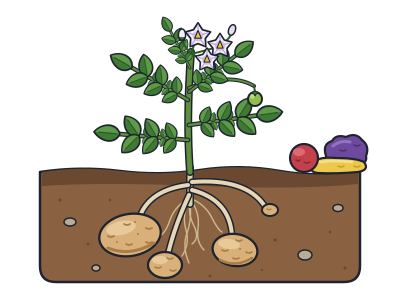
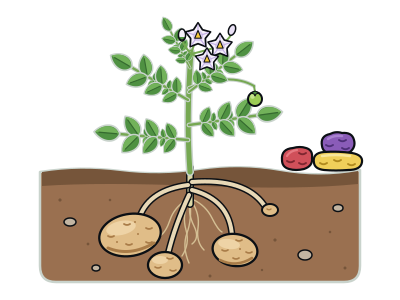
- PotatoThousands of varieties from the Andes; the swollen underground stems fed Europe's population boom.
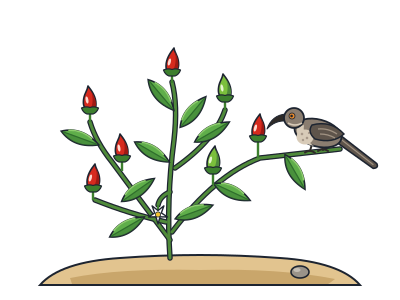
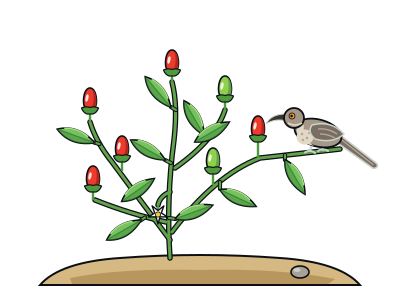
- Chili pepperIts heat stops mammals eating the seeds, but birds cannot feel it and spread them.
- PetuniaA favourite bedding flower that is a tobacco relative from South America.