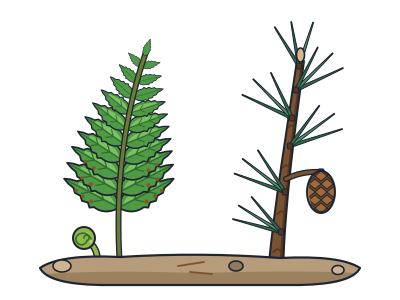
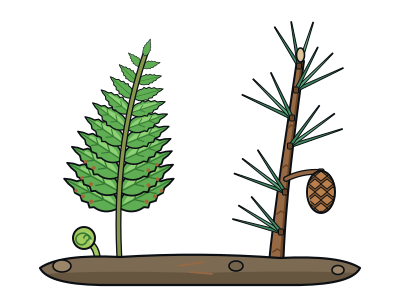
A group of living things
Ferns and seed plants
Euphyllophyta
The fern in your garden is a closer cousin of a pine tree than of a clubmoss.
This branch is shown at about 400 million years ago; its age is a rough estimate.
You and ferns and seed plants meet in the Eukaryotes branch, shown at about 1.8 billion years ago (on 28 July, in a calendar from life's shared ancestor to today).
A fern and a soft little clubmoss growing on a shady forest floor look like they belong together. They don't. Ferns are closer cousins of pine trees and roses than of clubmosses.
Living vascular plants (plants with veins) split into two big branches. On one side are the clubmosses and their kin. On the other side is this group: ferns and horsetails, plus every seed plant, including conifers, cycads and flowering plants. Ferns and horsetails together are the closest living relatives of seed plants.
This branch is enormous. A 2016 count by Kew listed about 391,000 known species of plants with veins, and almost all of them sit here. Flowering plants alone make up about 94 per cent of them.
Leaves have their own surprising story. The first plants with veins, about 420 million years ago, had bare, branching stems and no leaves at all. Leaves then evolved separately at least twice: small, simple ones on clubmosses, and larger ones on ferns and seed plants. True roots also seem to have evolved twice. Even so, both branches ended up using some of the same genes to build their leaves, each taking them up on its own.
Not a ladder
People used to picture ferns and horsetails as in-between steps on a ladder from mosses up to seed plants. A 2001 genetic study overturned that idea.
Ferns everywhere
There are more than 10,500 living fern species. Most of the species live in tropical rainforests, and some tree ferns grow about 20 metres tall.
Fake ferns
Not everything called a fern is one. The asparagus fern is actually a flowering plant.
Inside ferns and seed plants
- Seed plantsThe seed: a baby plant packed with lunch, able to wait for the right moment.
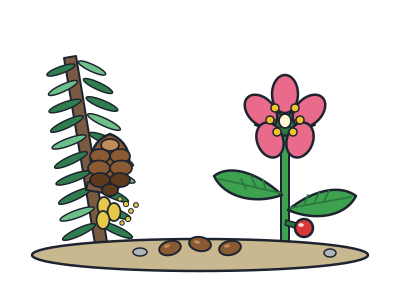
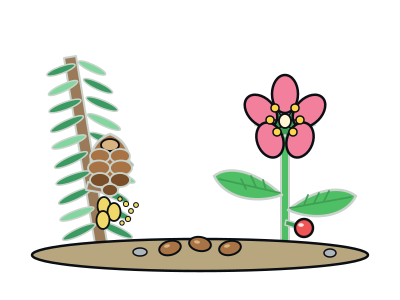
- Ferns and horsetailsLeafy plants that spread by spores, including horsetails, which turn out to be ferns.
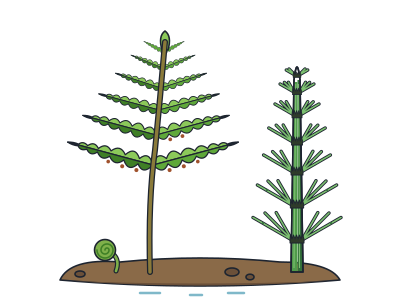
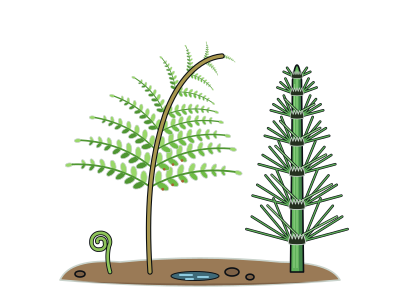
- ArchaeopterisThe first modern-looking tree: wooden trunk and leafy branches, but it still spread by spores.
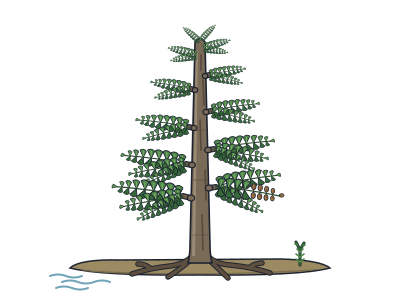
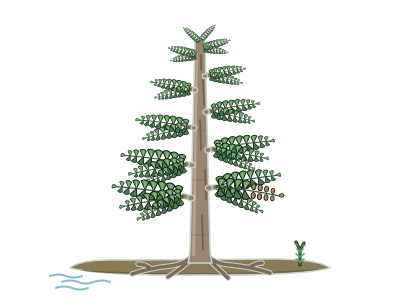
- ElkinsiaOne of the very first seeds, each wrapped in a little cup of fingers.
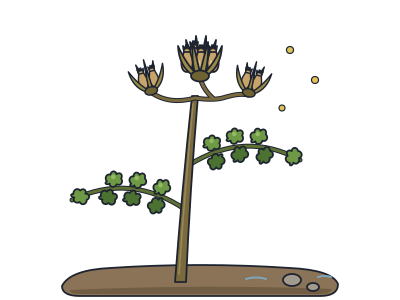
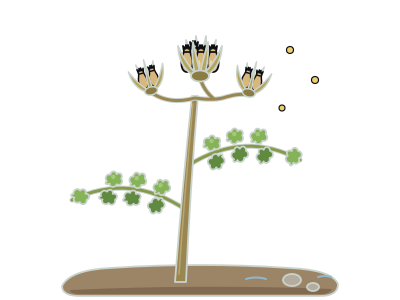
- Seed fernLooked like a tree fern but made seeds the size of hen's eggs.
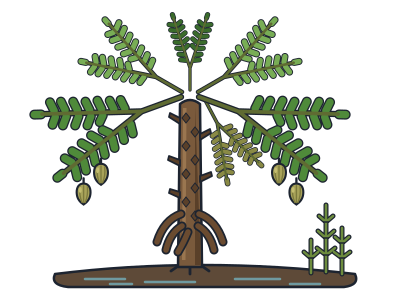
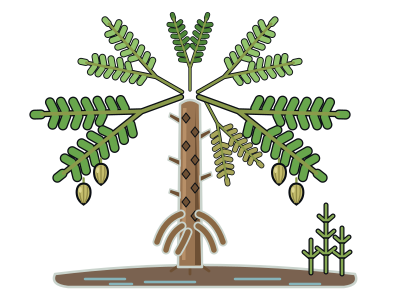
- WattiezaA palm-shaped tree from the world's oldest known forest, at Gilboa in New York.
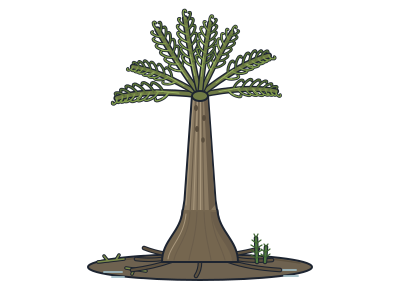
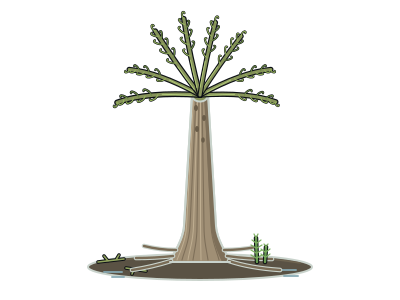
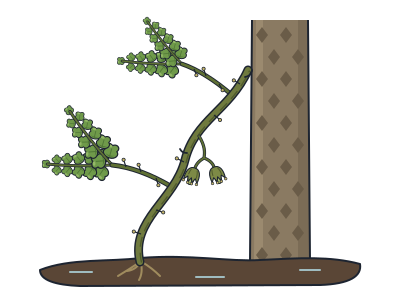
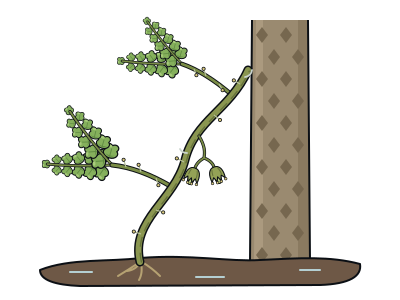
- LyginopterisA scrambling seed fern of the coal forests, with sticky glands on its fronds.
Next to it on the tree
- Clubmosses and kinToday they are small and mossy, but their ancestors were giant trees that became our coal.
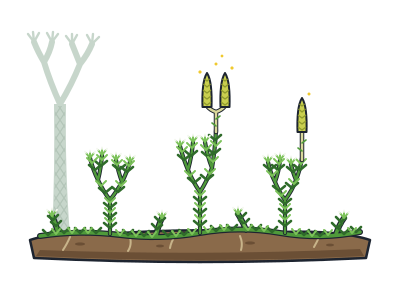
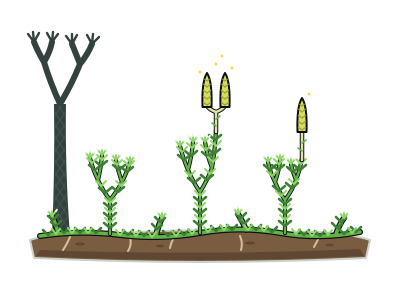
- BaragwanathiaOne of the first plants with leaves, a shaggy clubmoss-like stem from Silurian Australia.
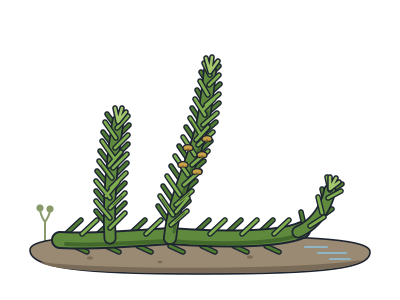
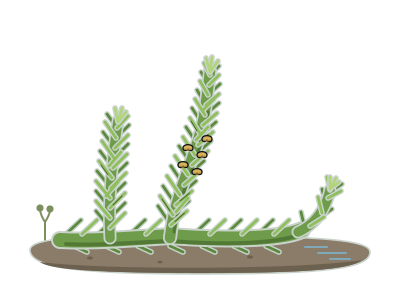
- ZosterophyllumLeafless green stems topped with kidney-shaped spore cases, an early cousin of clubmosses.
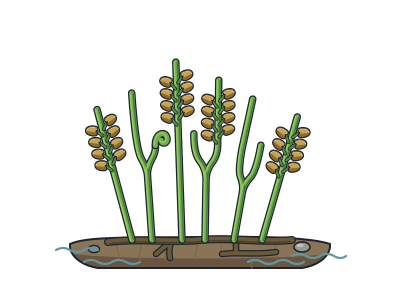
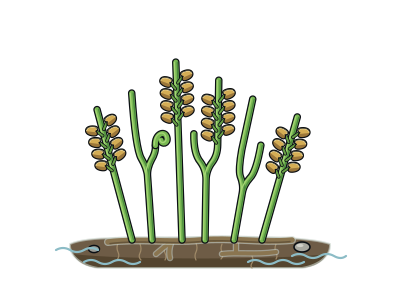
- PsilophytonSpiky forking stems that show what the shared ancestor of ferns and seed plants looked like.
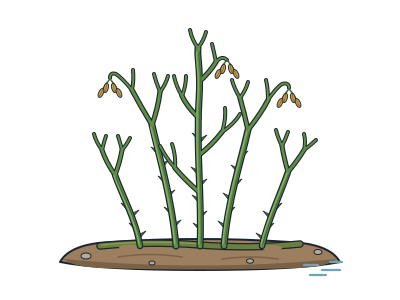
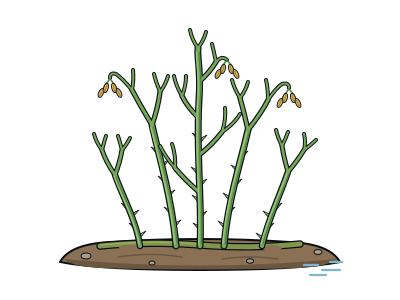
- AsteroxylonA Rhynie chert plant covered in tiny scale leaves, from the line that leads to clubmosses.