An extinct species
Baragwanathia †
Baragwanathia longifolia
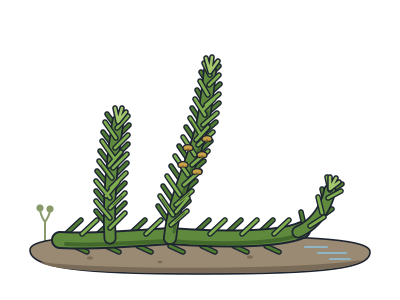
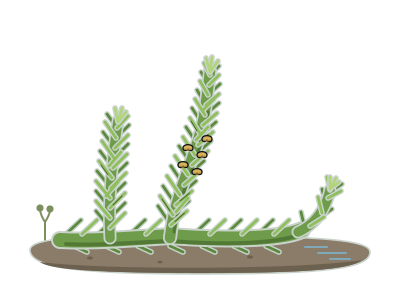
A shaggy, leafy stem from ancient Australia, and one of the first plants with leaves
Lived about 427–393 million years ago.
You and the baragwanathia meet in the Eukaryotes branch, shown at about 1.8 billion years ago (on 28 July, in a calendar from life's shared ancestor to today).
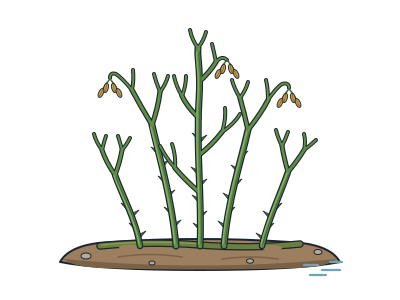
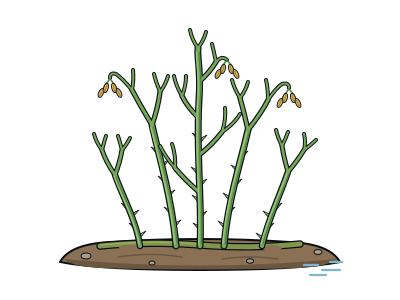
About 427 to 393 million years ago, long before the dinosaurs, a shaggy plant grew in damp, marshy ground in what is now Victoria, Australia. It was one of the first plants with leaves. Its stems were thickly covered in hundreds of thin, strap-like leaves, each about 4 cm long and set in a spiral all the way round. A stem probably looked a bit like a bottlebrush or a fox's tail.
This plant was an early relative of today's clubmosses. Despite the name, clubmosses are not true mosses. They are vascular plants, which have tiny tubes inside them to carry water. Each of its leaves had a single vein running down the middle, a hallmark of the clubmoss family line.
Fossils show flattened, dark impressions of stems with their leaves and small spore cases tucked where each leaf met the stem. Back then, Victoria lay beside a shallow sea. Dead plants washed into the sea, so the fossils turn up in old sea-floor rocks next to graptolites. The fossils are only pieces, so the shape of the whole plant is a reconstruction. Its stems may have trailed along the ground or arched upwards, perhaps reaching about 2 metres long. Its colour is a guess based on living clubmosses.
It comes from the time when plants were moving from water onto land. To do that, they needed ways to stand up without water to hold them.
Named after a finder
The plant is named after William Baragwanath, director of the Geological Survey of Victoria, who found the first specimens.
A pioneering scientist
It was named in 1935 by William Lang and Isabel Cookson, a pioneering Australian plant scientist. An even simpler, leafless early plant called Cooksonia was later named after her.
Almost a state emblem
It was a candidate in the 2021 public vote for Victoria's state fossil emblem, but in January 2022 Koolasuchus, a giant extinct amphibian, was announced as the winner.
Next to it on the tree
- Clubmosses and kinToday they are small and mossy, but their ancestors were giant trees that became our coal.
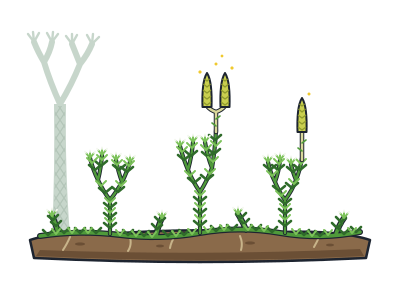
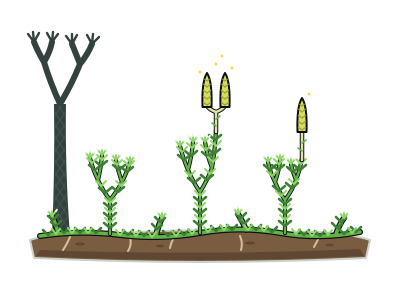
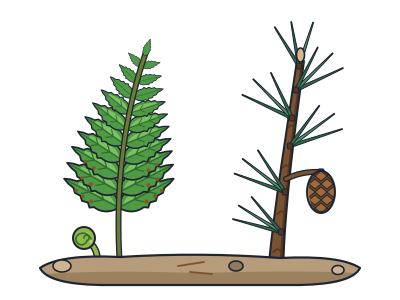
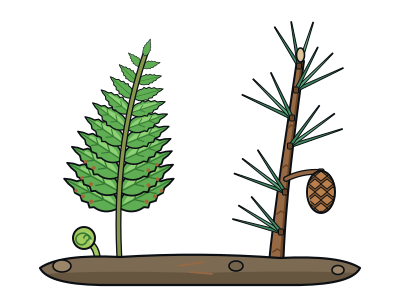
- Ferns and seed plantsFerns are closer cousins of pine trees and roses than of clubmosses.
- ZosterophyllumLeafless green stems topped with kidney-shaped spore cases, an early cousin of clubmosses.
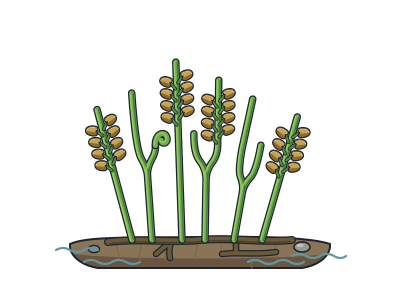
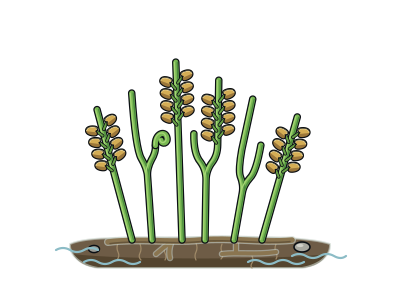
- PsilophytonSpiky forking stems that show what the shared ancestor of ferns and seed plants looked like.
- AsteroxylonA Rhynie chert plant covered in tiny scale leaves, from the line that leads to clubmosses.