An extinct species
Zosterophyllum †
Zosterophyllum
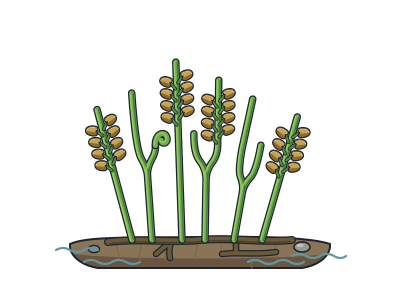
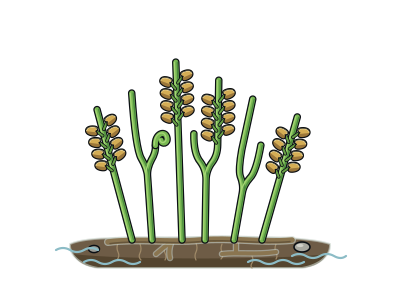
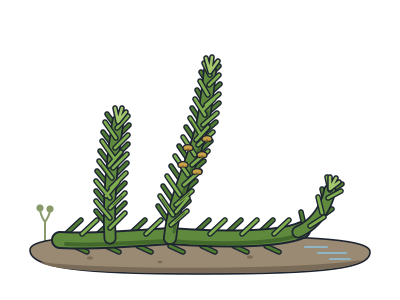
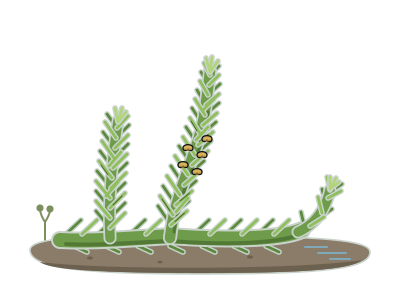
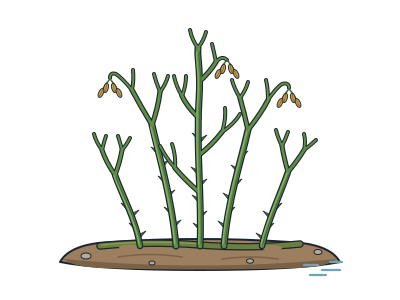
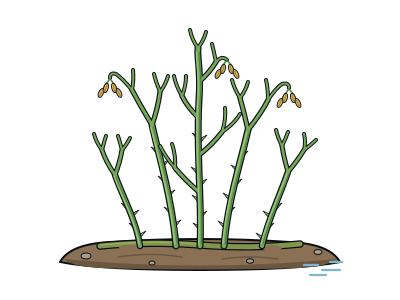
A tuft of bare green stems with kidney-shaped spore cases: an early relative of clubmosses.
Lived about 425–383 million years ago.
You and the zosterophyllum meet in the Eukaryotes branch, shown at about 1.8 billion years ago (on 28 July, in a calendar from life's shared ancestor to today).
Picture a small tuft of bare green stems with no leaves, no true roots and no flowers. Near the tips of the branches were little spikes of kidney-shaped spore cases. This plant lived about 425 to 383 million years ago, long before the dinosaurs.
Each spore case grew on a short stalk on the side of the stem. Clubmosses also have rounded, kidney-like spore cases on short stalks, so scientists link the two. This plant was not a clubmoss, and it was not a proven ancestor of clubmosses. It is better described as an early relative on the family branch that leads to them.
With no leaves, the plant made its food from sunlight in its stems. Scientists think the stems were green, but fossils do not keep colour. Many stems forked into Y shapes. In some species, the upright stems grew from a stem that crept along or just under the ground. Most plants were only about as tall as your hand.
When a spore case was ripe, it split along its top edge into two equal halves, like a clam shell opening. Out came tiny, dust-like spores. They were not seeds.
A misleading name
The name comes from a kind of seagrass plus the word for 'leaf', even though the plant had no leaves. The scientist who named it in 1892 thought it was a water plant with long, narrow leaves like seagrass. Scientists now think those 'leaves' were really its upright stems.
Pocket-sized species
The smallest known species, found in southern China, was only about 4.5 centimetres long. That is about as long as an adult's little finger.
Very early rooting
One species from China, about 413 million years old, had a tangle of fine root-like threads about 2 centimetres long. Scientists have described it as the oldest known rooting system.
Next to it on the tree
- Clubmosses and kinToday they are small and mossy, but their ancestors were giant trees that became our coal.
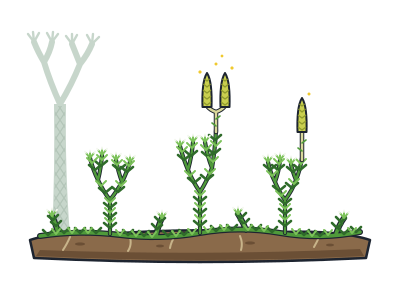
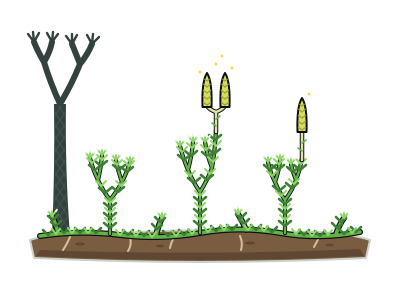
- BaragwanathiaOne of the first plants with leaves, a shaggy clubmoss-like stem from Silurian Australia.
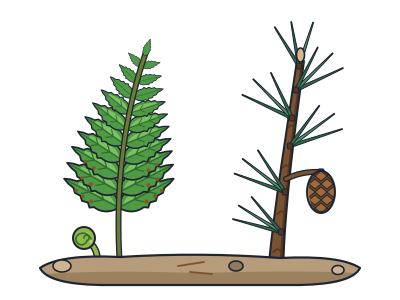
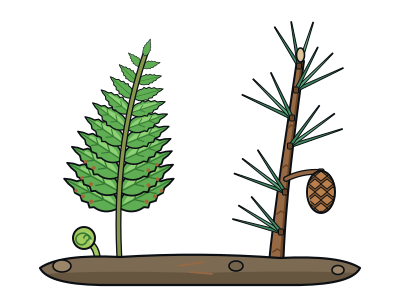
- Ferns and seed plantsFerns are closer cousins of pine trees and roses than of clubmosses.
- PsilophytonSpiky forking stems that show what the shared ancestor of ferns and seed plants looked like.
- AsteroxylonA Rhynie chert plant covered in tiny scale leaves, from the line that leads to clubmosses.