A group of living things
Clubmosses and kin
Lycopodiopsida
Small, mossy plants today, whose relatives were once giant trees in the coal swamps.
This branch is shown at about 390 million years ago; its age is a rough estimate.
You and clubmosses and kin meet in the Eukaryotes branch, shown at about 1.8 billion years ago (on 28 July, in a calendar from life's shared ancestor to today).
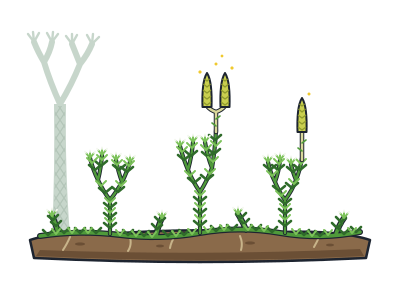
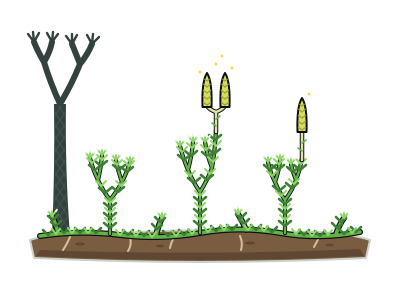
Clubmosses look like soft green carpets on the forest floor, but their family has a giant past. About 320 to 300 million years ago, some of their relatives grew as trees more than 30 metres tall, about as high as a ten-storey building. Huge forests of these scale trees grew in swamps and helped to form coal.
Today's members are much smaller. There are nearly 1,300 living species, in three main kinds: clubmosses, spikemosses and quillworts. Despite their names, they are not true mosses. Inside, they have tiny tubes that carry water around the plant, the same basic plumbing that ferns and trees have.
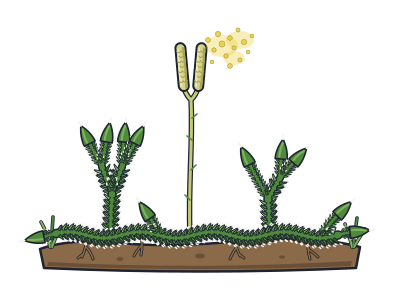
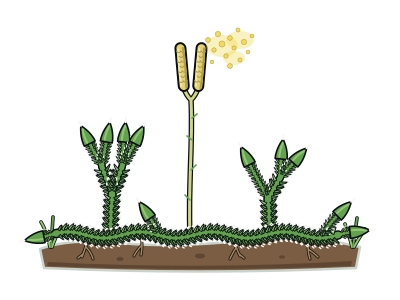
Stag's-horn clubmoss sends long green stems creeping along the ground, sometimes up to about a metre long. They are thickly covered in tiny leaves only 3 to 5 millimetres long, so each branch looks like a fluffy green pipe-cleaner. Slender yellow-green cones, each about as long as a paperclip, stand up on thin stalks. There are no flowers or seeds. Instead, the cones release clouds of fine yellow spores.
The ancient scale trees had no flowers either. Their trunks were covered in a scaly pattern. When people found fossil trunks in the 1800s, some even mistook them for stone snakes.
Flash powder from a plant
When a cloud of clubmoss spores is puffed into the air, it can burst into a bright flash. In the late 1800s, people used the spores as flash powder for stage effects and early flash photography.
Very slow growers
Some clubmosses take as long as 20 years to grow from a spore into an adult plant. Picking them from the wild has made them rarer, so several US states now protect them by law.
Needs to be left alone
Stag's-horn clubmoss grows on several continents, but it disappears from farmland and from places that are burned regularly.
Inside clubmosses and kin
- Stag's-horn clubmossIts spores are so oily they flash like fireworks and were once used for camera flash powder.
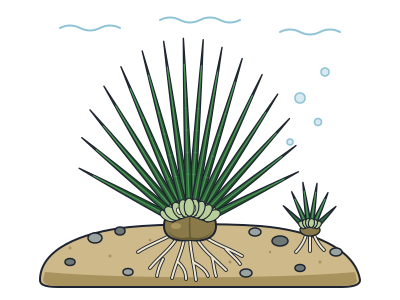
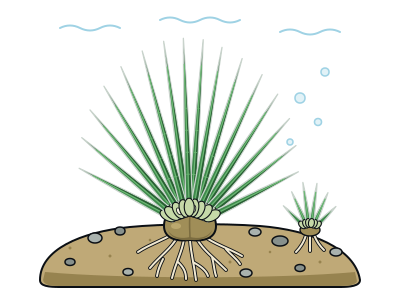
- Lake quillwortA little underwater tuft that is the closest living relative of the giant coal-forest trees.
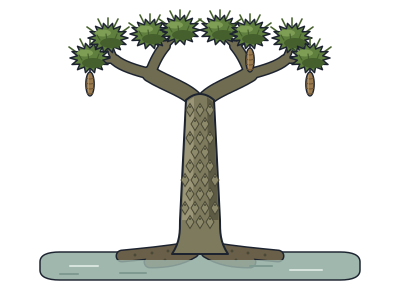
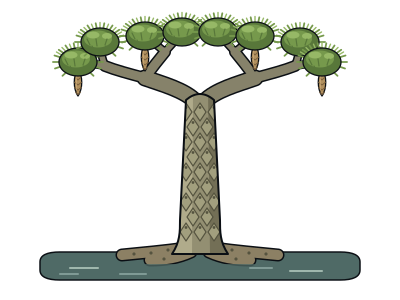
- Scale treeA 40-metre tree with snakeskin bark; its forests were buried to make much of the world's coal.
- Resurrection plantCurls into a dry brown ball for years, then turns green within hours of rain.
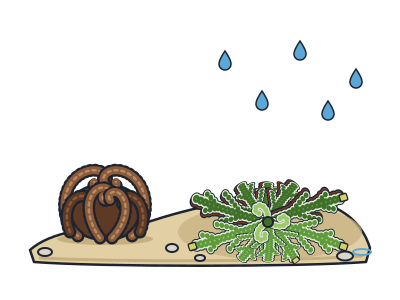
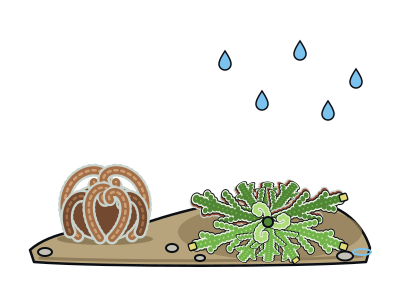
- Seal treeA coal-swamp giant whose bark looked as if it were stamped with rows of seals.
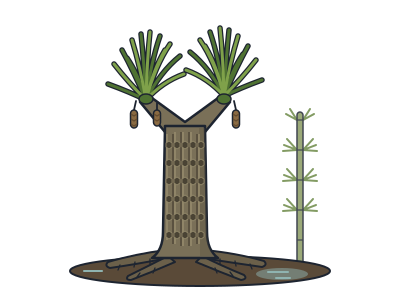
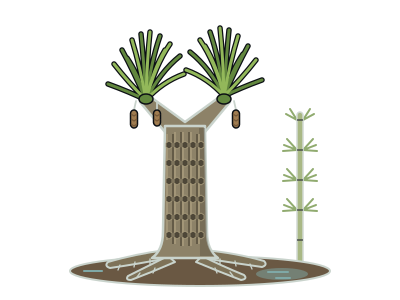
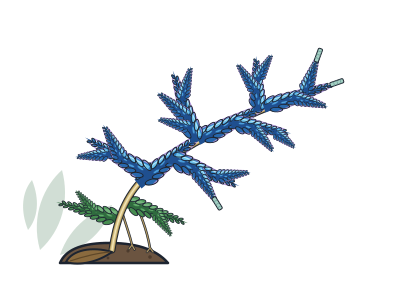
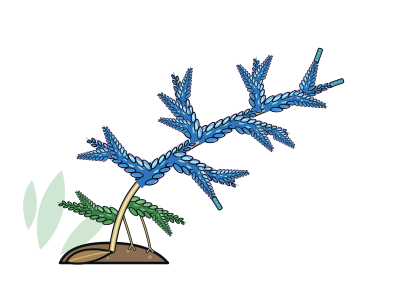
- Peacock spikemossIts leaves shimmer metallic blue in deep shade, thanks to light-bending layers in its cells.
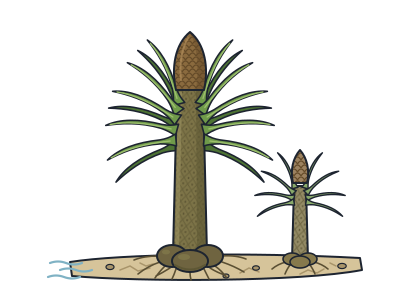
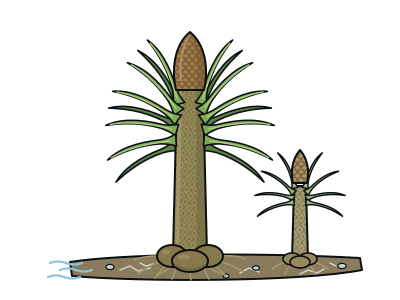
- PleuromeiaA stubby clubmoss tree that spread worldwide after the greatest mass extinction.
Next to it on the tree
- BaragwanathiaOne of the first plants with leaves, a shaggy clubmoss-like stem from Silurian Australia.
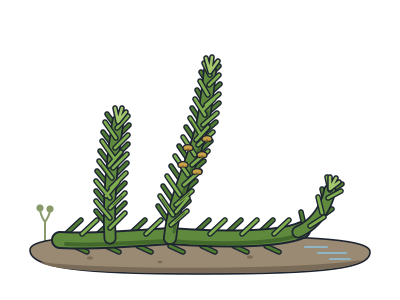
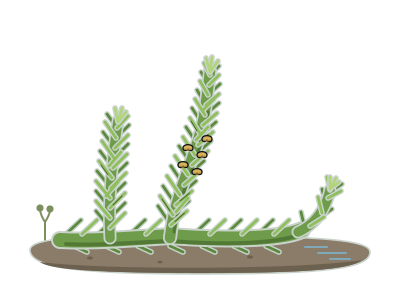
- Ferns and seed plantsFerns are closer cousins of pine trees and roses than of clubmosses.
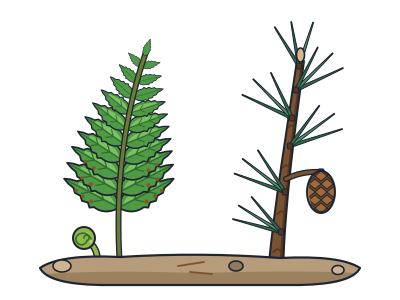
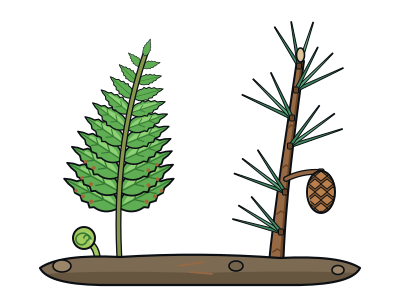
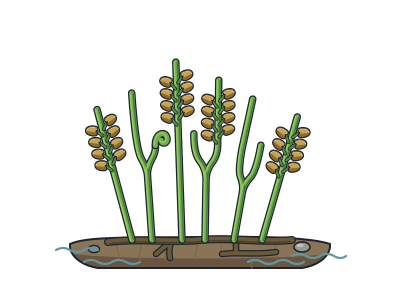
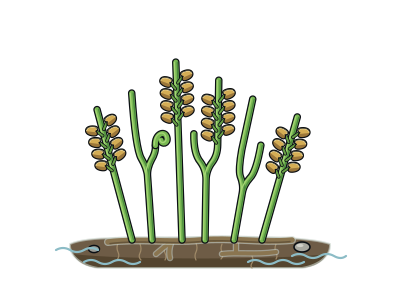
- ZosterophyllumLeafless green stems topped with kidney-shaped spore cases, an early cousin of clubmosses.
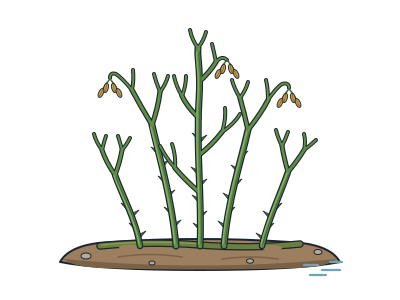
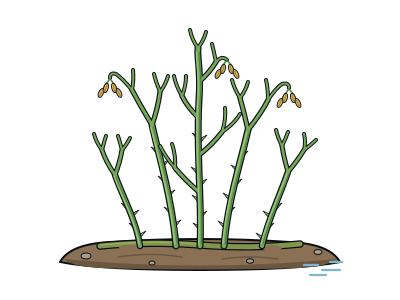
- PsilophytonSpiky forking stems that show what the shared ancestor of ferns and seed plants looked like.
- AsteroxylonA Rhynie chert plant covered in tiny scale leaves, from the line that leads to clubmosses.