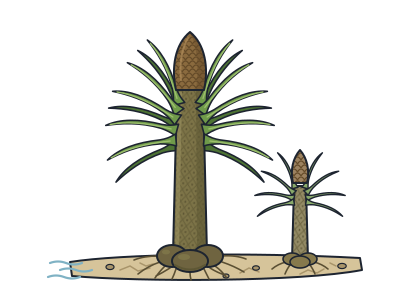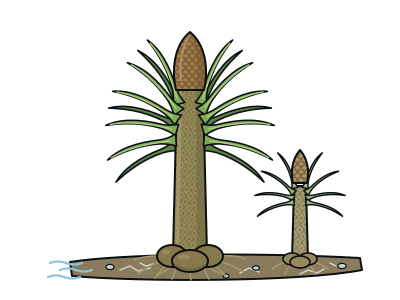
An extinct species
Seal tree †
Sigillaria
A swamp giant whose bark looked stamped with rows of seals
Lived about 320–270 million years ago.
You and the seal tree meet in the Eukaryotes branch, shown at about 1.8 billion years ago (on 28 July, in a calendar from life's shared ancestor to today).
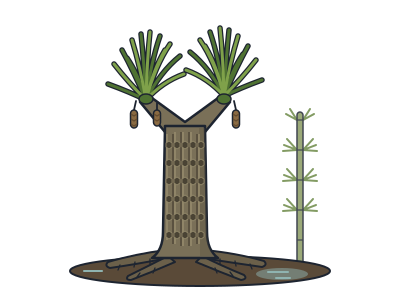
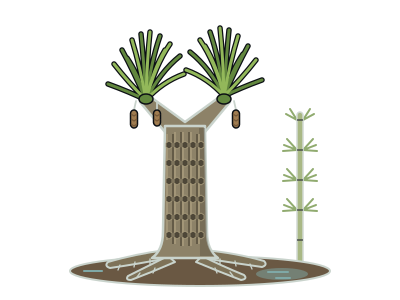
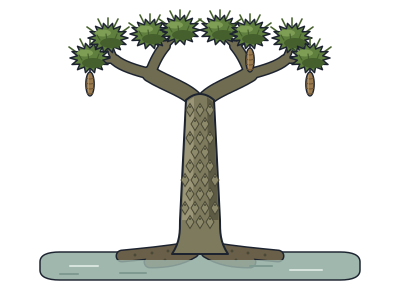
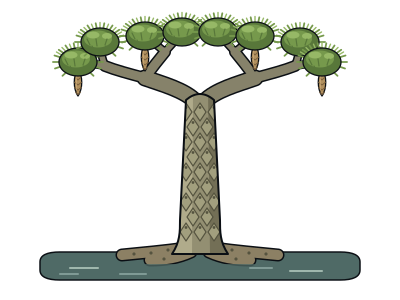
About 320 to 270 million years ago, warm coal swamps were home to a giant with very odd bark. Its trunk was covered in neat, straight rows of six-sided to roundish scars. They looked as if someone had pressed a seal into wax again and again. That is where its name comes from: the Latin word for 'seal'. Each mark was a scar left where a leaf had dropped off.
Despite its size, it was not a tree like an oak or a pine. It belonged with the clubmosses and their kin. One of its living relatives, the quillwort, is a small plant that often grows underwater and is usually no taller than your hand. The seal tree had no flowers or seeds. Instead, it made spores in cones that hung on short stalks high up on its trunk.
Scientists estimate it grew about 20 to 30 metres tall, as tall as a seven- to ten-storey building. The trunk was usually single and only sometimes forked. It had almost no wood. Instead, a thick, tough, bark-like outer layer of tightly packed leaf bases held it up. At the top, scientists picture a tuft of long, grass-like leaves, so the whole plant looked like a giant bottle brush.
Tell it from the scale tree
Its close relative, the scale tree, had leaf scars in a slanting diamond pattern, like snake skin. On the seal tree, the scars ran in straight up-and-down columns.
Roots mistaken for plants
Its spreading underground parts, covered in small rootlets, were once thought to be separate plants. Fossil hunters still give them their own name, Stigmaria.
Hollow-trunk time capsules
At Joggins in Nova Scotia, giant clubmoss relatives, some probably seal trees, rotted from the inside and left hollow stumps. Small animals were trapped inside them, including one of the earliest known reptiles.
Next to it on the tree
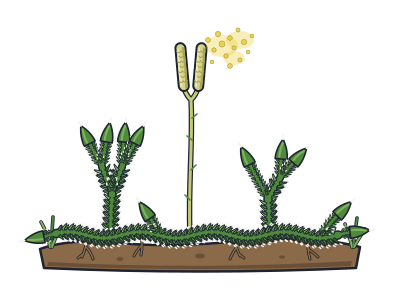
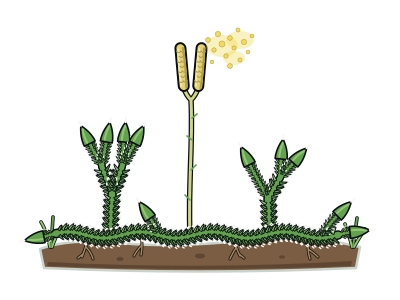
- Stag's-horn clubmossIts spores are so oily they flash like fireworks and were once used for camera flash powder.
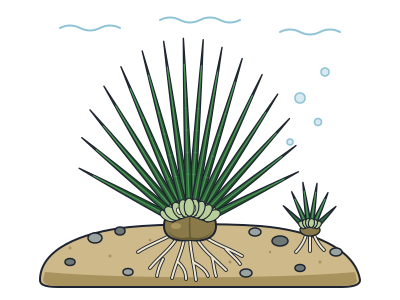
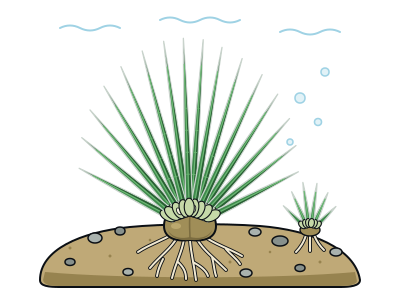
- Lake quillwortA little underwater tuft that is the closest living relative of the giant coal-forest trees.
- Scale treeA 40-metre tree with snakeskin bark; its forests were buried to make much of the world's coal.
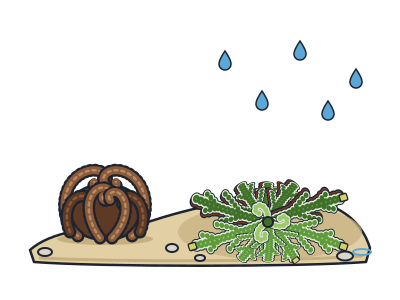
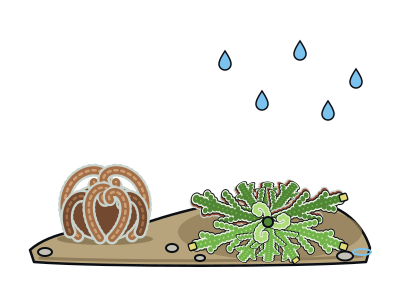
- Resurrection plantCurls into a dry brown ball for years, then turns green within hours of rain.
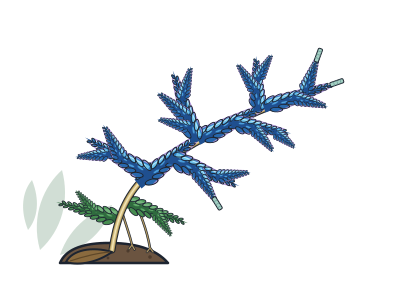
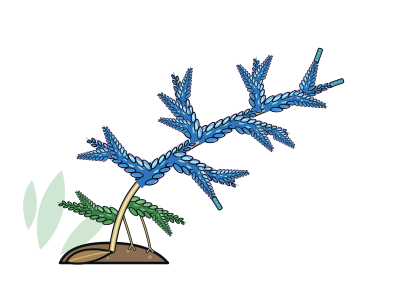
- Peacock spikemossIts leaves shimmer metallic blue in deep shade, thanks to light-bending layers in its cells.
- PleuromeiaA stubby clubmoss tree that spread worldwide after the greatest mass extinction.