An extinct species
Pleuromeia †
Pleuromeia sternbergii
A stubby, tree-like clubmoss that spread across a bare, battered world
Lived about 251–230 million years ago.
You and the pleuromeia meet in the Eukaryotes branch, shown at about 1.8 billion years ago (on 28 July, in a calendar from life's shared ancestor to today).
After the greatest mass extinction in Earth's history, the land took a long time to recover. Within about half a million years, conifer-type trees had become rare for a while, and clubmosses took over in many places. One of the plants that moved in was a stubby, tree-like clubmoss. It lived about 251 to 230 million years ago. This species is known from Europe to China. Close relatives in the same group spread even further, and their fossils have been found in Russia, Japan, Australia and South America too.
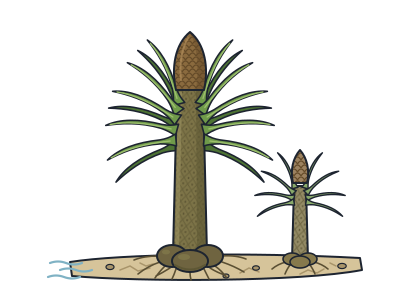
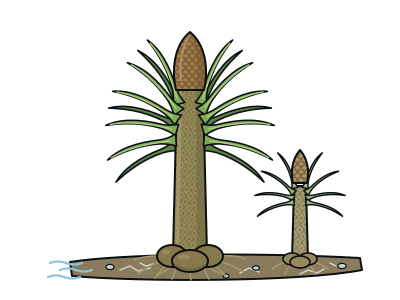
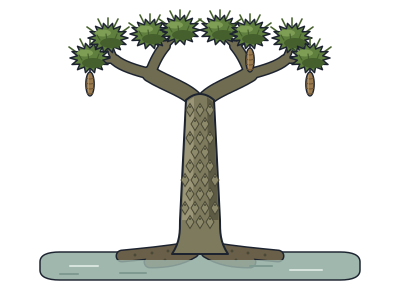
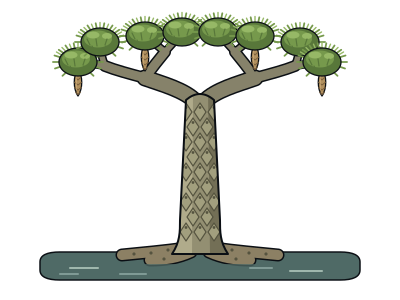
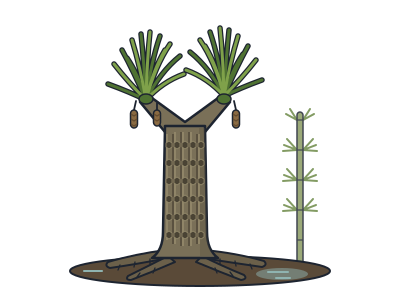
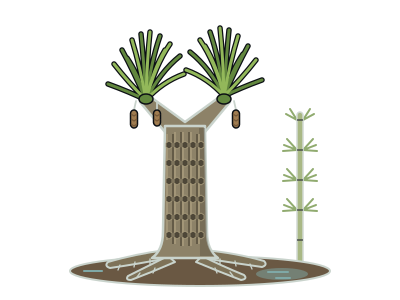
It was not a true tree. Fossils show a single stem with no branches, up to about 2 metres tall, roughly the height of a doorway, though most were smaller. Narrow, strap-like leaves grew in a spiral and wrapped around the stem. When they fell, they left diamond-shaped scars, a bit like the skin of a pineapple. One cone sat at the very top. The base was a short, bulb-like foot with many small roots.
Clubmosses are not real mosses. Like ferns, they have tubes inside that carry water. This plant's spores look very like those of living quillworts, small plants found in lakes today. Quillworts are thought to be its closest living relatives. Colour does not survive in these fossils, so the green leaves in pictures are an educated guess.
Found in a cathedral
The first fossil turned up in the 1830s, when a sandstone block split open during repairs to Magdeburg Cathedral in Germany. In 1839 it was first mistaken for a seal tree, a giant coal-age relative, before it got its own name.
Fields of just one plant
At German fossil sites from this time, about 78 out of every 100 plant collections with this plant in them hold no other kind of plant. It often grew in crowded stands all on its own.
Two sizes of spore
Its cone made two kinds of spores, small ones and large ones. Living quillworts and spikemosses do this too.
Next to it on the tree
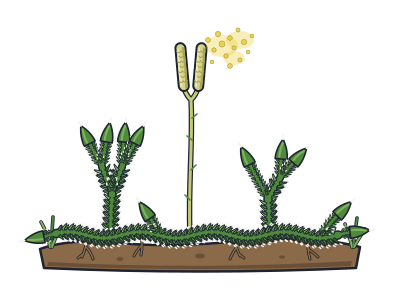
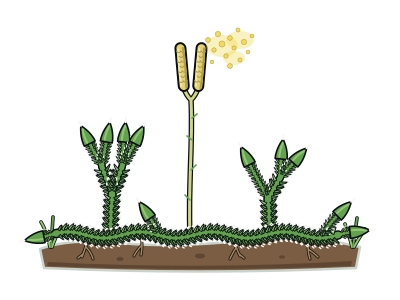
- Stag's-horn clubmossIts spores are so oily they flash like fireworks and were once used for camera flash powder.
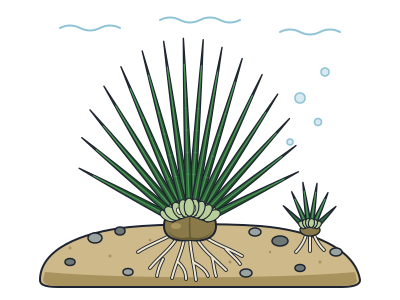
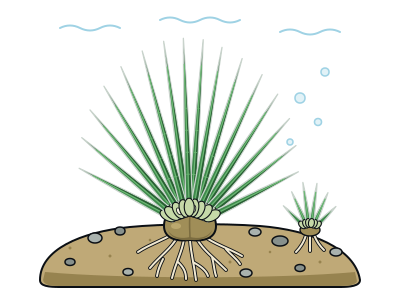
- Lake quillwortA little underwater tuft that is the closest living relative of the giant coal-forest trees.
- Scale treeA 40-metre tree with snakeskin bark; its forests were buried to make much of the world's coal.
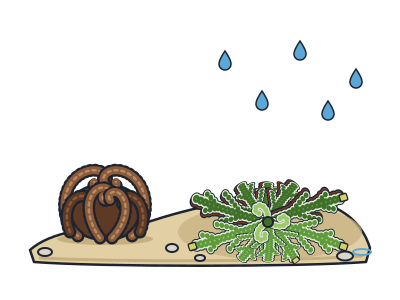
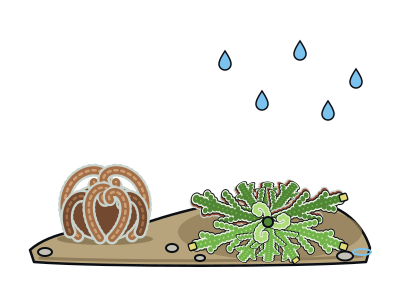
- Resurrection plantCurls into a dry brown ball for years, then turns green within hours of rain.
- Seal treeA coal-swamp giant whose bark looked as if it were stamped with rows of seals.
- Peacock spikemossIts leaves shimmer metallic blue in deep shade, thanks to light-bending layers in its cells.