A species
Stag's-horn clubmoss
Lycopodium clavatum
A humble creeping plant whose spores go up in a flash
You and the stag's-horn clubmoss meet in the Eukaryotes branch, shown at about 1.8 billion years ago (on 28 July, in a calendar from life's shared ancestor to today).
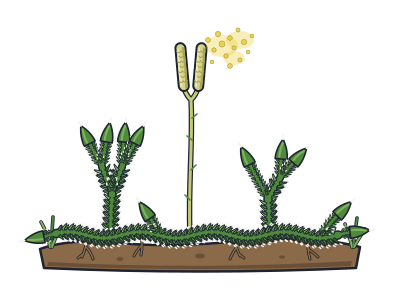
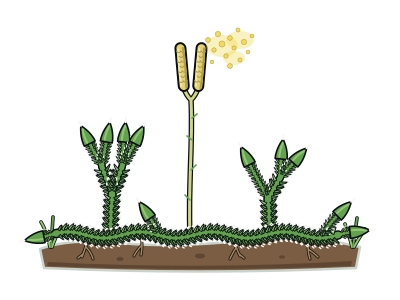
Puff a cloud of this plant's spores near a flame and you get a sudden, bright flash. Each spore is tiny and rich in oily fat, so a fine cloud of them catches fire in an instant. Early photographers used the yellow powder to light their pictures. Stage magicians and film crews still use it for big flashes that are fairly safe to handle. A heap of the powder only burns slowly, though.
Despite its name, this is not a moss, and it is not a baby pine either. It belongs to an ancient group called lycophytes. Their fossils go back more than 400 million years, long before the dinosaurs. It is more closely related to ferns than to true mosses.
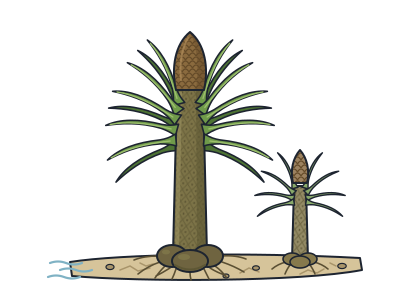
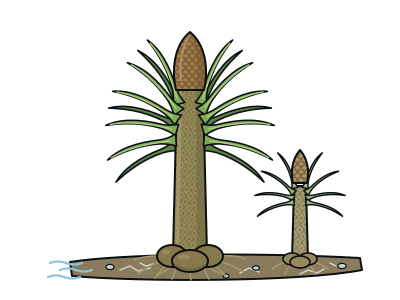
Its relatives on the tree include quillworts, spikemosses and the extinct scale trees. About 300 million years ago, scale trees grew over 30 metres tall in swampy forests, and their remains helped form coal. Surprisingly, those giants were closer to quillworts and spikemosses than to this little plant.
Today it creeps along the ground like a green pipe cleaner, putting down roots as it goes. Its short branches fork like a stag's antlers. Its tiny leaves end in fine white hairs, which give it a frosted look.
Help for inventors
Around 1807, Nicéphore Niépce used the powder as fuel in an early engine. In 1938, Chester Carlson used it in his first photocopying experiments.
It stays dry
The powder repels water and floats on it instead of getting wet. It has been used to dust for fingerprints and to coat pills.
One kind of spore
This clubmoss makes only one kind of spore. Its cousins the spikemosses and quillworts make two kinds, and their female spores are much bigger than the male ones.
Next to it on the tree
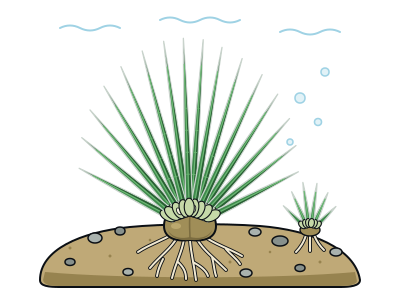
- Lake quillwortA little underwater tuft that is the closest living relative of the giant coal-forest trees.

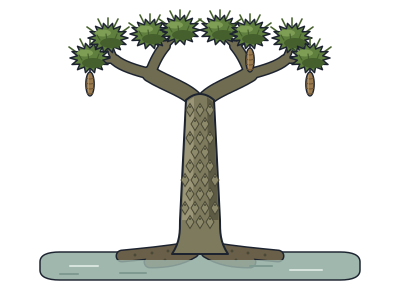
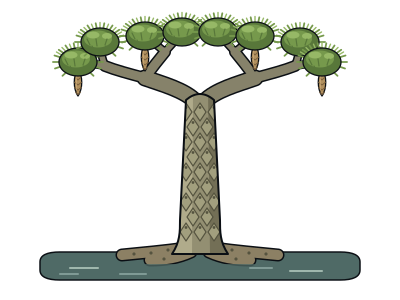
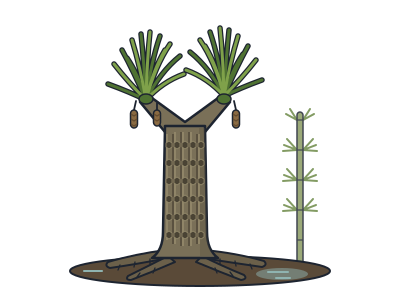
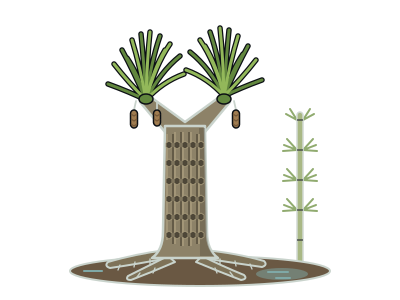
- Scale treeA 40-metre tree with snakeskin bark; its forests were buried to make much of the world's coal.
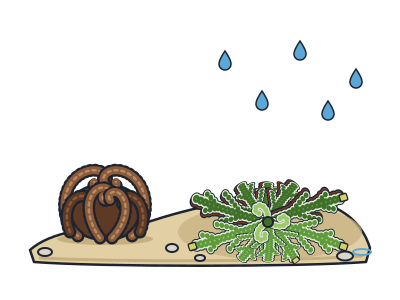
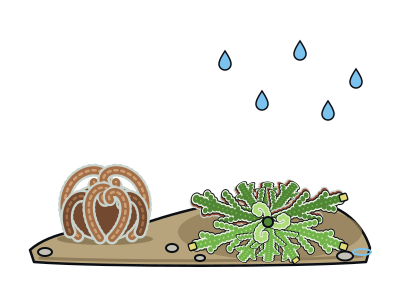
- Resurrection plantCurls into a dry brown ball for years, then turns green within hours of rain.
- Seal treeA coal-swamp giant whose bark looked as if it were stamped with rows of seals.
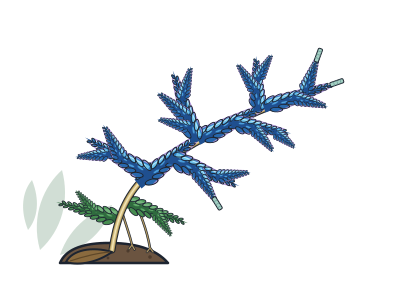
- Peacock spikemossIts leaves shimmer metallic blue in deep shade, thanks to light-bending layers in its cells.
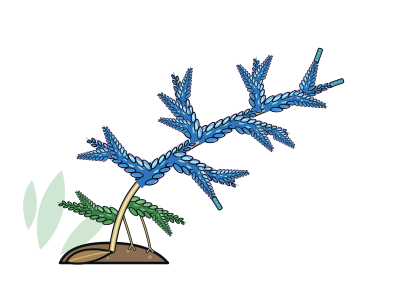
- PleuromeiaA stubby clubmoss tree that spread worldwide after the greatest mass extinction.