An extinct species
Scale tree †
Lepidodendron
A swamp giant with snakeskin bark whose buried forests helped make coal
Lived about 345–299 million years ago.
You and the scale tree meet in the Eukaryotes branch, shown at about 1.8 billion years ago (on 28 July, in a calendar from life's shared ancestor to today).
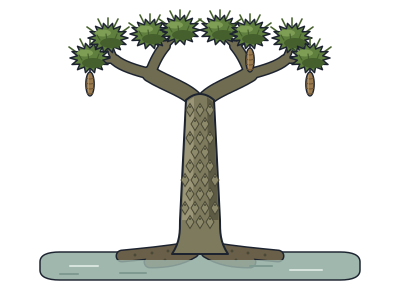
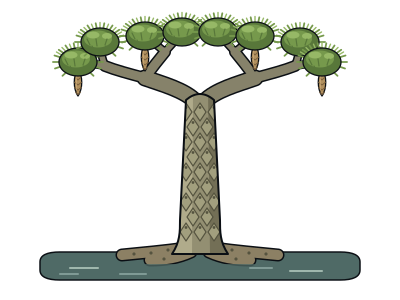
Picture a tree as tall as a 12-storey building, with bark patterned like snakeskin. The tallest scale trees reached about 40 metres. They grew in hot, wet swamps about 345 to 299 million years ago, long before the dinosaurs. The diamond-shaped 'scales' on the trunk were not scales at all. They were the leftover bases of old leaves that had dropped off.
When these swamp forests died, layer after layer of them was buried and squeezed over millions of years. Their remains, along with other swamp plants, slowly turned into coal. In some coal beds in Europe and North America, up to about four-fifths of the plant material came from scale trees and their giant relatives.
People often call it a giant clubmoss. It was actually more closely related to the small quillworts that grow in lakes today. It was not built like an oak or a pine either. It had very little true wood, and a thick, bark-like layer held it up. It also made spores in cones instead of seeds.
Fossils show its bark, roots, leaves and cones, but usually as separate pieces. Colour does not survive in fossils, so its green leaves and brownish bark are a reasonable guess.
Branches came last
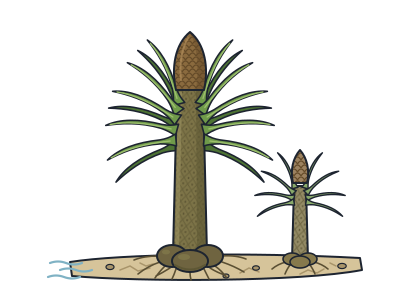
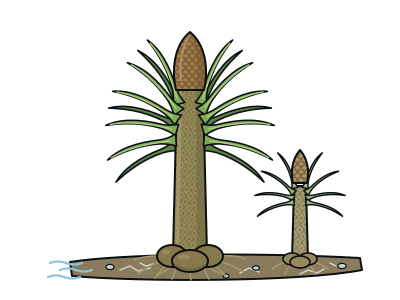
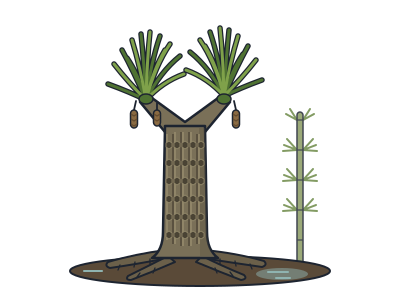
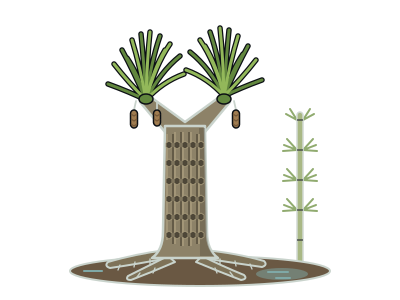
A young scale tree grew as one tall pole with no branches. Only late in life did the top split again and again into a crown of branches, a bit like a candelabra.
Giant cones
The cones at the branch tips could be nearly 1 metre long. The plants made two kinds of spores, one small and one large.
Roots built for mud
At its base, the trunk split into thick arms that spread sideways just under the swampy ground, covered in small rootlets. Its relative the seal tree had the same kind of roots.
Next to it on the tree
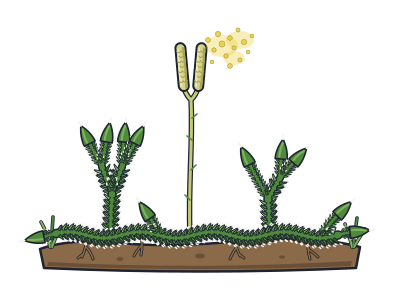
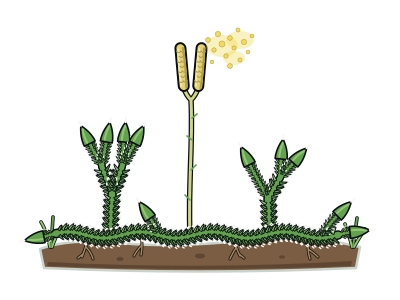
- Stag's-horn clubmossIts spores are so oily they flash like fireworks and were once used for camera flash powder.
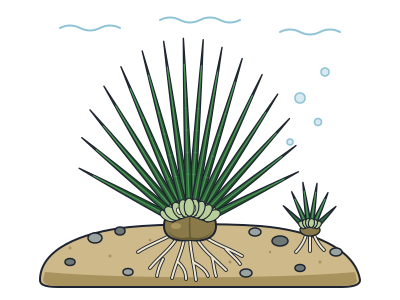
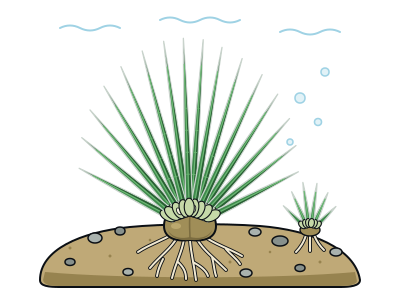
- Lake quillwortA little underwater tuft that is the closest living relative of the giant coal-forest trees.
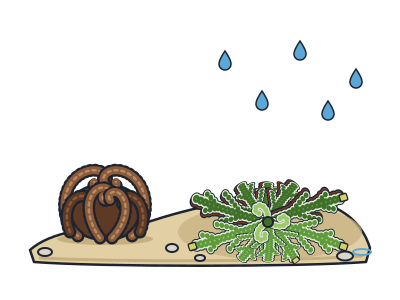
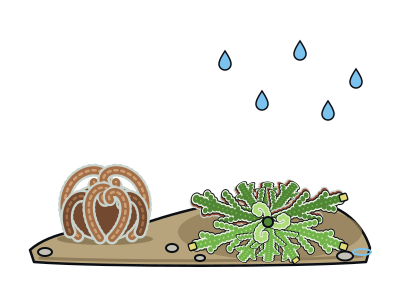
- Resurrection plantCurls into a dry brown ball for years, then turns green within hours of rain.
- Seal treeA coal-swamp giant whose bark looked as if it were stamped with rows of seals.
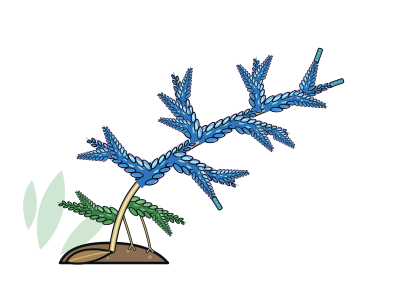
- Peacock spikemossIts leaves shimmer metallic blue in deep shade, thanks to light-bending layers in its cells.
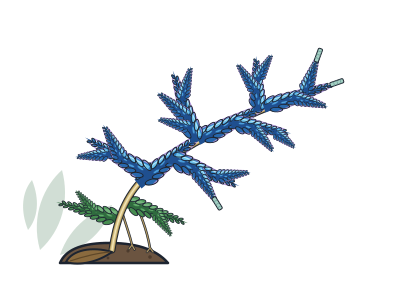
- PleuromeiaA stubby clubmoss tree that spread worldwide after the greatest mass extinction.