A species
Peacock spikemoss
Selaginella willdenowii
A forest-floor plant whose young leaves shimmer metallic blue
You and the peacock spikemoss meet in the Eukaryotes branch, shown at about 1.8 billion years ago (on 28 July, in a calendar from life's shared ancestor to today).
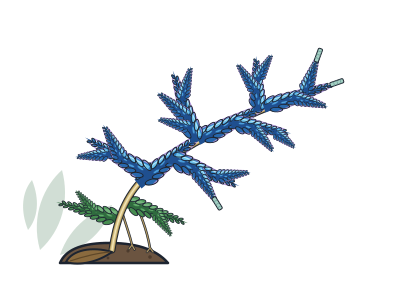
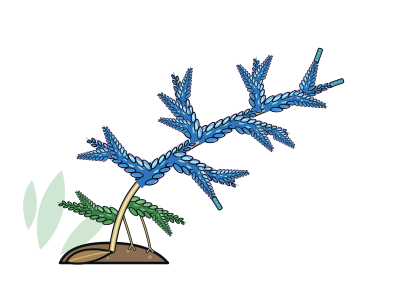
Deep in the shade of a tropical rainforest, the young leaves of this plant shimmer a metallic peacock blue. No blue pigment makes this colour. The thin outer skin of each leaf has stacked layers, far thinner than a hair, and they bounce back blue light the way a soap bubble shines. This is called structural colour. Tilt your head and the colour shifts. As leaves age, the layers break down and the leaves turn plain green.
Its nickname is 'peacock fern', but it is not a fern. And despite the 'moss' in 'spikemoss', it is not a moss either. It belongs to the clubmosses and kin, one of the oldest surviving lines of plants with water-carrying tubes. Their line goes back more than 400 million years, long before the dinosaurs. Ferns, conifers and flowering plants are all more closely related to each other than any of them is to this plant.
Its flat, lacy sprays of branches fork again and again. Tiny scale-like leaves, only a few millimetres long, cover them. It sprawls in thick tangles across the forest floor or scrambles several metres up into trees. In the wild it grows across South-East Asia, from Myanmar and Vietnam to Indonesia and the Philippines.
Two sizes of spore
Spikemosses make large female spores and small male spores. Seed plants also use two kinds, but its relative the stag's-horn clubmoss makes just one kind.
Blue more than once
Shimmering blue leaves have evolved separately in several unrelated shade plants of the tropical forest floor, including some ferns and a begonia.
An unwanted guest
It was brought in as a garden plant and has gone wild near Kuranda in far north Queensland. There it is treated as an environmental weed, and it is listed as an unwanted plant in the Wet Tropics World Heritage Area.
Next to it on the tree
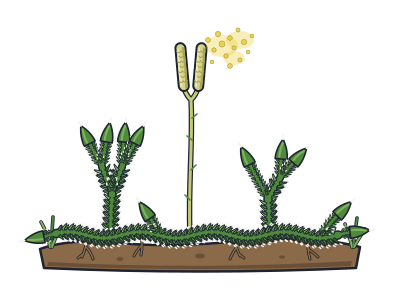
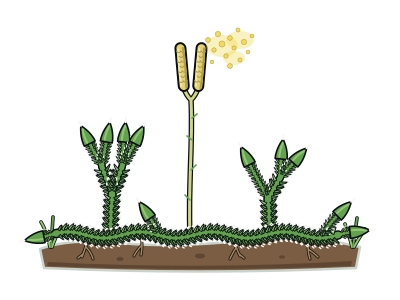
- Stag's-horn clubmossIts spores are so oily they flash like fireworks and were once used for camera flash powder.
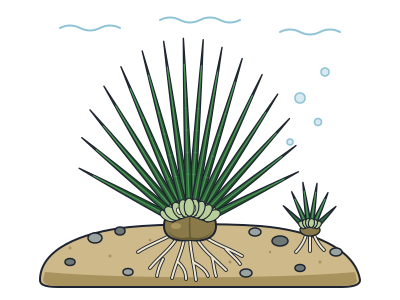
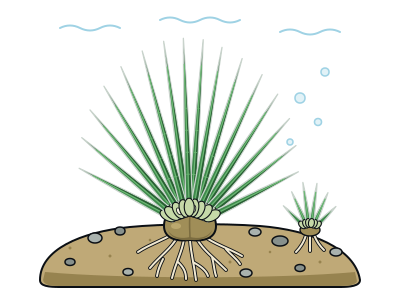
- Lake quillwortA little underwater tuft that is the closest living relative of the giant coal-forest trees.
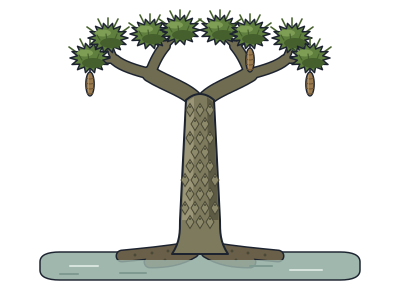
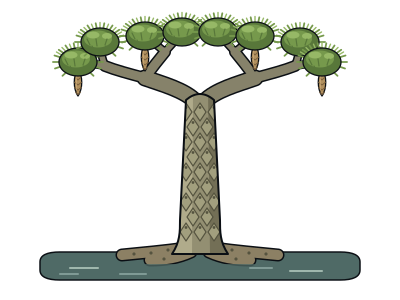
- Scale treeA 40-metre tree with snakeskin bark; its forests were buried to make much of the world's coal.
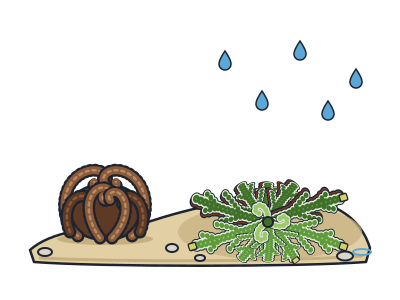
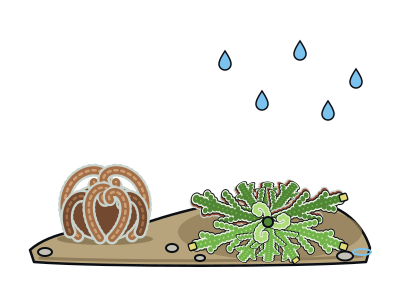
- Resurrection plantCurls into a dry brown ball for years, then turns green within hours of rain.
- Seal treeA coal-swamp giant whose bark looked as if it were stamped with rows of seals.
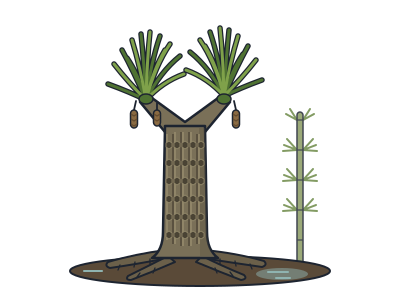
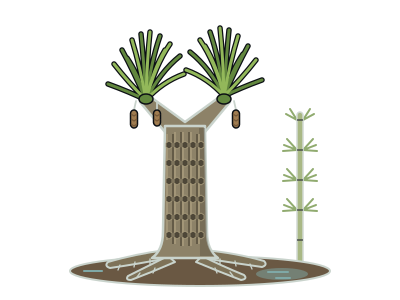
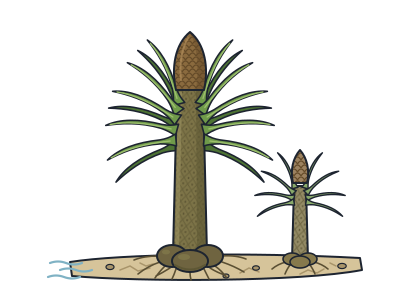
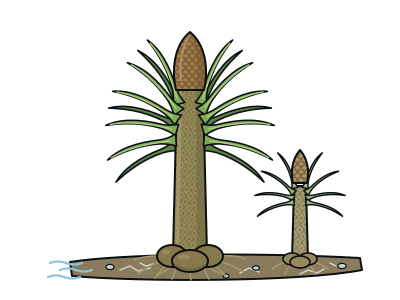
- PleuromeiaA stubby clubmoss tree that spread worldwide after the greatest mass extinction.