A group of living things
Vascular plants
Tracheophyta
Plants with pipes inside, which let them grow tall enough to build the first forests.
This branch is shown at about 430 million years ago; its age is a rough estimate.
You and vascular plants meet in the Eukaryotes branch, shown at about 1.8 billion years ago (on 28 July, in a calendar from life's shared ancestor to today).
Hold a fern leaf up to the light and you can see its veins. These are pipes. Vascular plants have two kinds. One kind is stiffened with a tough material called lignin and carries water and minerals up from the soil. The other carries sugar made in the leaves around the rest of the plant. The stiff water pipes work a bit like a skeleton and help the plant stand upright.
This is an enormous group of about 300,000 known species. It includes clubmosses, horsetails, ferns, pine trees and their relatives, and all flowering plants. In fact, it covers nearly every land plant except mosses, liverworts and hornworts. Here is the surprise: despite their name, clubmosses are not mosses at all. A clubmoss is a closer relative of a fern or a pine tree than of the soft moss on a rock.
The oldest fossils with pipes are roughly 430 to 420 million years old. With pipes to hold them up, plants could grow much taller. By about 385 million years ago, trees such as Wattieza were about 8 to 9 metres tall, as high as a three-storey building. They had no true leaves and made spores, not seeds. Trees like these, along with a few other early kinds, made up the first forests, long before the dinosaurs.
Forests that became coal
About 300 to 360 million years ago, in a time called the Carboniferous, giant relatives of clubmosses grew as big as trees and formed huge forests. Their remains helped make much of the coal we dig up today.
Upside-down life cycle
The big, long-lived plant you see, like a fern or a tree, is the stage that makes spores. Mosses work the other way round: the green moss is the other stage, and the spore-making part is small.
A crowded early forest
Wattieza trees grew close together, only about 1 to 5 metres apart. Their fallen branches fed small creepy-crawlies living on the forest floor.
Inside vascular plants
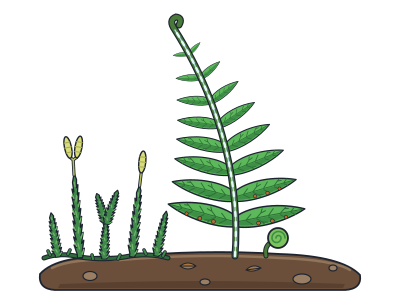
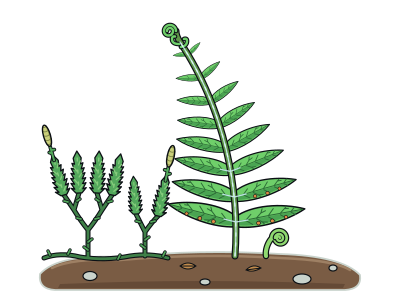
- Clubmosses and kinToday they are small and mossy, but their ancestors were giant trees that became our coal.
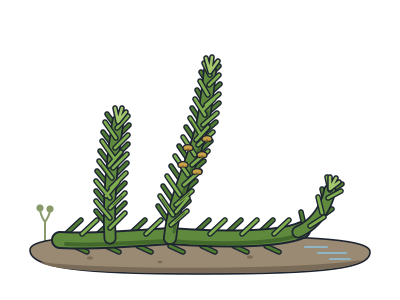
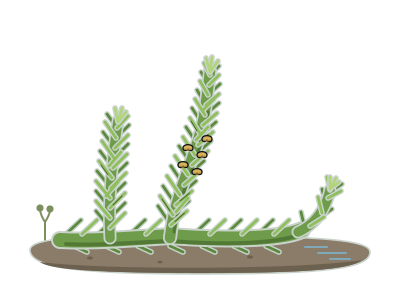
- BaragwanathiaOne of the first plants with leaves, a shaggy clubmoss-like stem from Silurian Australia.
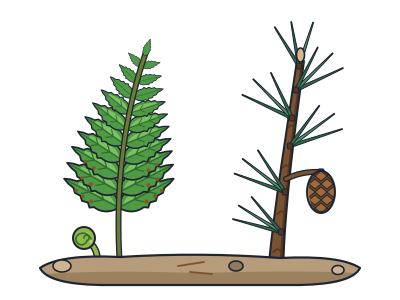
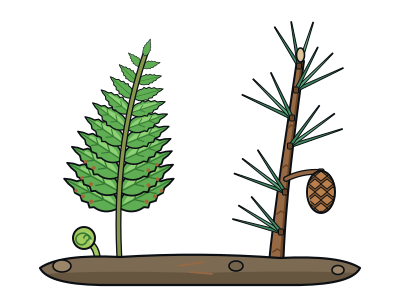
- Ferns and seed plantsFerns are closer cousins of pine trees and roses than of clubmosses.
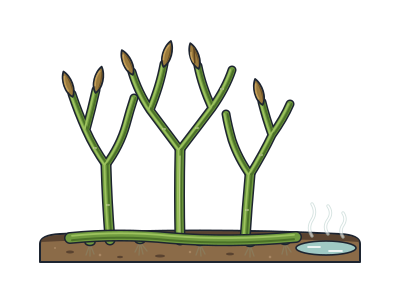
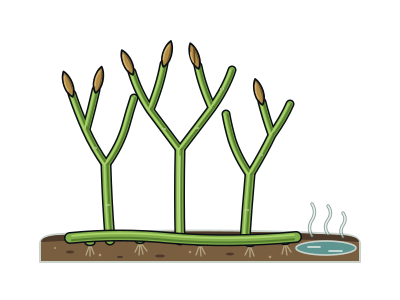
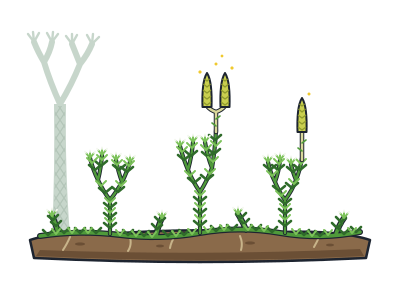
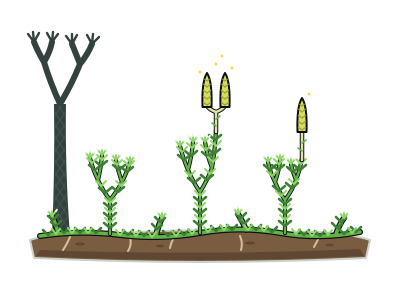
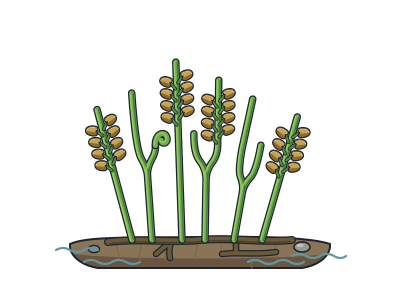
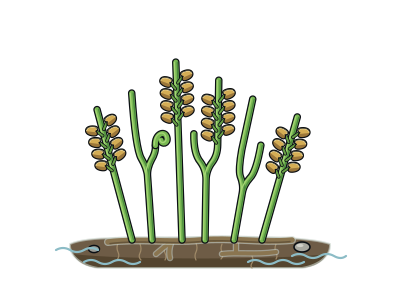
- ZosterophyllumLeafless green stems topped with kidney-shaped spore cases, an early cousin of clubmosses.
- PsilophytonSpiky forking stems that show what the shared ancestor of ferns and seed plants looked like.
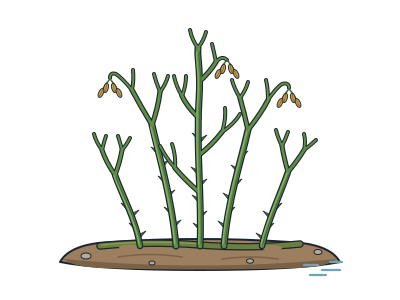
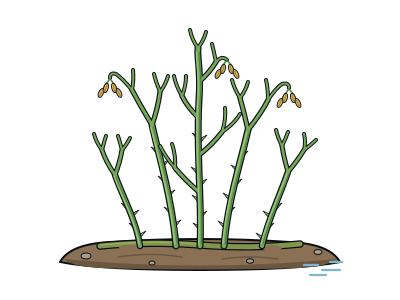
- AsteroxylonA Rhynie chert plant covered in tiny scale leaves, from the line that leads to clubmosses.
Next to it on the tree
- Mosses, liverworts and hornwortsSmall plants without pipes that hug damp ground and keep the oldest land-plant habits.
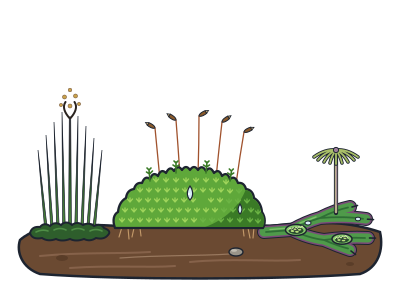
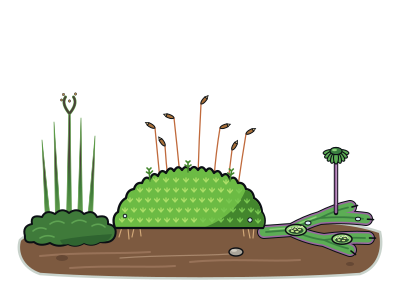
- CooksoniaA matchstick-sized forking stem with no leaves: one of the first upright plants on land.
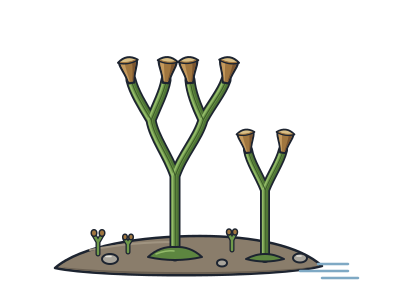
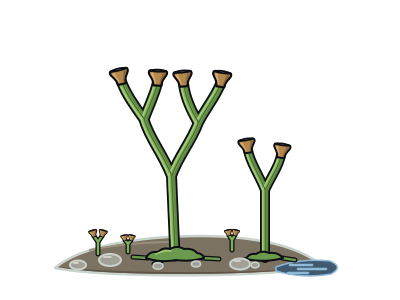
- Rhynie chert plantPreserved cell by cell in hot-spring rock, giving a real snapshot of a 400-million-year-old landscape.
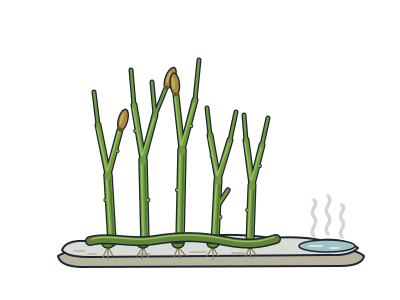
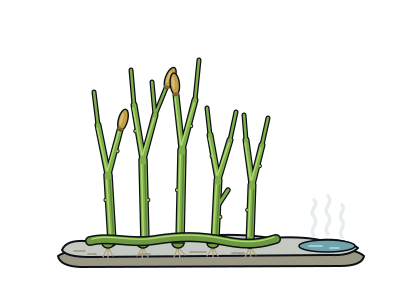
- AglaophytonA Rhynie chert plant with water tubes simpler than true veins, caught halfway to being vascular.