An extinct species
Aglaophyton †
Aglaophyton major
An early plant with water tubes that were not quite veins
Lived about 411–407 million years ago.
You and the aglaophyton meet in the Eukaryotes branch, shown at about 1.8 billion years ago (on 28 July, in a calendar from life's shared ancestor to today).
This little plant was caught halfway to being a vascular plant, the group that includes ferns, conifers and flowering plants. Its stems had tubes that carried water. However, their cells lacked the stiffening rings or bars found in the water pipes of true vascular plants. They were more like the water-carrying cells of mosses. Scientists generally treat it as an early relative of vascular plants that sits just outside that group.
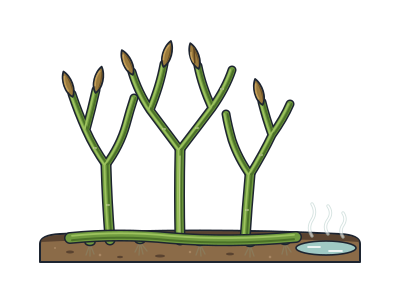
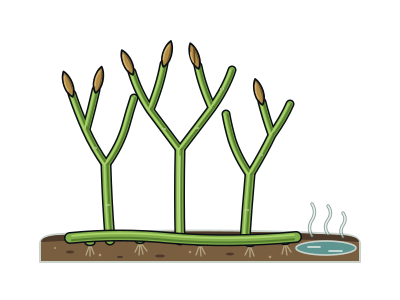
It lived about 411 to 407 million years ago, in a wetland full of hot springs in what is now Scotland. Water rich in silica flooded the plants and turned them to stone where they stood. The fossils are so well preserved that you can see single cells under a microscope.
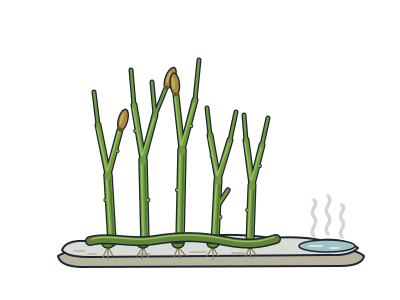
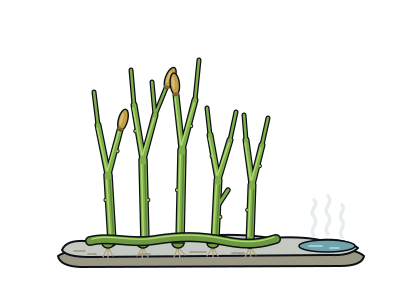
The fossils show a low plant with no roots and no leaves. Creeping stems lay along the ground, held down by tufts of fine hairs. Bare upright stems, about as long as a pencil, forked into Y shapes again and again. Many of them ended in pairs of long, spindle-shaped spore cases. Its colour was not preserved. Its stems were probably green, though, because they did the food-making work that leaves do in plants today.
A name change
When scientists first described this plant in 1920, they called it Rhynia major and counted it as a true vascular plant. In 1986 a closer look showed that it lacked true vascular tissue, so it got a new name.
Early fungus partner
It is one of the earliest plants known to have teamed up with a fungus. The fungus got in through tiny breathing pores in the stem and grew small branching structures inside it.
Swimming sperm
Its sperm cells were spiral-shaped and about 20 thousandths of a millimetre long. To reach the eggs on female plants they had to swim through water, probably rainwater.
Next to it on the tree
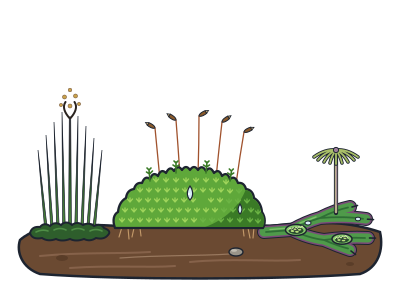
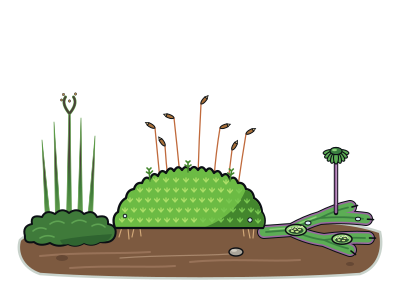
- Mosses, liverworts and hornwortsSmall plants without pipes that hug damp ground and keep the oldest land-plant habits.
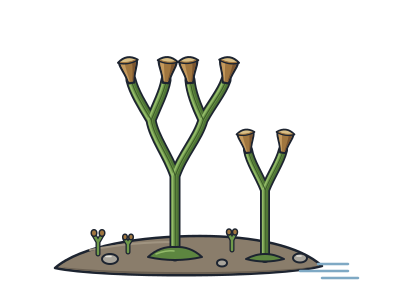
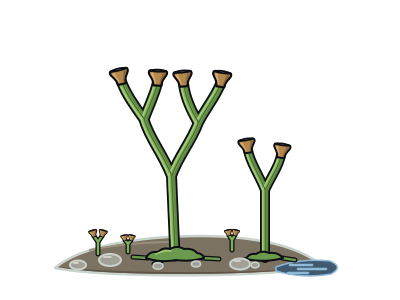
- CooksoniaA matchstick-sized forking stem with no leaves: one of the first upright plants on land.
- Rhynie chert plantPreserved cell by cell in hot-spring rock, giving a real snapshot of a 400-million-year-old landscape.
- Vascular plantsPlants with internal pipes, which let them stand tall and grow into the first forests.