A group of living things
Mosses, liverworts and hornworts
Bryophyta sensu lato
Small plants without proper pipes, which hug damp ground and keep the oldest land-plant habits
This branch is shown at about 480 million years ago; its age is a rough estimate.
You and mosses, liverworts and hornworts meet in the Eukaryotes branch, shown at about 1.8 billion years ago (on 28 July, in a calendar from life's shared ancestor to today).
These little plants are relatives of the tallest trees, yet they keep some very old habits. Trees and ferns have stiff tubes that carry water up from their roots. These plants have no proper pipes like that, although a few have simple water-carrying cells. They have no true roots either. Instead they soak up water and minerals straight through their surface, so most stay small and hug damp ground.
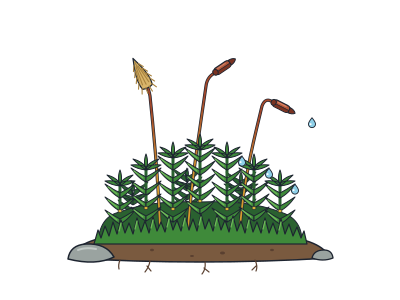
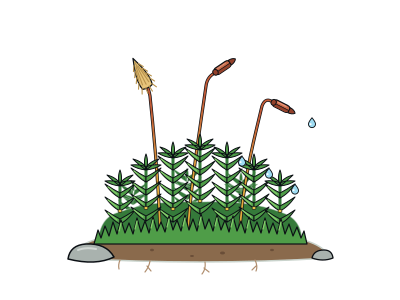
They also need water to make the next generation from eggs and sperm. Their sperm have tiny tails and must swim through a thin film of water to reach an egg. That is one reason they grow best in damp, shady places like forest floors, rocks and bogs.
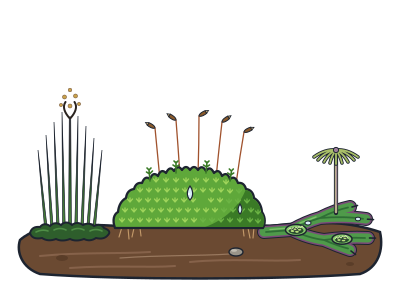
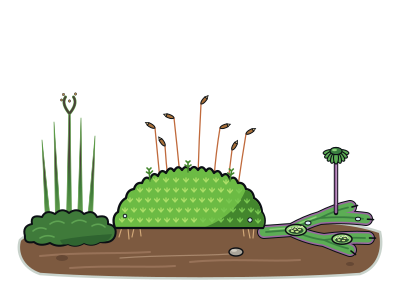
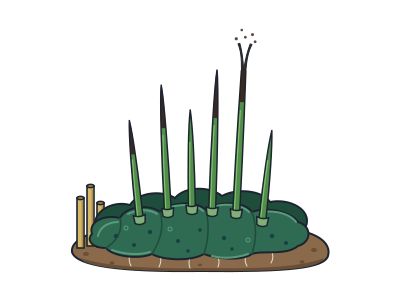
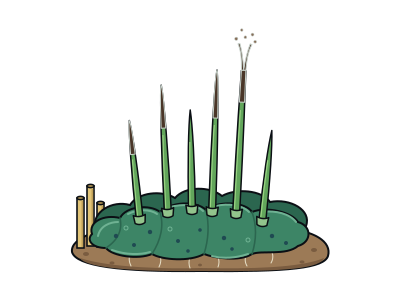
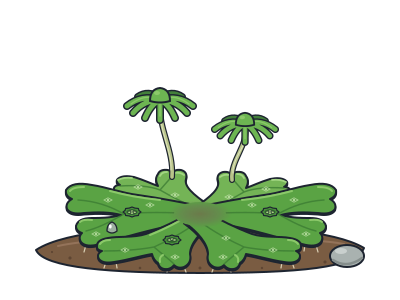
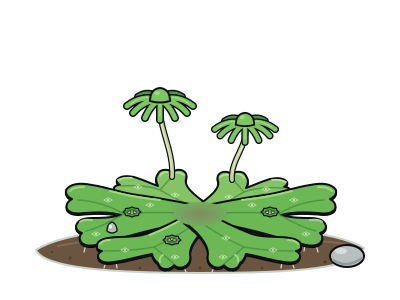
Their life cycle is the other way round from a fern or a tree. The green plant you notice makes the eggs and sperm. The part that makes spores grows on top of it and stays attached, getting at least some of its food from the green plant. You can tell the three groups apart by that part. Most mosses hold their spore capsules up on thin, wire-like stalks. Most liverworts use soft stalks that do not last long. Hornworts grow upright horns that split open.
Together there are about 20,000 species. They are not the ancestors of ferns and trees. Recent genetic studies suggest they form their own branch of land plants. That branch has been evolving for just as long as the one that led to ferns, trees and flowering plants.
Back from the ice
In 2014, scientists brought Antarctic moss back to life after it had been frozen for at least about 1,500 years. After a few weeks in an incubator it started growing again.
A touch of algae
Many hornworts have a tiny part inside their chloroplasts that gathers up carbon dioxide. No other land plants have one, but many algae do, so it is an algae-like feature. Hornworts also house helpful bacteria in small chambers inside the plant, and these bacteria turn nitrogen from the air into plant food.
Not really moss
Lots of things called 'moss' are not mosses at all. Spanish moss is a flowering plant in the pineapple family, reindeer moss is a lichen, and Irish moss is a seaweed.
Inside mosses, liverworts and hornworts
Next to it on the tree
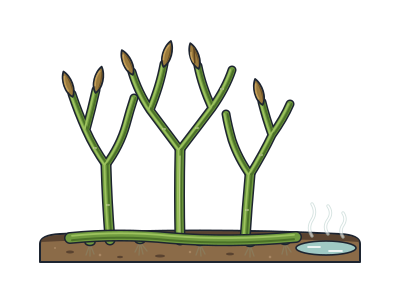
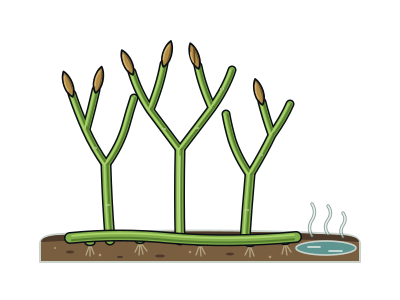
- CooksoniaA matchstick-sized forking stem with no leaves: one of the first upright plants on land.
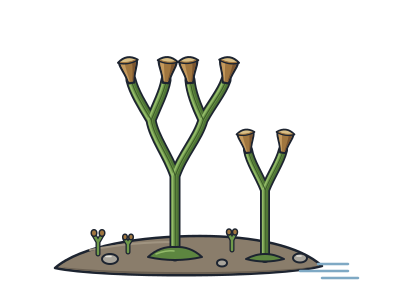
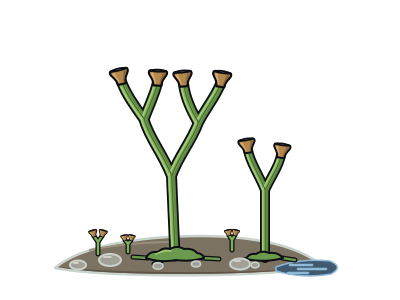
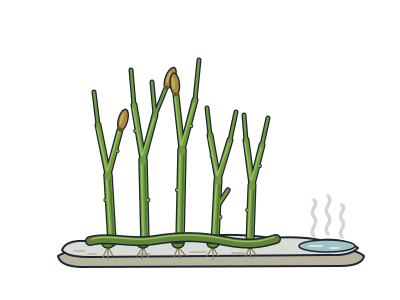
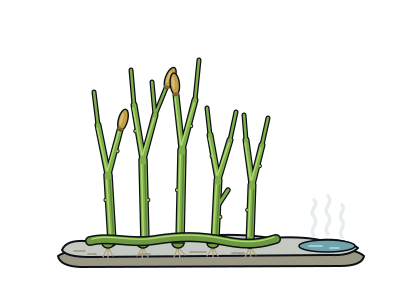
- Rhynie chert plantPreserved cell by cell in hot-spring rock, giving a real snapshot of a 400-million-year-old landscape.
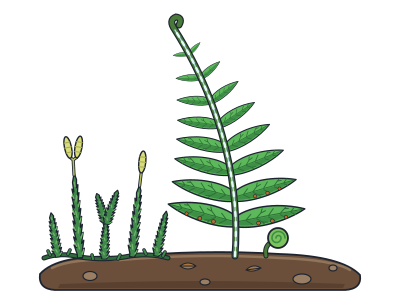
- Vascular plantsPlants with internal pipes, which let them stand tall and grow into the first forests.
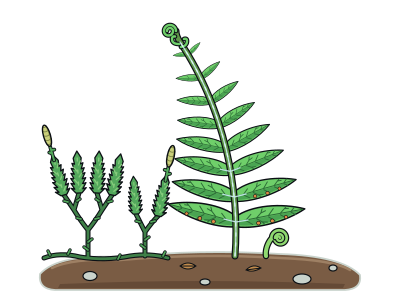
- AglaophytonA Rhynie chert plant with water tubes simpler than true veins, caught halfway to being vascular.