A group of living things
Liverworts
Marchantiophyta
Flat green ribbons and tiny leafy threads from the dawn of plant life on land
This branch is shown at about 430 million years ago; its age is a rough estimate.
You and liverworts meet in the Eukaryotes branch, shown at about 1.8 billion years ago (on 28 July, in a calendar from life's shared ancestor to today).
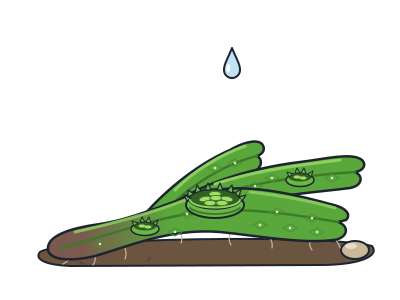
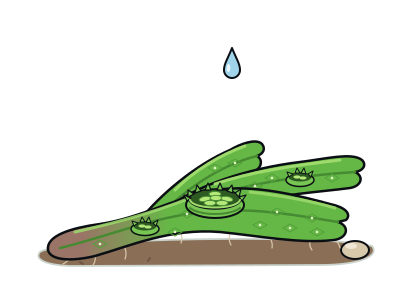
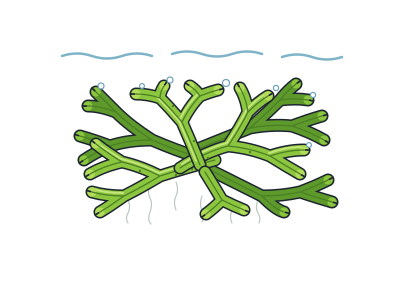
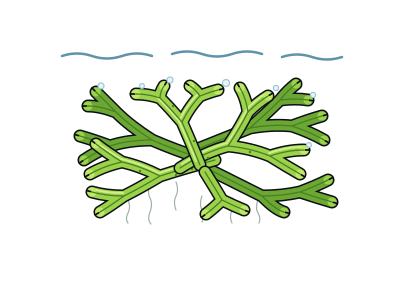
Liverworts are flat green ribbons or tiny leafy threads, and they are among the oldest kinds of land plant. Fossil spores about 470 million years old, found in Argentina, are thought to come from liverworts. That makes them some of the earliest signs of plants living on land, long before the dinosaurs.
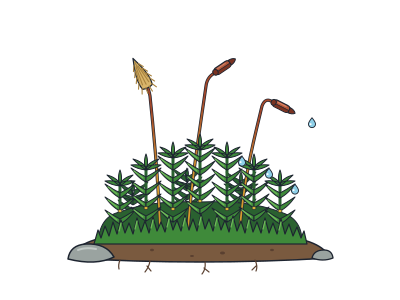
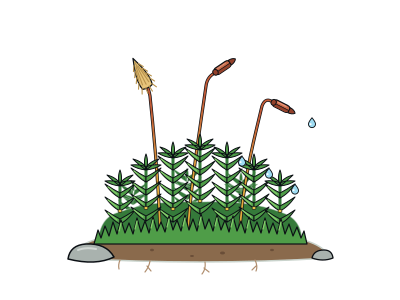
On the tree, they sit beside mosses and hornworts. Recent studies of their genes suggest that mosses are their very closest relatives. Leafy liverworts can look just like mosses. But their leaves have no central vein, and each of the fine hairs that hold them down is a single cell.
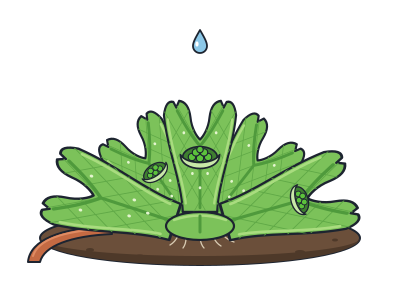
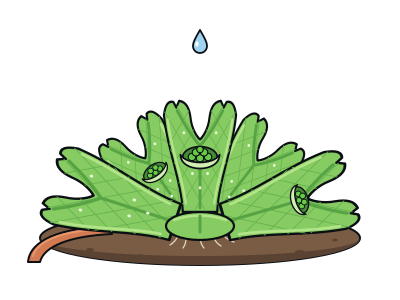
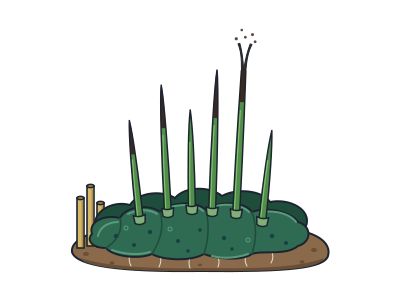
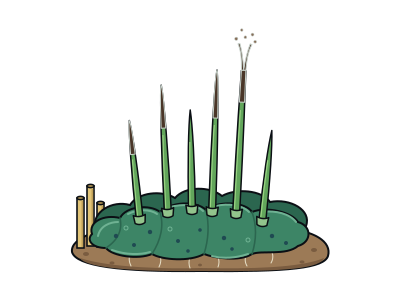
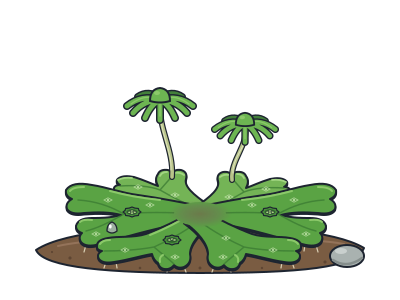
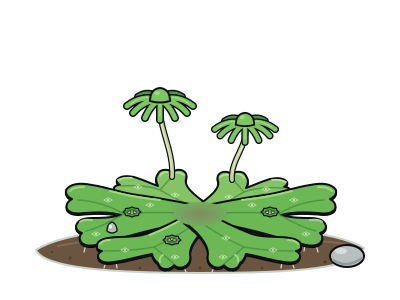
There are about 9,000 kinds, and most are the leafy sort. The best known is the common liverwort, which forms forked green ribbons up to about 10 cm long. Female plants raise tiny umbrellas with arms spread like a star. Male plants raise stalks topped with a flat disc. These are not mushrooms or flowers. They are the parts the plant uses to reproduce.
Liverworts have no true roots and no flowers. They like damp places and grow worldwide, except in very dry areas. Some even float in ponds.
A name from old medicine
The name comes from the Old English 'liferwyrt', meaning 'liver plant'. People once thought some liverworts looked like a liver and could cure liver disease. They cannot.
Splash-powered babies
Common liverwort has little cups on its surface filled with tiny green buds. When a raindrop lands in a cup, the buds splash out and grow into new plants that are copies of the parent.
A secret in their cells
About nine in ten kinds of liverwort have tiny oily packets in their cells called oil bodies. No other group of plants has them, and experts use them to tell species apart.