A group of living things
Mosses
Bryophyta
Tiny leafy plants that can dry to a crisp, then turn green again
This branch is shown at about 400 million years ago; its age is a rough estimate.
You and mosses meet in the Eukaryotes branch, shown at about 1.8 billion years ago (on 28 July, in a calendar from life's shared ancestor to today).
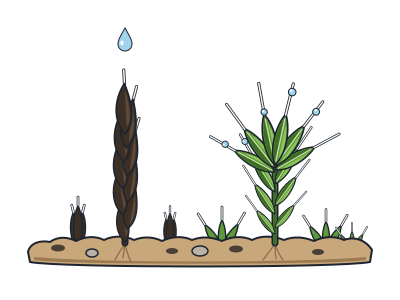
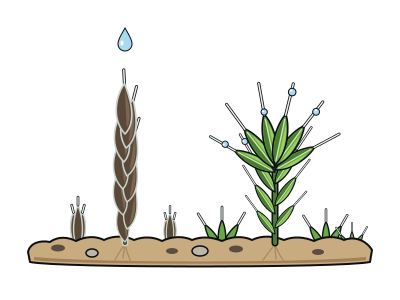
Run your hand over a soft green carpet on an old wall or log, and you are touching thousands of tiny plants. Each one is a little stem covered in leaves that are usually only one cell thick. Many mosses can dry out for months, looking brown and dead. Then, within a few hours of getting wet, they turn green and come back to life.
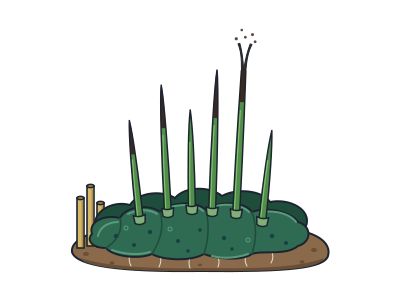
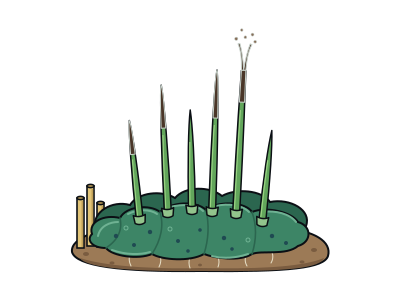
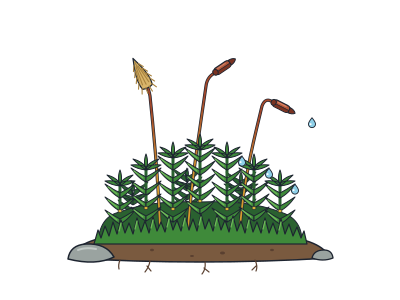
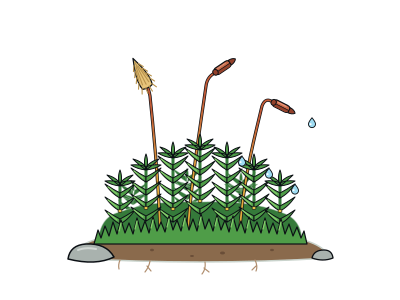
Mosses have no flowers, seeds or true roots. Thin threads called rhizoids hold them in place. They also lack the strong, true water pipes that ferns and trees have, so they soak up water mostly through their leaves and stems. Instead of seeds, they make spores in a small capsule, often held up on a thin stalk. Mosses live their lives the opposite way round to ferns and flowering plants. In a moss, the green leafy plant is the main, long-lived stage. The stalk and capsule grow out of it and only last a short time.
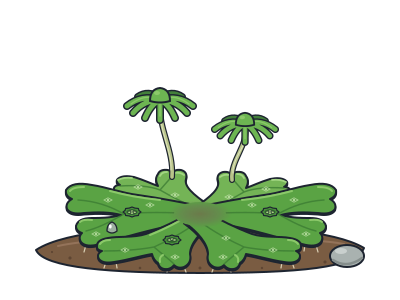
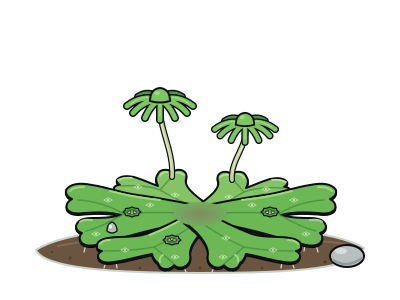
Their nearest relatives are liverworts and hornworts, other small land plants without true water pipes. Mosses are not leftovers from the past. They have kept evolving alongside other plants. Today there are about 12,000 kinds. Most are shorter than a pencil, and they grow everywhere from Antarctica to volcanic ground hotter than 50°C.
Back after 1,500 years
Scientists regrew moss from frozen ground on an island off the Antarctic Peninsula. It had first grown about 1,500 to 1,700 years ago. Before this, no plant was known to have survived more than about 20 years frozen.
A living sponge
Peat moss can hold more than 20 times its own weight in water. It soaks up rain and melting snow, then lets it go slowly.
A hairy hat
Haircap moss gets its name from the shaggy, hairy hood that covers each young spore capsule like a tiny woolly hat.
Inside mosses
- Common haircap mossNo roots, no flowers, no seeds, yet it holds water like a sponge.
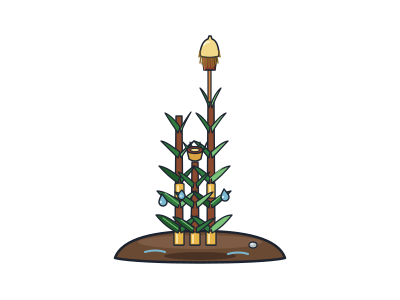
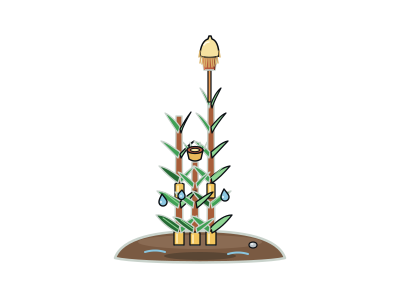
- Peat mossCan soak up many times its weight in water and builds peat bogs that lock away carbon.
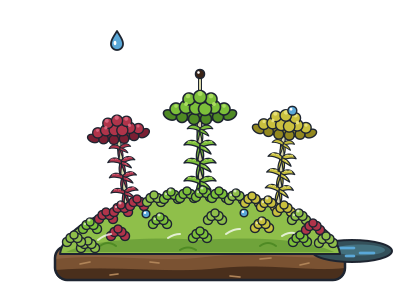
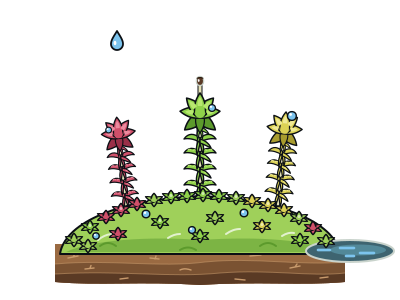
- Goblin's goldA cave moss whose lens-shaped cells catch dim light and shine it back gold-green.
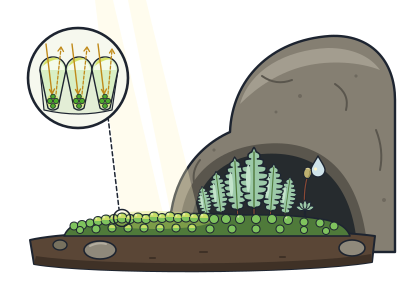
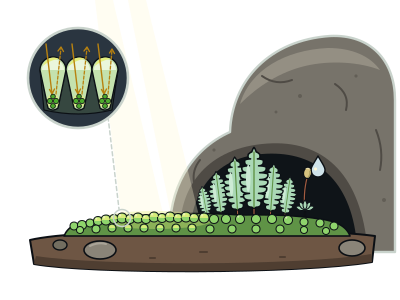
- Willow mossA moss that lives underwater, trailing in streams like dark green hair.
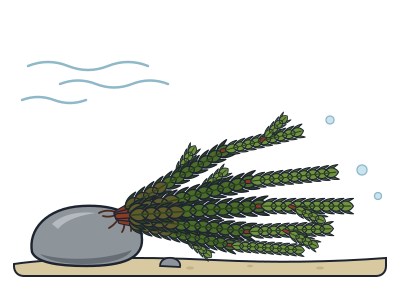
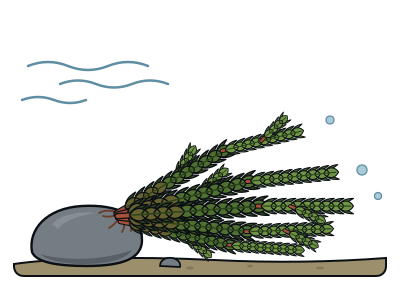
- Giant dawsoniaThe tallest self-supporting moss, standing up to half a metre in New Zealand forests.
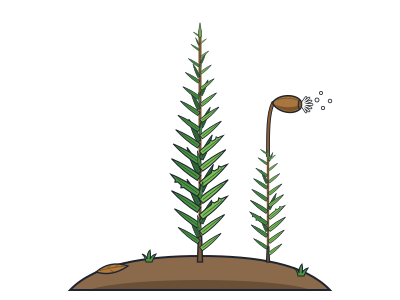
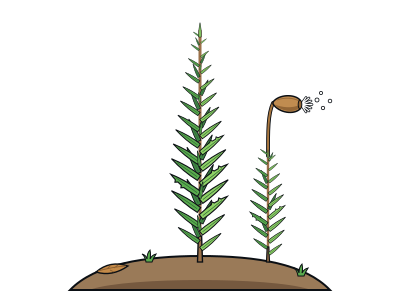
- TakakiaA tiny Himalayan moss from the oldest surviving branch of mosses, long mistaken for a liverwort.
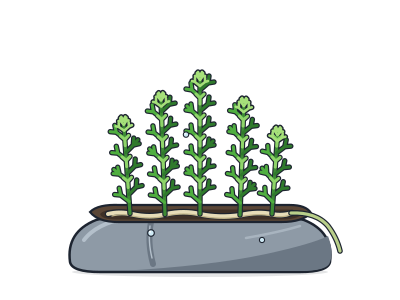
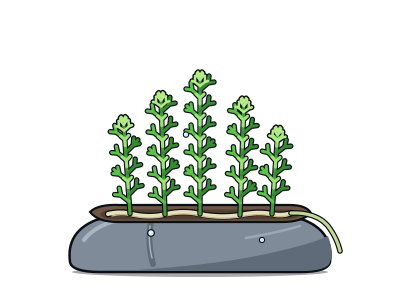
- Desert mossDries to a crisp and revives within seconds, and survived freezing and radiation like on Mars.