A species
Peat moss
Sphagnum
A soft moss that soaks up water and slowly turns land into carbon-storing bogs.
You and the peat moss meet in the Eukaryotes branch, shown at about 1.8 billion years ago (on 28 July, in a calendar from life's shared ancestor to today).
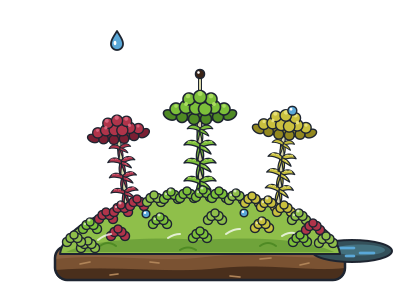
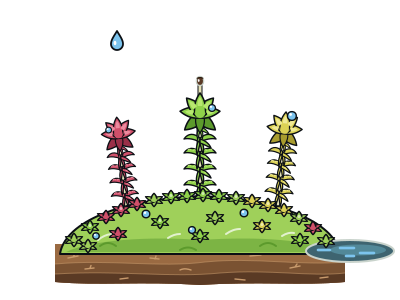
Peat moss is a super sponge. This soft, springy moss can soak up roughly 20 times its own dry weight in water. Its tiny leaves are packed with large, empty cells that work like little water tanks. Between them sit narrow green cells that make food from sunlight. It has no roots at all. Instead, it takes in water and nutrients straight through its leaves.
Peat moss also builds its own home. It slowly creeps into drier ground and keeps it soggy and sour, often roughly as acidic as orange juice. Over time, the land turns into a bog. In the airless, waterlogged ground, dead moss rots very slowly. Over thousands of years it piles up into peat that can be metres deep.
Peat locks away a huge amount of carbon, and peat moss builds much of the peat in cool, wet places. Peatlands cover only about 3% of the world's land. Yet they hold more than twice as much carbon as all the world's forests put together. When bogs are drained and damaged, they give off greenhouse gases instead.
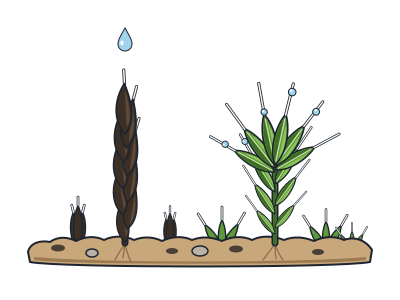
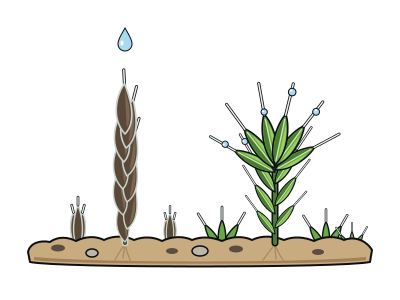
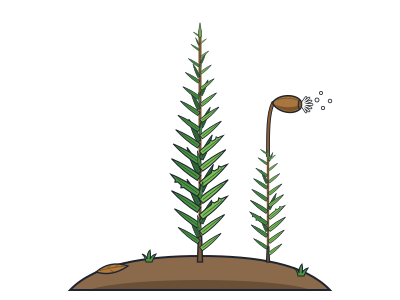
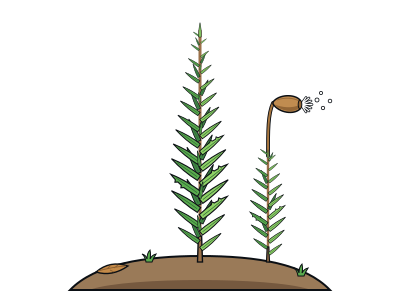
Peat moss is a true moss, but it is only a distant cousin of the common haircap moss shown beside it. Most scientists think its branch of the moss family split off very early. It isn't just one kind of plant. It is a group of about 380 species, in shades of green, yellow, orange, brown and red.
A tiny air gun
Its peppercorn-sized spore capsule dries in the sun and squeezes the air inside until it bursts. This fires the spores out at nearly 145 km/h inside a tiny mushroom-shaped cloud, which is a spinning ring of air. Peat moss was the first plant found to make its own spinning air rings.
Wartime bandages
In the First World War, peat moss was gathered to make wound dressings, because it soaks up liquid so well and helps keep germs away.
Nature's time capsule
Bogs made by peat moss can preserve things for thousands of years. One example is Lindow Man, an ancient human body found in a bog in England.
Next to it on the tree
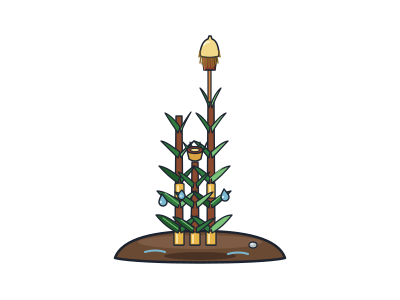
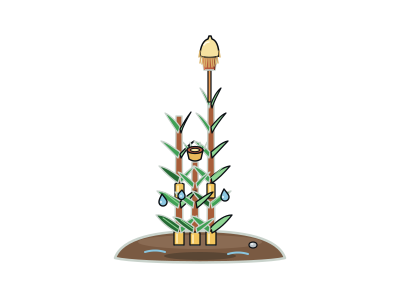
- Common haircap mossNo roots, no flowers, no seeds, yet it holds water like a sponge.
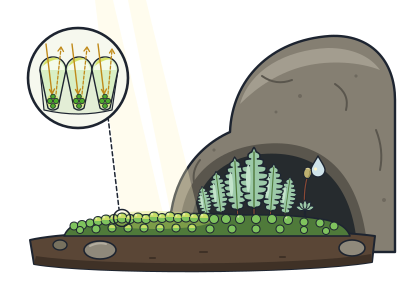
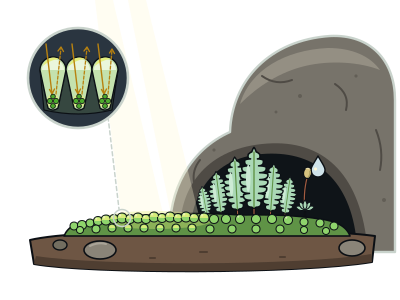
- Goblin's goldA cave moss whose lens-shaped cells catch dim light and shine it back gold-green.
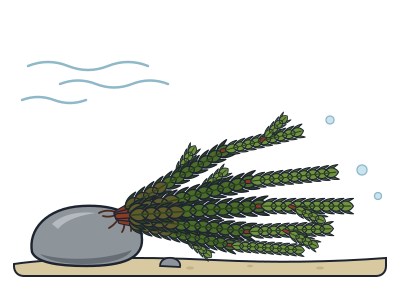
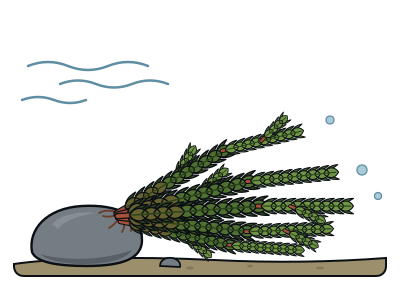
- Willow mossA moss that lives underwater, trailing in streams like dark green hair.
- Giant dawsoniaThe tallest self-supporting moss, standing up to half a metre in New Zealand forests.
- TakakiaA tiny Himalayan moss from the oldest surviving branch of mosses, long mistaken for a liverwort.
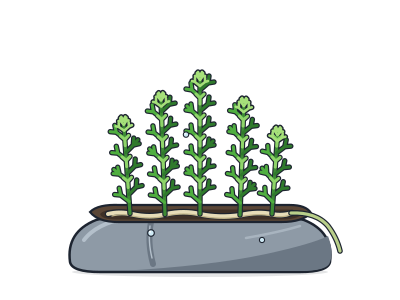
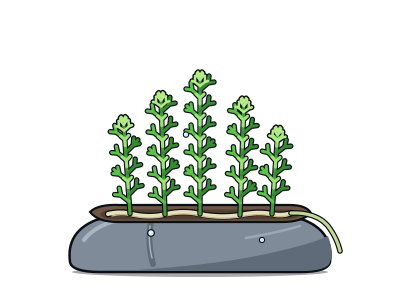
- Desert mossDries to a crisp and revives within seconds, and survived freezing and radiation like on Mars.