A species
Giant dawsonia
Dawsonia superba
The moss that stands up to half a metre tall
You and the giant dawsonia meet in the Eukaryotes branch, shown at about 1.8 billion years ago (on 28 July, in a calendar from life's shared ancestor to today).
Most mosses are only a centimetre or two tall. Giant dawsonia can stand up to about half a metre, about as long as a child's arm, without leaning on anything. That makes it the tallest self-supporting moss in the world. It grows on shady forest floors throughout New Zealand, and also in eastern Australia, New Guinea and Malaysia.
How does a moss grow so tall? One reason is that its stem has special cells that carry water and sugars up and down, a bit like the plumbing in ferns and flowering plants. But this plumbing has no wood to stiffen it. It evolved separately from the plumbing of those plants.
It belongs to the same family as the common haircap moss. Mosses in this family share features that are rare in other mosses. One is unusually well-developed tissue for carrying water and food. Another is rows of thin, upright plates on the leaves, which help with making food and taking in air.
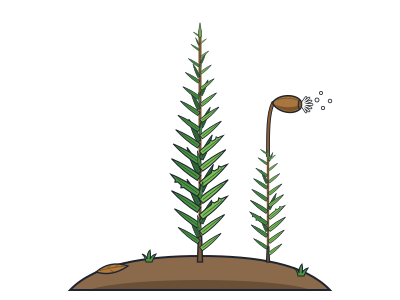
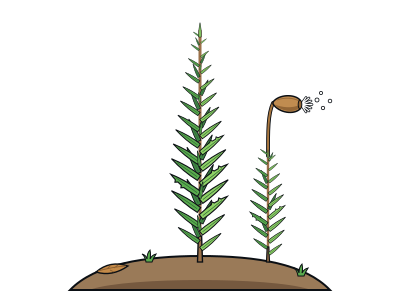
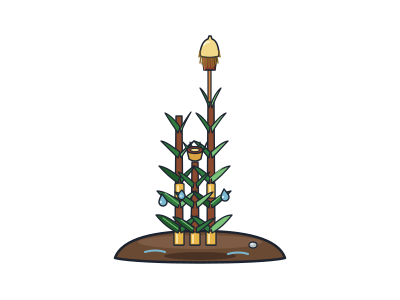
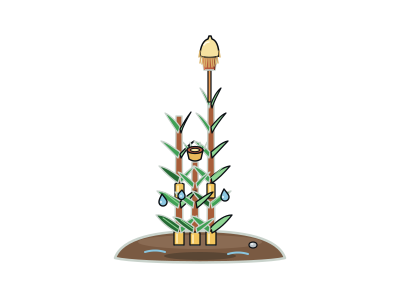
Up close, it looks like a tiny bottlebrush or a baby conifer, with spiky leaves spiralling around a single stem. Its Māori name is pāhau kākāpō, 'the beard of the kākāpō'. That is because its little spiky leaves look like the green, hair-like feathers around the bird's face.
Rain-powered splash cups
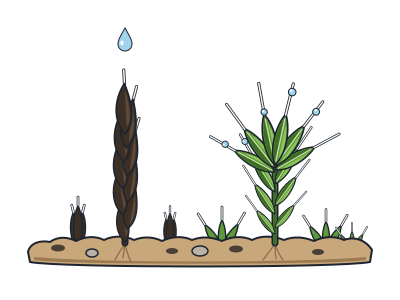
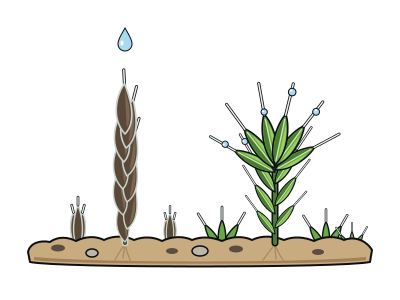
Male and female parts grow on separate plants. The tops of male plants are shaped like splash cups. When a raindrop hits one, it can throw sperm up to about 3 metres.
A tiny paintbrush
When its spore capsule is ripe, a tuft of fine white hairs sticks out of the opening. The tiny spores, each about 7 thousandths of a millimetre across, are slowly released through this brush.
Slow and steady
On average it grows about 2 centimetres a year. In good conditions it can grow up to about 5 centimetres a year.
Next to it on the tree
- Common haircap mossNo roots, no flowers, no seeds, yet it holds water like a sponge.
- Peat mossCan soak up many times its weight in water and builds peat bogs that lock away carbon.
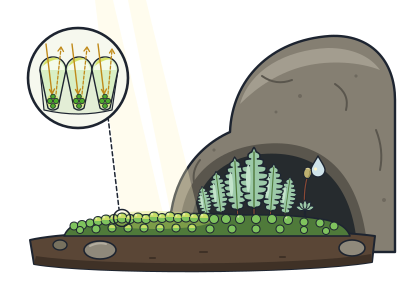
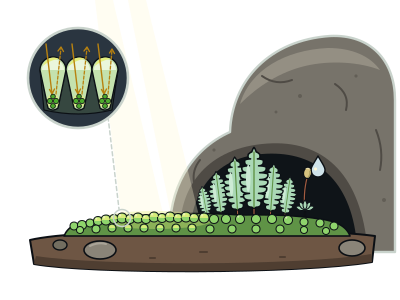
- Goblin's goldA cave moss whose lens-shaped cells catch dim light and shine it back gold-green.
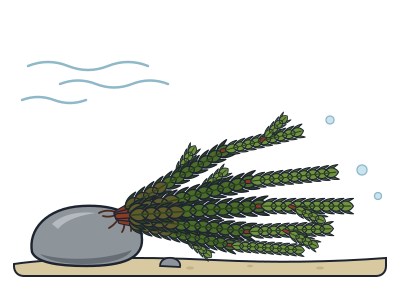
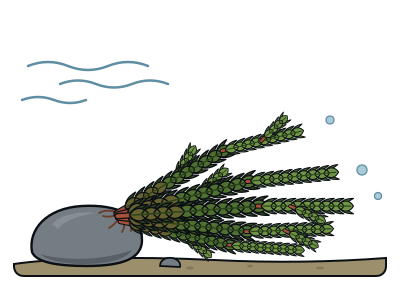
- Willow mossA moss that lives underwater, trailing in streams like dark green hair.
- TakakiaA tiny Himalayan moss from the oldest surviving branch of mosses, long mistaken for a liverwort.
- Desert mossDries to a crisp and revives within seconds, and survived freezing and radiation like on Mars.