A species
Goblin's gold
Schistostega pennata
A tiny cave moss with lens-shaped cells that catch dim light and shine it back gold-green.
You and the goblin's gold meet in the Eukaryotes branch, shown at about 1.8 billion years ago (on 28 July, in a calendar from life's shared ancestor to today).
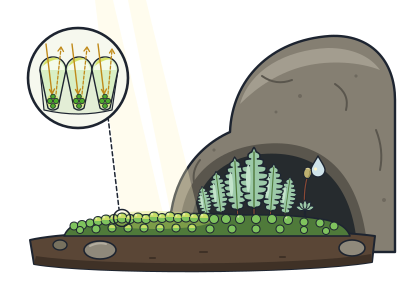
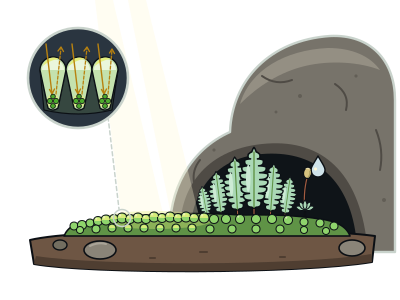
In the dim mouth of a cave, a patch of goblin's gold can shine like scattered gold dust. But the moss does not make any light of its own. Part of the moss is a thin mat of threads covered in round cells shaped like tiny lenses. Each lens gathers faint light and focuses it onto the green parts of the cell that make food from light.
The moss bounces the light it does not use back out, and this looks like a gold-green shine. You only see the glow when you look from the direction the light is coming from, with the light behind you. In total darkness, it does not shine at all.
This trick lets it live in shady places where almost no other plant competes with it: cave entrances, rock cracks, old stone ruins, the roots of fallen trees and even rabbit burrows. The lenses form in dim light. When the moss is grown in bright light, the mat does not make them.
Goblin's gold is a true moss, related to the haircap moss and peat moss shown beside it on the tree. Yet it is a loner, because it is the only species in its whole family. Its leafy shoots grow up to about 1.5 cm tall and look like tiny palm fronds or feathers.
Named for treasure
It is also called dragon's gold and luminous moss. A botanist in the 1800s described its gleam in caves as golden-green sparks. Carried out into daylight, it showed only as dull green dots on ordinary soil. This gave rise to tales of goblin treasure that turned to worthless earth.
A capsule without teeth
Most moss spore capsules have a ring of tiny teeth around the opening. This moss's small round capsule has none, and it turns pale yellow-brown when ripe.
Rare in Spain
A study found 73 groups of it in Spain and Portugal, mostly at shady cave and mine entrances in the rainy north and north-west. Spain lists it as Vulnerable, because of threats such as trampling, building work and a warmer, drier climate.
Next to it on the tree
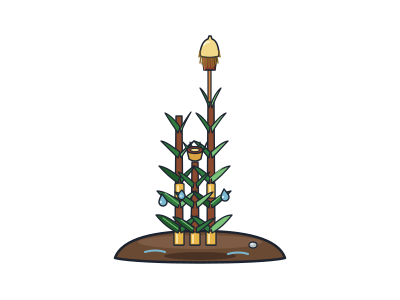
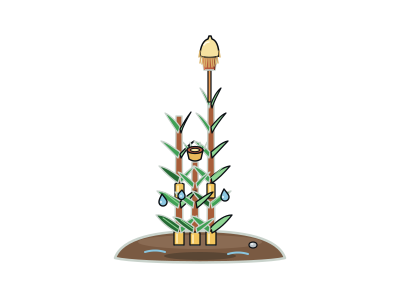
- Common haircap mossNo roots, no flowers, no seeds, yet it holds water like a sponge.
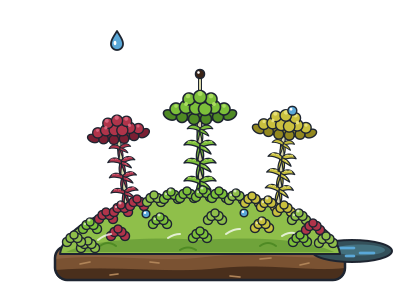
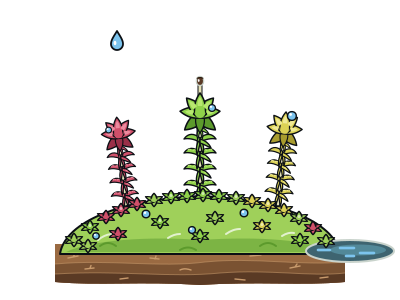
- Peat mossCan soak up many times its weight in water and builds peat bogs that lock away carbon.
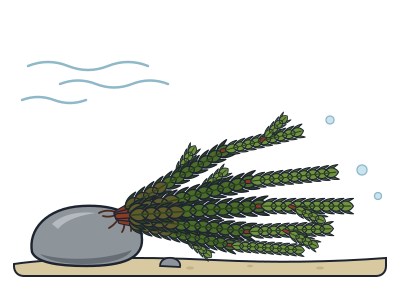
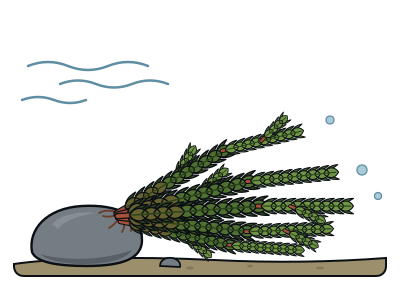
- Willow mossA moss that lives underwater, trailing in streams like dark green hair.
- Giant dawsoniaThe tallest self-supporting moss, standing up to half a metre in New Zealand forests.
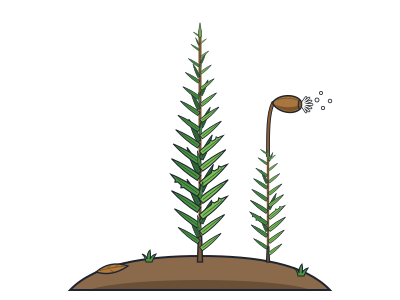
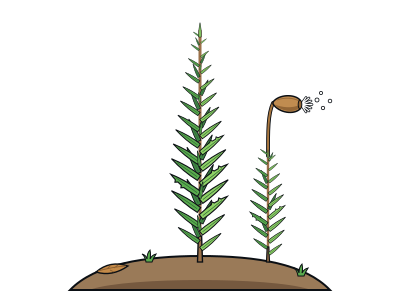
- TakakiaA tiny Himalayan moss from the oldest surviving branch of mosses, long mistaken for a liverwort.
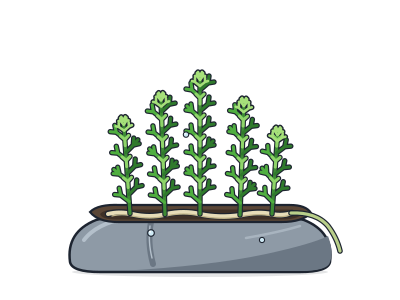
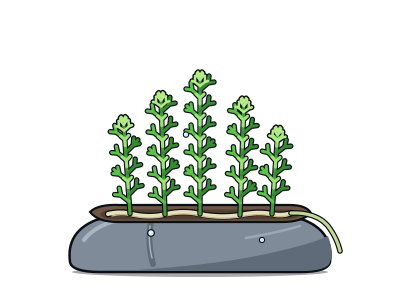
- Desert mossDries to a crisp and revives within seconds, and survived freezing and radiation like on Mars.