An extinct species
Rhynie chert plant †
Rhynia gwynne-vaughanii
A tiny leafless plant turned to stone, cell by cell, in an ancient hot spring
Lived about 411–407 million years ago.
You and the rhynie chert plant meet in the Eukaryotes branch, shown at about 1.8 billion years ago (on 28 July, in a calendar from life's shared ancestor to today).
About 411 to 407 million years ago, hot springs bubbled in a valley in what is now north-east Scotland. Silica-rich water flooded over the plants growing there and turned them to stone, often where they stood. The rock kept them so well that scientists can see single cells. It gives us a real snapshot of the oldest known preserved land ecosystem, complete with fungi, tiny animals and this little plant.
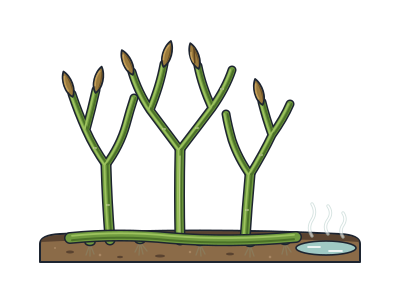
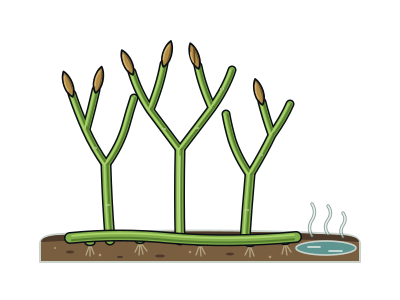
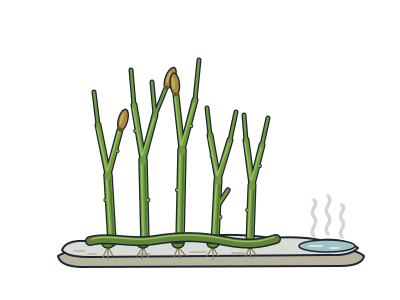
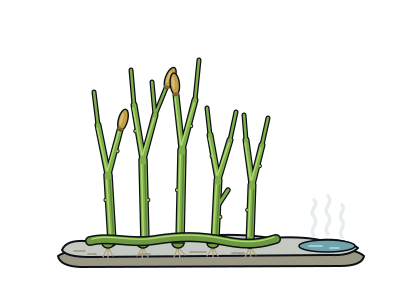
The fossils show it was small, about 20 centimetres tall, roughly the height of a pencil. Its smooth stems were up to about as thick as a matchstick, and they are thought to have been green. It had no leaves and no true roots. Instead, stems creeping along the ground grew tufts of fine hairs that took up water. The upright stems often forked into two, and some ended in a tiny cigar-shaped spore case.
Inside its stems were special water-carrying cells, an early, simple version of the plumbing that ferns, conifers and flowering plants use today. That makes it an early relative of vascular plants. It was probably an offshoot that branched off before the modern group, not a direct ancestor of ferns or trees.
It was one of the most common plants there, often growing in thick patches of nothing but itself on sandy ground and the crusty silica near the pools.
Mystery bumps
Its stems had small dome-shaped bumps that no other Rhynie plant had. Nobody knows for sure what they were for. Ideas include damage from tiny animals, wounds from fungi or worms, or a way of reproducing.
Still happening today
The same crusty silica that preserved it still forms around hot springs today, at Yellowstone National Park in the USA and near Rotorua in New Zealand.
A short forest
The tallest plant in this hot-spring landscape, a scaly plant called Asteroxylon, probably reached only about 40 centimetres, below knee height on most adults.
Next to it on the tree
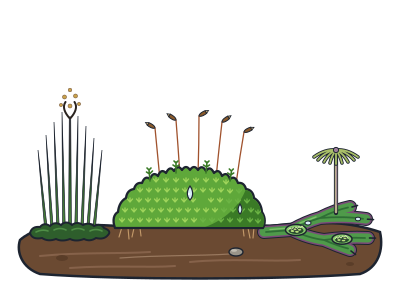
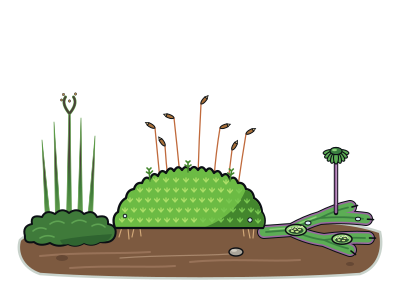
- Mosses, liverworts and hornwortsSmall plants without pipes that hug damp ground and keep the oldest land-plant habits.
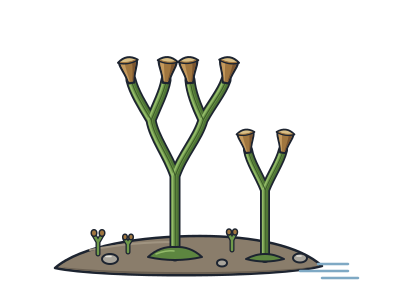
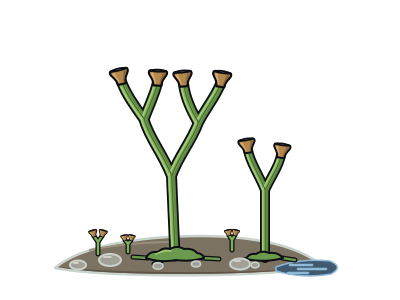
- CooksoniaA matchstick-sized forking stem with no leaves: one of the first upright plants on land.
- Vascular plantsPlants with internal pipes, which let them stand tall and grow into the first forests.
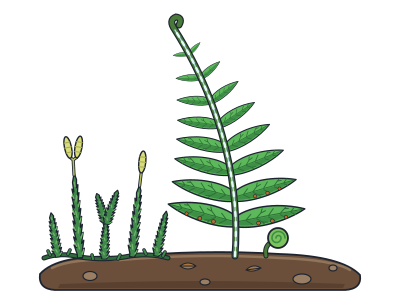
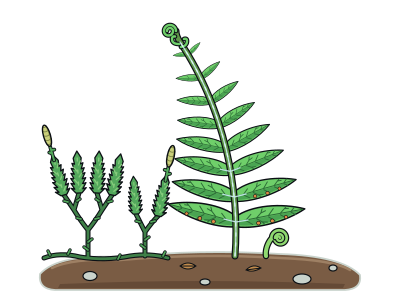
- AglaophytonA Rhynie chert plant with water tubes simpler than true veins, caught halfway to being vascular.