An extinct species
Lyginopteris †
Lyginopteris oldhamia
A fern look-alike that made seeds and leaned on its neighbours in the coal forests.
Lived about 350–300 million years ago.
You and the lyginopteris meet in the Eukaryotes branch, shown at about 1.8 billion years ago (on 28 July, in a calendar from life's shared ancestor to today).
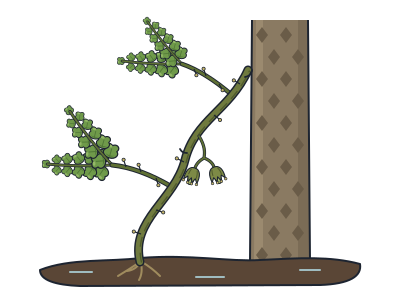
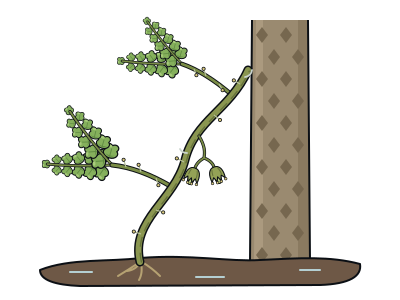
This plant looked like a fern, but it was not one. It was a slender plant that grew in the swampy coal forests of what is now Britain and the rest of Europe, about 320 to 305 million years ago. Its leafy fronds, stems and seed cups were dotted with tiny glands. Each one looked like a pin with a round head. Scientists think the glands may have given off a protective, resin-like substance.
Unlike true ferns, it made seeds. That puts it on the seed-plant side of the tree, the side that today includes conifers and flowering plants, rather than with ferns. Its seeds were about the size of a peppercorn. Each one sat in a small cup covered in glands.
Its stems were thin and weak. It probably leaned on taller plants and scrambled through them, and it likely grew no taller than about 2 metres.
Its fossils turn up in separate pieces, mostly inside coal balls. In 1903 and 1904, scientists noticed that the same unusual glands grew on fossil seeds, stems and leaves. That showed the pieces all came from one plant. It was the first proof that some fern-like plants of the Coal Age actually made seeds.
A clock in the stem
If you cut a fossil stem across, the outer bark shows bands of tough cells laid out like the Roman numerals on a clock face.
Stems that added wood
Most ferns cannot do this, but its stems had a thin growing layer that let them add wood and grow thicker over time.
A coal-field regular
It is the best-known seed fern of all, and it was plentiful in Europe's coal fields, especially in England.
Next to it on the tree
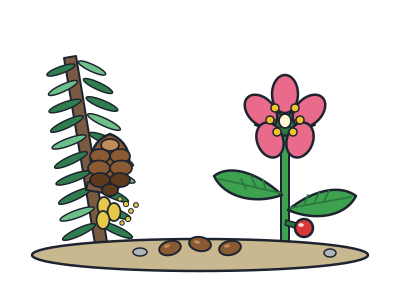
- Seed plantsThe seed: a baby plant packed with lunch, able to wait for the right moment.
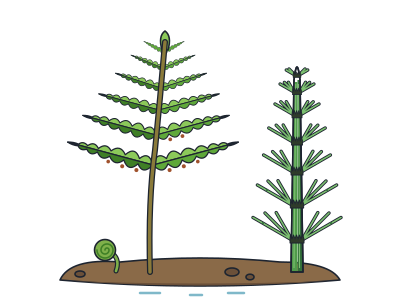
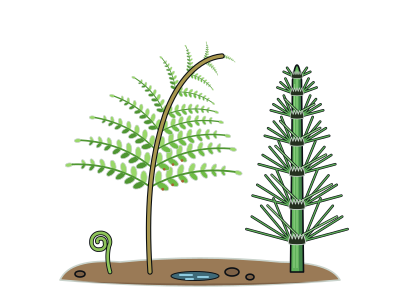
- Ferns and horsetailsLeafy plants that spread by spores, including horsetails, which turn out to be ferns.
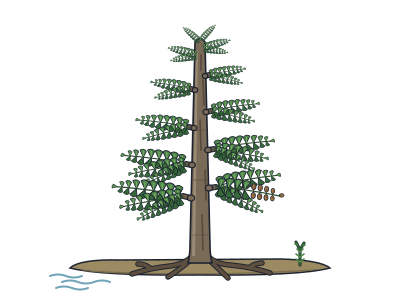
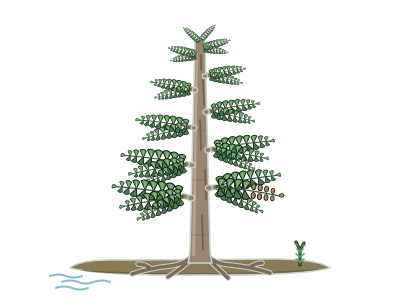
- ArchaeopterisThe first modern-looking tree: wooden trunk and leafy branches, but it still spread by spores.
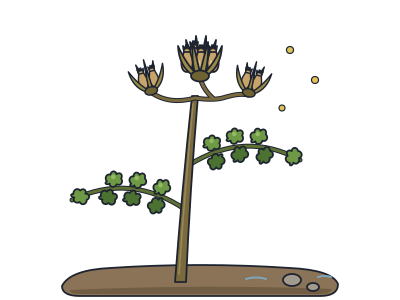
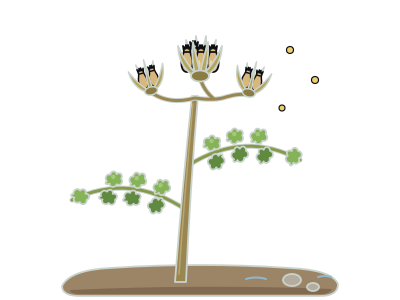
- ElkinsiaOne of the very first seeds, each wrapped in a little cup of fingers.
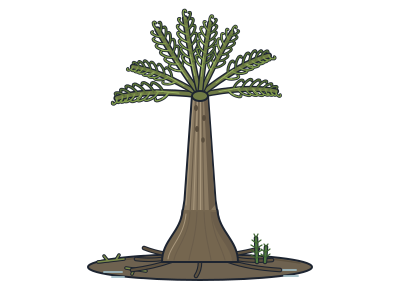
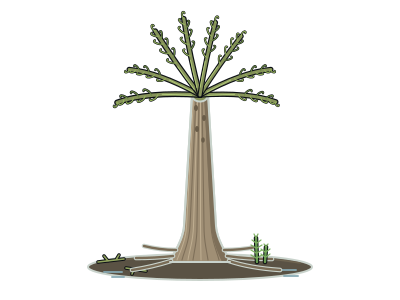
- Seed fernLooked like a tree fern but made seeds the size of hen's eggs.
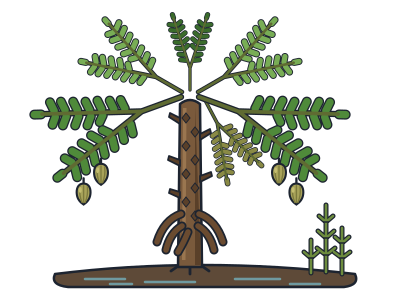
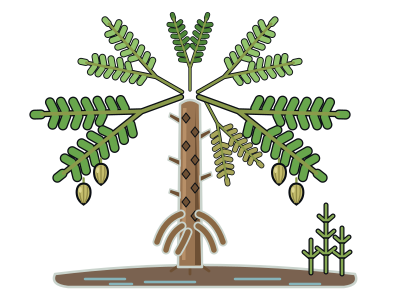
- WattiezaA palm-shaped tree from the world's oldest known forest, at Gilboa in New York.