An extinct species
Wattieza †
Wattieza
A palm-shaped tree from one of Earth's first forests
Lived about 385–383 million years ago.
You and the wattieza meet in the Eukaryotes branch, shown at about 1.8 billion years ago (on 28 July, in a calendar from life's shared ancestor to today).
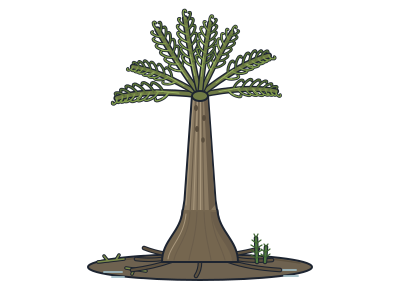
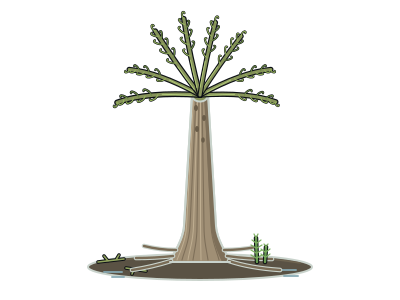
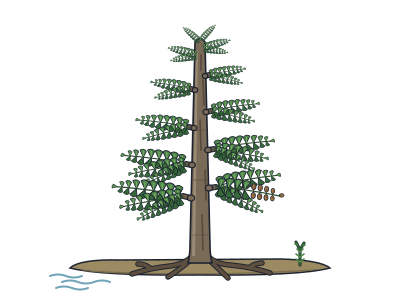
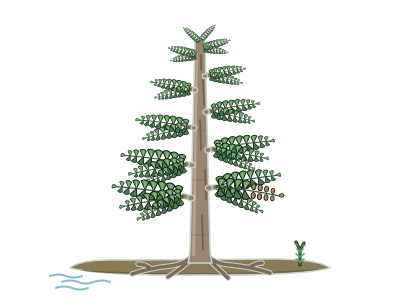
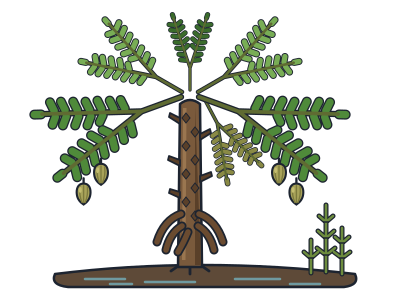
About 385 to 383 million years ago, long before the dinosaurs, a tree shaped like a palm grew in what is now New York. Scientists think the area was a warm, tropical wetland. It was part of the Gilboa forest, one of the oldest forests ever found. It looked a lot like a modern tree fern, but it was not a close relative. Its wider group is thought to be related to today's ferns and horsetails.
Stumps from this forest were first found in the 1800s. For well over 100 years after that, nobody knew what the whole tree looked like. Then, in 2004, scientists found a fossil crown still joined to the top of its trunk. The next year they found a long piece of trunk from the same kind of tree. Together, the fossils finally showed the whole tree.
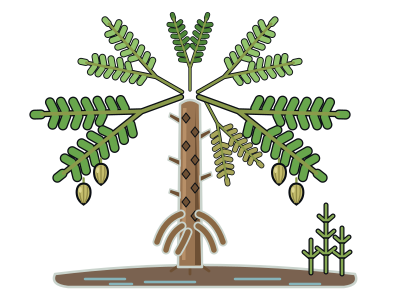
The fossils show one ridged trunk rising from a wide base about 75 centimetres across. Scientists estimate the tree stood about 8 metres tall, as high as a two- or three-storey building. Its crown had no true leaves. Instead, branches about 1 metre long split again and again, until the end of each one looked like a bottle brush.
Scientists think these thin branchlets made food from sunlight. They probably also carried spores, the tiny specks the tree used to reproduce. The tree's colour was not preserved, so green branches and a brownish trunk are only a sensible guess.
A misleading name
In 1924, Winifred Goldring named the stumps Eospermatopteris, which means 'ancient seed fern'. She was the first woman to be a state palaeontologist in the USA. The name doesn't fit, because the tree had no seeds.
A forest floor uncovered
In 2010, engineers repairing a nearby dam dug out an old quarry and uncovered part of the ancient forest floor. Researchers could see where the trees had once stood, with their roots spreading out in every direction.
Named in Belgium first
The name Wattieza first came from Belgium. In 1968, a scientist named it from fossil branches found near a village called Sart-Dame-Avelines, almost 40 years before the New York crown was described.
Next to it on the tree
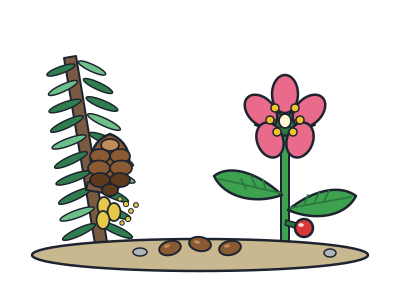
- Seed plantsThe seed: a baby plant packed with lunch, able to wait for the right moment.
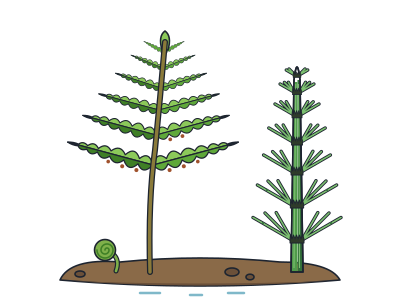
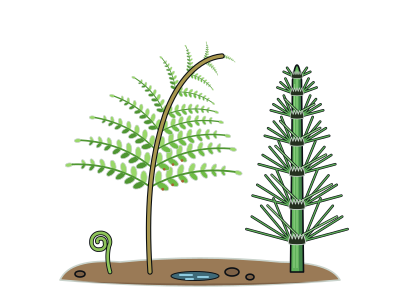
- Ferns and horsetailsLeafy plants that spread by spores, including horsetails, which turn out to be ferns.
- ArchaeopterisThe first modern-looking tree: wooden trunk and leafy branches, but it still spread by spores.
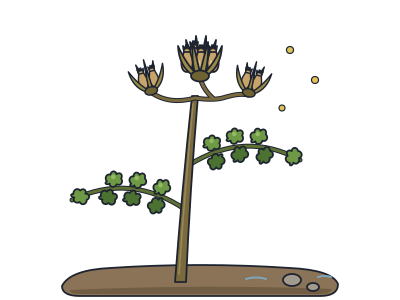
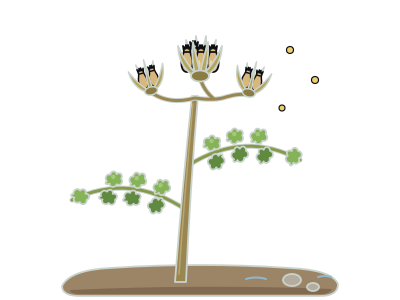
- ElkinsiaOne of the very first seeds, each wrapped in a little cup of fingers.
- Seed fernLooked like a tree fern but made seeds the size of hen's eggs.
- LyginopterisA scrambling seed fern of the coal forests, with sticky glands on its fronds.