An extinct species
Seed fern †
Medullosa
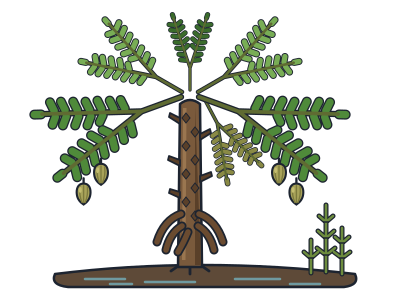
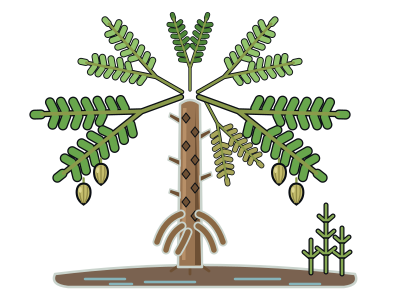
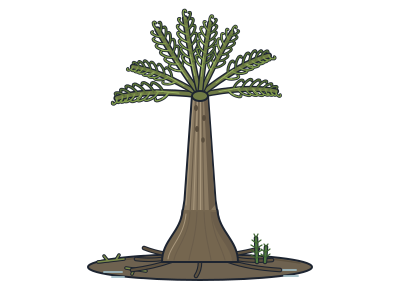
It looked like a tree fern, but some of its seeds were as big as a hen's egg.
Lived about 330–270 million years ago.
You and the seed fern meet in the Eukaryotes branch, shown at about 1.8 billion years ago (on 28 July, in a calendar from life's shared ancestor to today).
Picture a plant that looked like a tree fern, with a crown of huge feathery leaves on a single trunk. But it did not make spores like a fern. It made seeds, and the biggest were about 10 centimetres long, larger than a hen's egg. Most were smaller, closer to the size of a pecan or a plum. Despite its name, this seed fern was not a true fern. It was a seed plant, like pines and flowering plants. Most experts think it was an extinct side branch, though, not their ancestor.
This plant and its close kin lived about 330 to 270 million years ago, long before the first dinosaurs. They mostly grew in hot, wet swamp forests near the equator, on land that is now North America and Europe. They seem to have liked muddy, clay-rich ground in those forests. These were the swamps that later turned into coal.
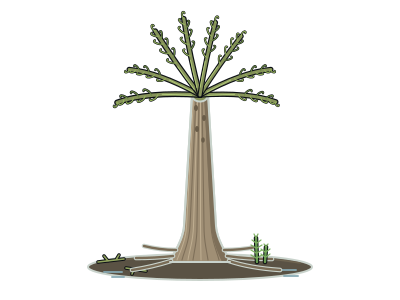
Fossils show a straight trunk with no branches, made shaggy by old leaf bases. At the top sat a crown of giant fronds, each about 2 to 3.5 metres long, which is longer than a tall adult. The fronds usually split into two near the base. Most of these plants were small to medium trees. The largest may have reached about 10 metres, roughly as tall as a three-storey building. Fossil seeds show a fleshy outer layer around a hard shell. Fossils do not keep colour, only shape and cell structure, but green is a fair guess, as for nearly all plants.
Buried upside down
In Chemnitz, Germany, volcanic ash buried a whole crown of one of these seed ferns about 291 million years ago. It was found upside down with ten fronds still attached.
Almost pollen
These seed ferns did not make true pollen. They made 'pre-pollen', which sits partway between fern spores and real pollen. It formed in sacs that were grouped into clusters shaped like cups, bells or cigars.
Built-in plumbing
The stem of the Chemnitz plant held up to 87 water-carrying strands. Together they could move lots of water up to its big, leafy crown.
Next to it on the tree
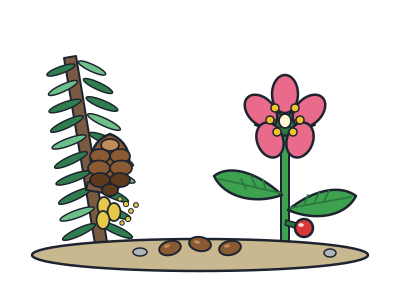
- Seed plantsThe seed: a baby plant packed with lunch, able to wait for the right moment.
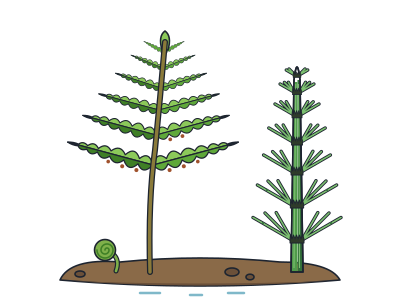
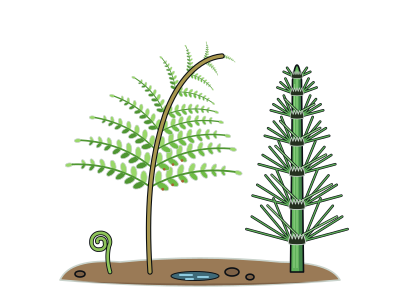
- Ferns and horsetailsLeafy plants that spread by spores, including horsetails, which turn out to be ferns.
- ArchaeopterisThe first modern-looking tree: wooden trunk and leafy branches, but it still spread by spores.
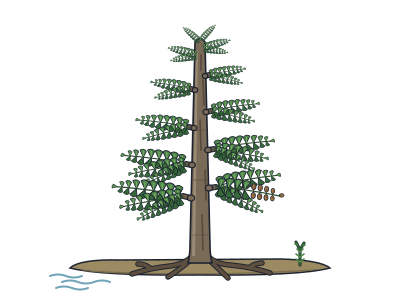
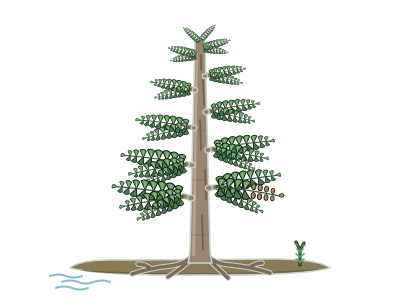
- ElkinsiaOne of the very first seeds, each wrapped in a little cup of fingers.
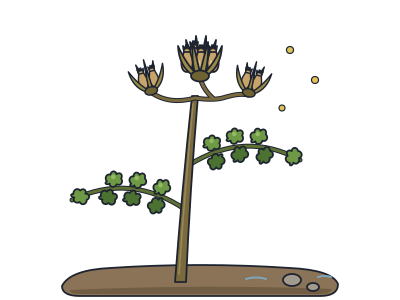
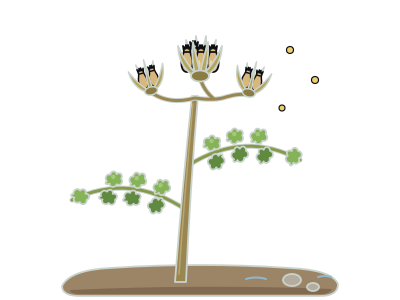
- WattiezaA palm-shaped tree from the world's oldest known forest, at Gilboa in New York.
- LyginopterisA scrambling seed fern of the coal forests, with sticky glands on its fronds.