A group of living things
Ferns and horsetails
Polypodiopsida
Leafy plants that spread by spores, and the scratchy horsetail turns out to be one of them.
This branch is shown at about 350 million years ago; its age is a rough estimate.
You and ferns and horsetails meet in the Eukaryotes branch, shown at about 1.8 billion years ago (on 28 July, in a calendar from life's shared ancestor to today).
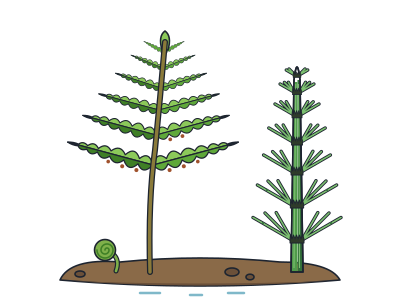
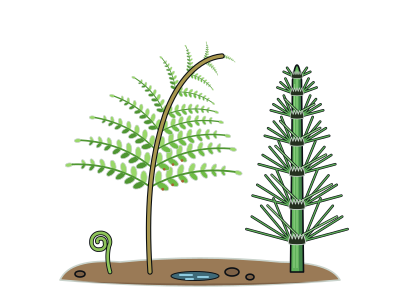
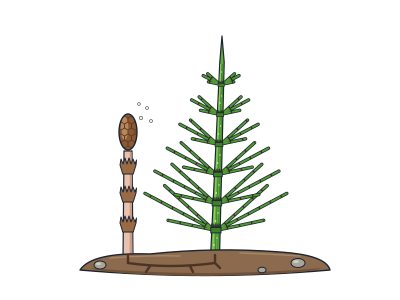
A horsetail looks nothing like a fern. It has a hollow, jointed green stem, like a small stack of bamboo tubes, and no broad leaves at all. Yet horsetails are ferns. In 2001, a big study using genes and body features showed that horsetails, the odd whisk fern and all true ferns form one natural group. Before that, many scientists thought horsetails were a separate, more ancient kind of plant, apart from the ferns.
The same study found another surprise. Ferns and horsetails together are the closest living relatives of seed plants, such as conifers and flowering plants. They are closer to them than clubmosses are.
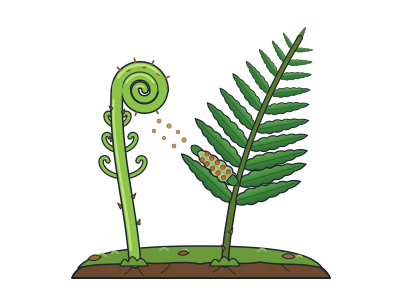
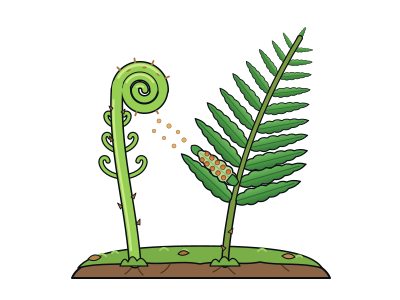
None of these plants has flowers or seeds. They spread by spores, often made in little brown dots under the fronds. A spore grows into a tiny plant, usually only about 3 to 10 millimetres across. This tiny plant makes eggs and sperm. When an egg is fertilised, it grows into the big leafy fern we usually see.
There are more than 10,500 kinds. They range from the little floating mosquito fern to soft tree ferns, which are usually about 5 metres tall. Between a quarter and a third of all ferns grow on other plants, such as tropical trees, rather than in soil.
Unrolling leaves
Young fern leaves usually come up tightly coiled, as 'fiddleheads', then slowly unroll into fronds as they grow.
Nature's scrubbing brush
Horsetail stems contain silica, which makes them gritty. People once used them to scour pots.
Fertiliser for rice
The mosquito fern can take nitrogen from the air with help from tiny partner bacteria, and that nitrogen helps plants grow. Farmers in south-east Asia use it as a natural fertiliser in their rice paddies.
Inside ferns and horsetails
- Field horsetailA jointed, gritty stem filled with silica; people once scrubbed pots with it.
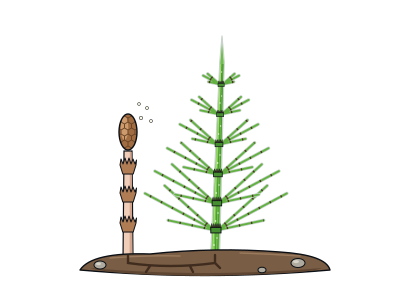
- Giant horsetailA horsetail the height of a house that grew in the coal swamps.
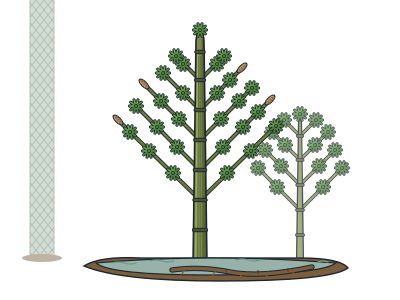
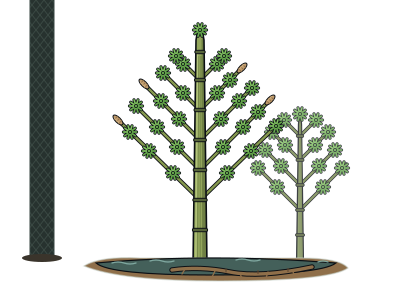
- PsaroniusA coal-age tree fern whose trunk was wrapped in a thick coat of roots.
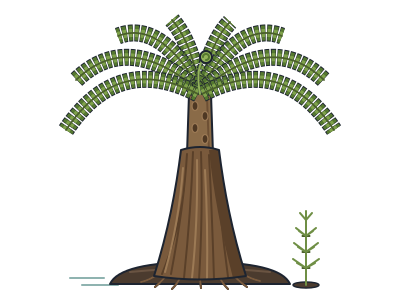
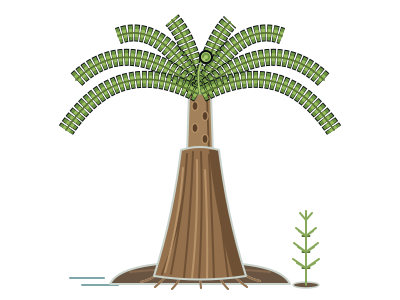
- Whisk ferns and adder's-tonguesOdd ferns with no normal fronds, holding the plant records for genome size and chromosome count.
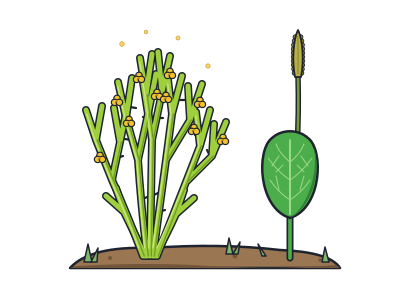
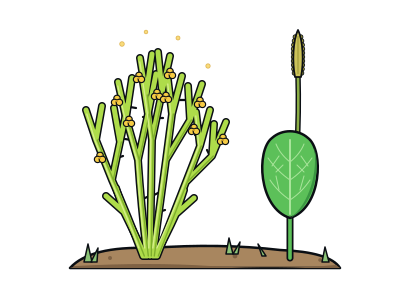
- King fernIts fronds reach seven metres, among the longest of any fern, from a lineage as old as the coal forests.
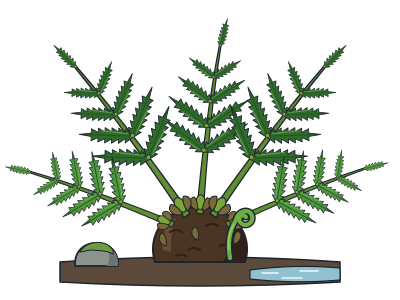
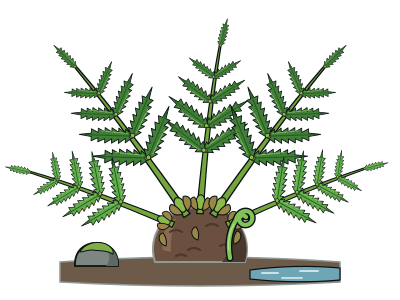
- Typical fernsNine out of ten fern species belong here, firing spores out with a tiny spring.
Next to it on the tree
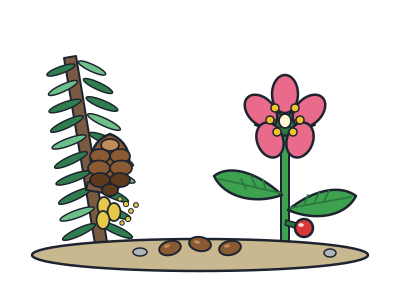
- Seed plantsThe seed: a baby plant packed with lunch, able to wait for the right moment.
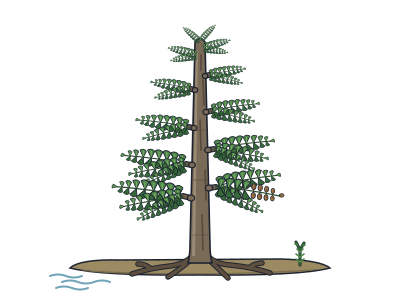
- ArchaeopterisThe first modern-looking tree: wooden trunk and leafy branches, but it still spread by spores.
- ElkinsiaOne of the very first seeds, each wrapped in a little cup of fingers.
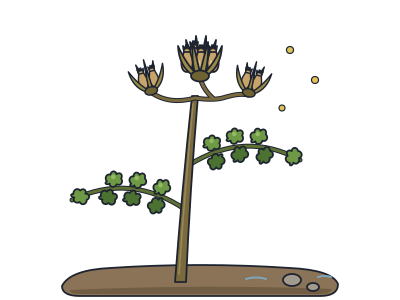
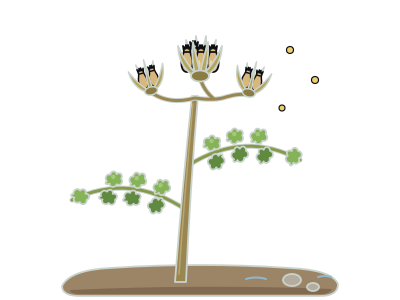
- Seed fernLooked like a tree fern but made seeds the size of hen's eggs.
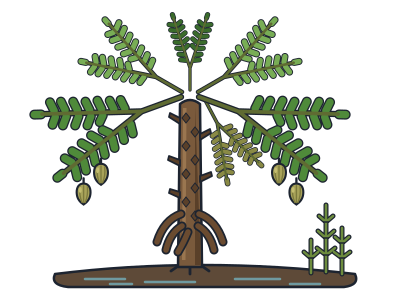
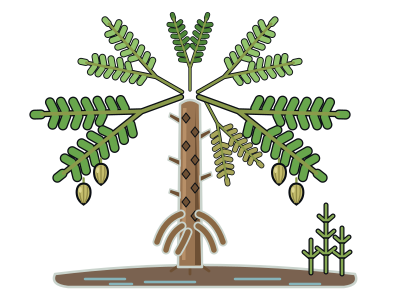
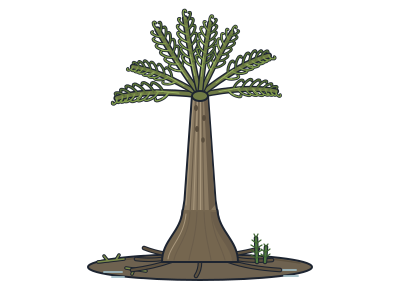
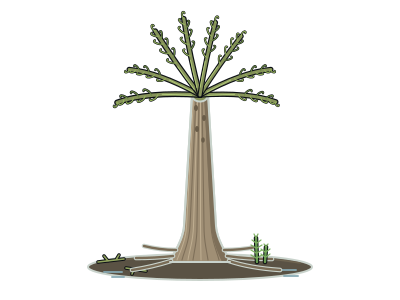
- WattiezaA palm-shaped tree from the world's oldest known forest, at Gilboa in New York.
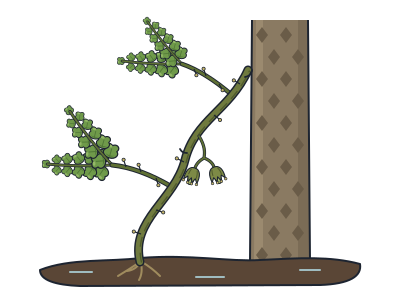
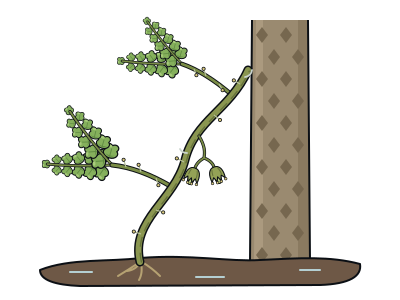
- LyginopterisA scrambling seed fern of the coal forests, with sticky glands on its fronds.