A group of living things
Whisk ferns and adder's-tongues
Ophioglossidae
Strange little ferns with no normal fronds, but record-breaking DNA
This branch is shown at about 275 million years ago; its age is a rough estimate.
You and whisk ferns and adder's-tongues meet in the Eukaryotes branch, shown at about 1.8 billion years ago (on 28 July, in a calendar from life's shared ancestor to today).
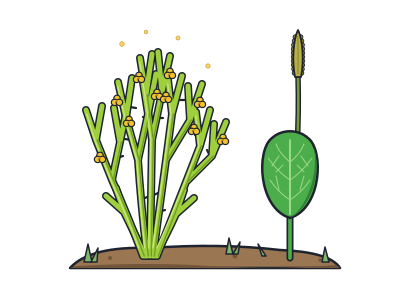
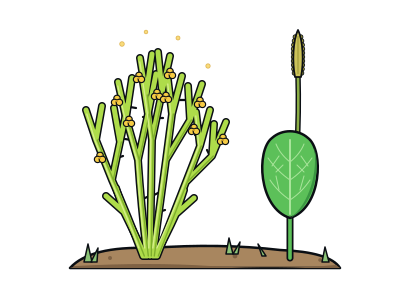
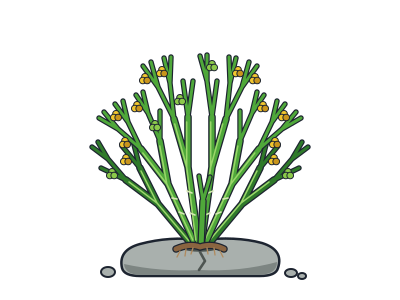
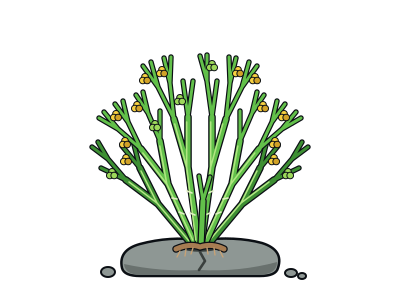
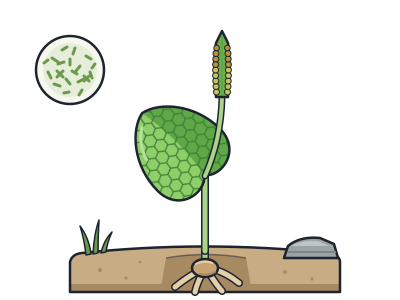
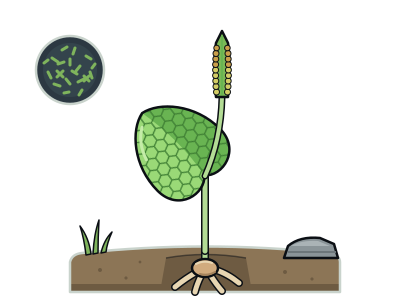
These are ferns that hardly look like ferns. Whisk ferns are bare green stems that fork again and again, with no roots and no true leaves. Adder's-tongues usually grow just one fleshy leaf at a time. Each leaf is split into a flat green blade and a thin spike that carries spores. The two kinds look so different that only DNA studies showed they are each other's closest relatives.
This small group also holds two big records. A fork fern from New Caledonia, only about 15 cm long, has the largest genome ever measured. It has about 160 billion DNA letters, more than 50 times as many as a human. The netted adder's-tongue has the most chromosomes recorded for any plant, more than 1,200 in each cell. You have 46.
Both kinds also share a hidden stage in their life cycle. It is tiny and usually lives underground. It cannot make food from sunlight, so it gets its food from fungi. Whisk ferns were once thought to be leftovers from the very first plants with veins. Scientists now think they are ferns that lost parts their ancestors had.
Taller than a famous tower
If you unravelled the DNA from one cell of the record fork fern, it would stretch more than 100 metres. That is taller than the 96-metre tower in London that holds the bell Big Ben. The DNA in one human cell would stretch only about 2 metres.
A garden favourite in Japan
Japanese gardeners prized the whisk fern as an ornamental called matsubaran, meaning 'pine-needle orchid'. Over 100 garden varieties were given fancy names.
Fingernail-sized fern
One adder's-tongue from India is only about 1 to 1.2 cm tall. It has been described as the smallest fern-like plant that grows on land.
Inside whisk ferns and adder's-tongues
- Whisk fernA leafless green broom of forking stems, once thought to be a living Rhynie plant.
- Adder's-tongue fernOne leaf and one spore spike, yet its cells hold about 1,440 chromosomes, the most of any plant.
- Fork fernA small New Caledonian fern with the largest genome ever measured, 50 times a human's.
Next to it on the tree
- Field horsetailA jointed, gritty stem filled with silica; people once scrubbed pots with it.
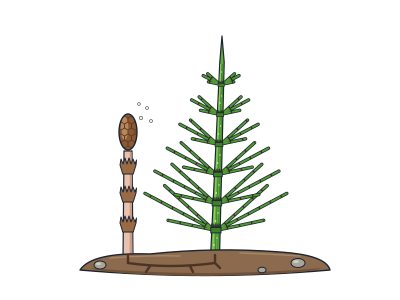
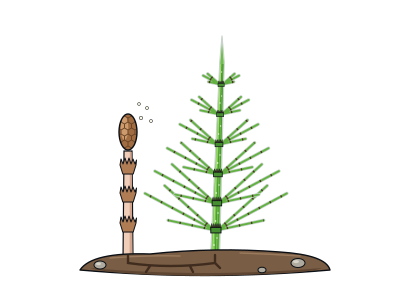
- Giant horsetailA horsetail the height of a house that grew in the coal swamps.
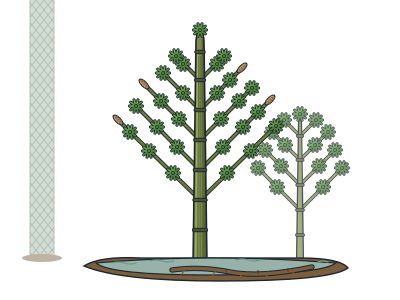
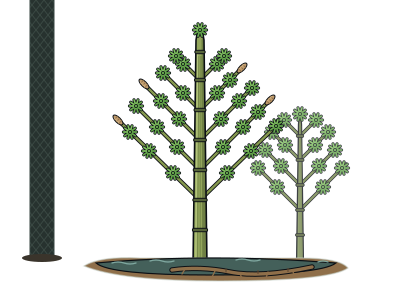
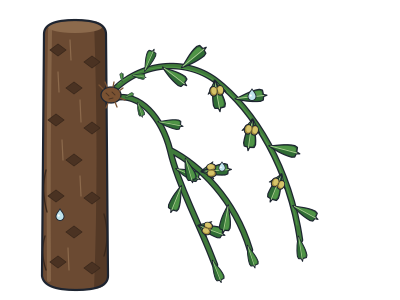
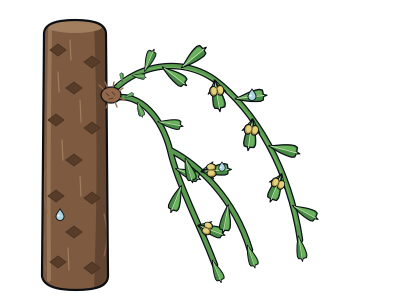
- PsaroniusA coal-age tree fern whose trunk was wrapped in a thick coat of roots.
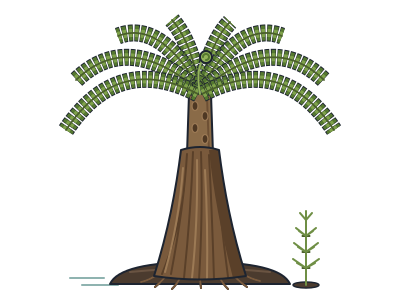
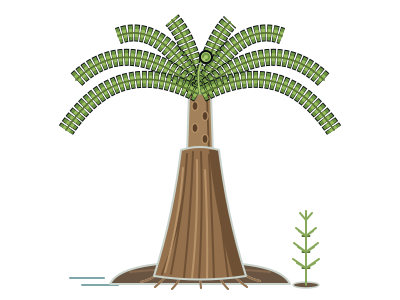
- King fernIts fronds reach seven metres, among the longest of any fern, from a lineage as old as the coal forests.
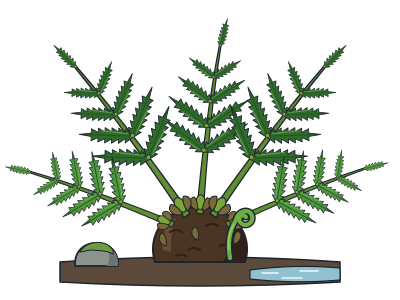
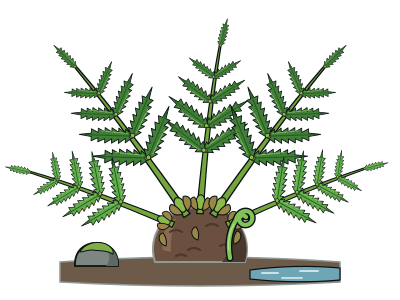
- Typical fernsNine out of ten fern species belong here, firing spores out with a tiny spring.