A species
Field horsetail
Equisetum arvense
A gritty, jointed plant that people once used to scrub and polish.
You and the field horsetail meet in the Eukaryotes branch, shown at about 1.8 billion years ago (on 28 July, in a calendar from life's shared ancestor to today).
Run your fingers up a field horsetail stem and it feels gritty, a bit like fine sandpaper. Its stems are packed with a hard mineral called silica. People made good use of that roughness. In the past, horsetail stems were used to scrub cooking pots and mugs. Field horsetail was used to polish pewter and wood, which is how it got the old name 'pewterwort'.
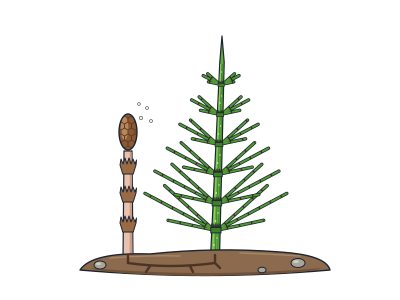
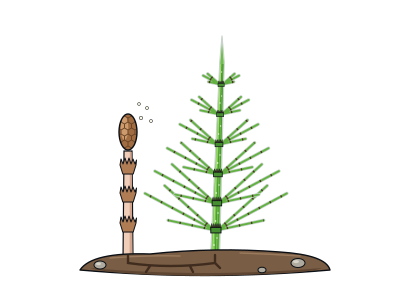
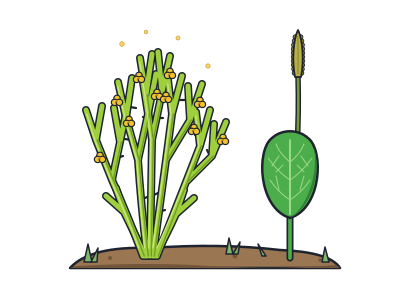
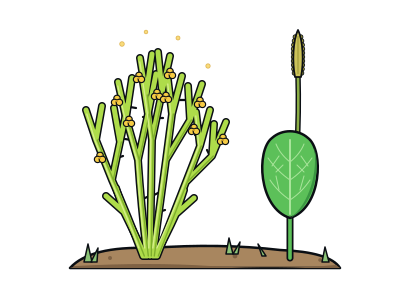
The stem is made of joints stacked on top of each other, like bamboo. Each joint has a thin collar ending in tiny dark teeth. That collar is made of the plant's real leaves, joined together. The green 'needles' growing out in rings are actually branches. The plant has no flowers and no seeds. In spring, pale pinkish-brown stems come up first, each topped with a cone that releases dust-like spores. Then they wither. After that, green bottlebrush stems grow from the same plant, often up to about knee height.
It looks a little like a tiny bamboo or a rush, but it belongs with the ferns. DNA studies show that horsetails, whisk ferns and other ferns form one natural group. That group is the closest living relative of the seed plants, such as conifers and flowering plants. One of its extinct cousins grew as big as a tree in coal swamps more than 300 million years ago.
Hopping spores
Each spore has four ribbon-like arms. They coil and uncoil as the air gets damper or drier, which helps the spore crawl and hop away.
Deep underground stems
Its underground stems can reach about 1.8 metres down, about as deep as a tall adult. That is why mowing or burning the plant does not kill it.
Bad for horses
Field horsetail is poisonous to horses. It contains a substance that breaks down vitamin B1, and it stays toxic even when it is dried in hay.
Next to it on the tree
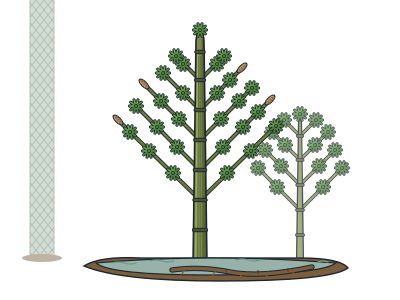
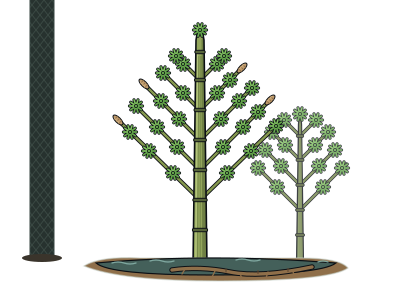
- Giant horsetailA horsetail the height of a house that grew in the coal swamps.
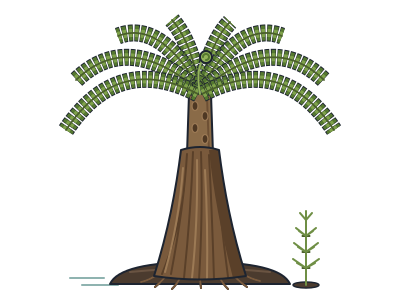
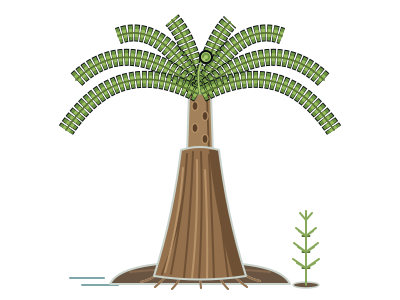
- PsaroniusA coal-age tree fern whose trunk was wrapped in a thick coat of roots.
- Whisk ferns and adder's-tonguesOdd ferns with no normal fronds, holding the plant records for genome size and chromosome count.
- King fernIts fronds reach seven metres, among the longest of any fern, from a lineage as old as the coal forests.
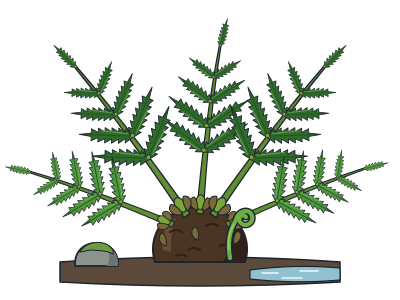
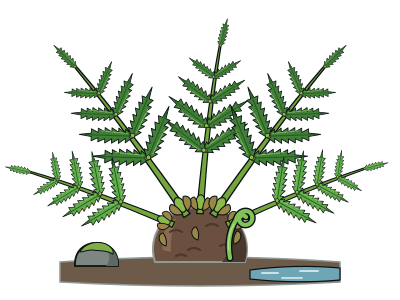
- Typical fernsNine out of ten fern species belong here, firing spores out with a tiny spring.