An extinct species
Giant horsetail †
Calamites
A horsetail as tall as a house that grew in the coal swamps
Lived about 330–270 million years ago.
You and the giant horsetail meet in the Eukaryotes branch, shown at about 1.8 billion years ago (on 28 July, in a calendar from life's shared ancestor to today).
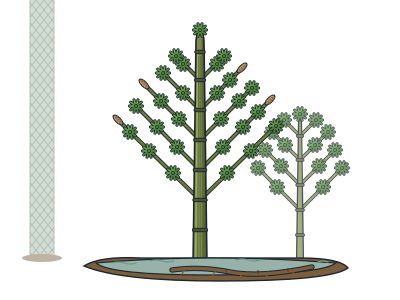
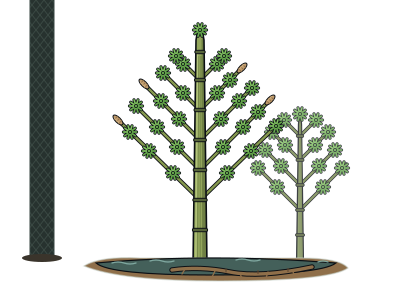
Imagine a horsetail as tall as a house. Today's horsetails are mostly small, soft plants that you might find in a damp ditch. But their relative, the giant horsetail, grew into a tree. It was often about 10 metres tall and sometimes taller. It lived about 330 to 270 million years ago, long before the first dinosaurs, in warm, wet swamp forests that later turned into coal.
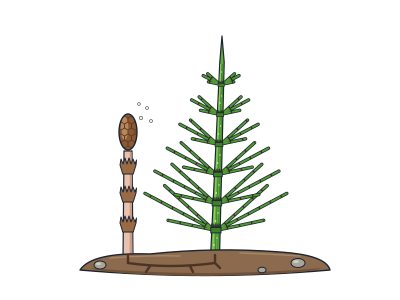
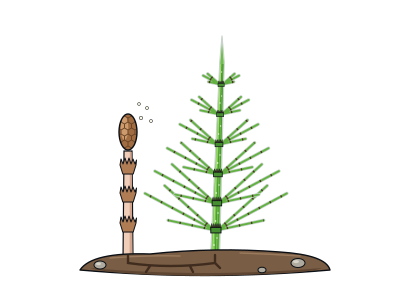
Fossils show a straight trunk divided into joints, a bit like giant bamboo. Slim branches grew in rings at some of the joints and pointed upwards, and they carried rings of needle-like leaves. As a whole, it looked more like a pine tree than a modern horsetail. It had no flowers or seeds. Instead, it made spores in small cones.
Its trunk was hollow, like a tube, and quite weak. These plants fell over easily unless neighbouring plants or piled-up mud held them up. Underground runners sent up new trunks that were clones of the parent plant. They often grew in thick patches of a single kind along river and lake shores, probably a lot like reed beds today. Fossils don't keep colour, so scientists can only guess that its leaves were green.
A fossil made of mud
Most of its fossils are not the trunk itself. Mud and sand filled the hollow centre of the stem and hardened into a ribbed, jointed core.
One plant, many names
Its leaves, cones and roots are usually found apart, so scientists gave each part its own name. Those names are still used today, even though the parts belonged to the same kind of plant.
A horsetail with wood
Unlike modern horsetails, it made true wood around its hollow centre, though not very much of it.
Next to it on the tree
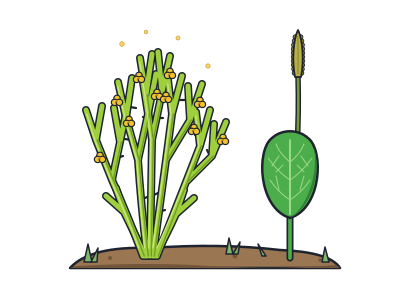
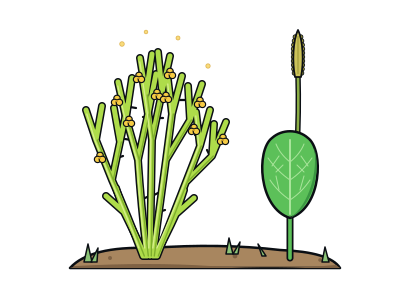
- Field horsetailA jointed, gritty stem filled with silica; people once scrubbed pots with it.
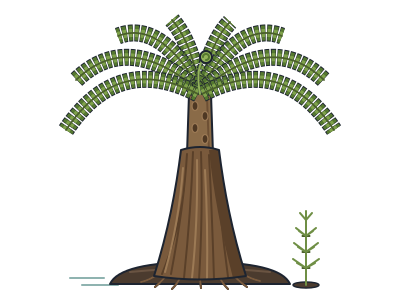
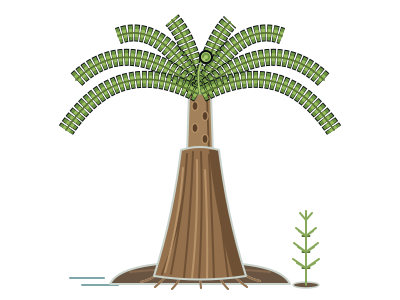
- PsaroniusA coal-age tree fern whose trunk was wrapped in a thick coat of roots.
- Whisk ferns and adder's-tonguesOdd ferns with no normal fronds, holding the plant records for genome size and chromosome count.
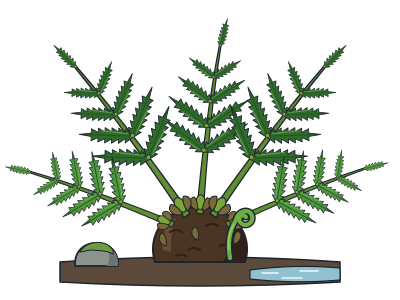
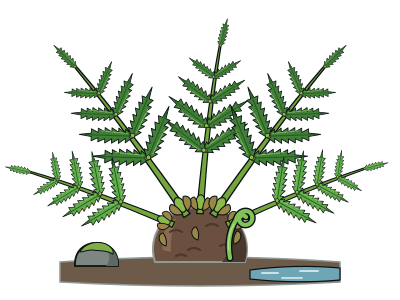
- King fernIts fronds reach seven metres, among the longest of any fern, from a lineage as old as the coal forests.
- Typical fernsNine out of ten fern species belong here, firing spores out with a tiny spring.