A species
King fern
Angiopteris evecta
A fern with leaves as long as a minibus, from a family line older than the dinosaurs.
You and the king fern meet in the Eukaryotes branch, shown at about 1.8 billion years ago (on 28 July, in a calendar from life's shared ancestor to today).
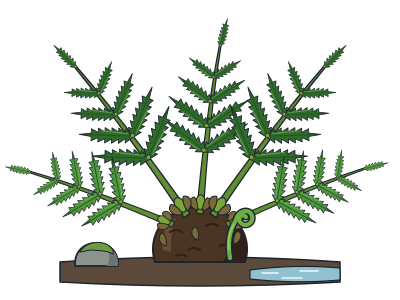
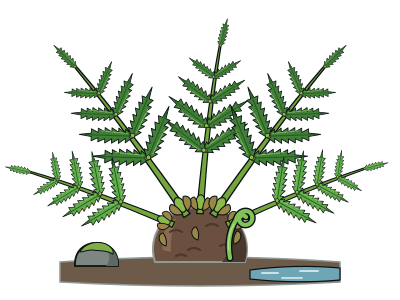
A single leaf of the king fern can grow to about 7 metres long. That is longer than one and a half family cars parked end to end. Its fronds are thought to be among the longest of any fern on Earth. Yet the plant has no tall trunk. Its giant leaves rise from a squat, knobbly base, so the whole plant looks like an enormous palm crown sprouting straight from the ground.
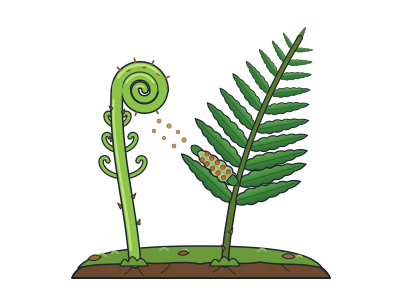
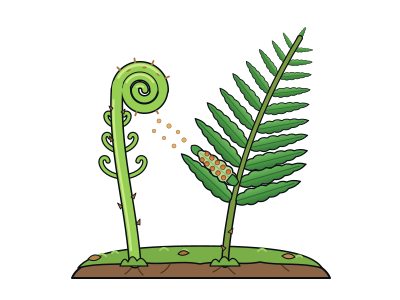
Despite that palm-like look, it is a fern, not a palm. Palms make seeds, but the king fern spreads by spores. Its spore cases are thick-walled, unlike those of most modern ferns.
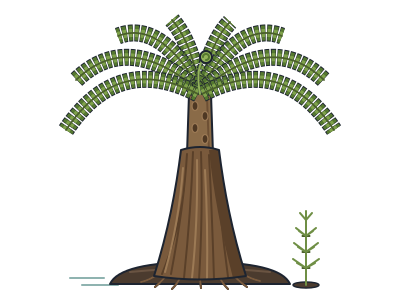
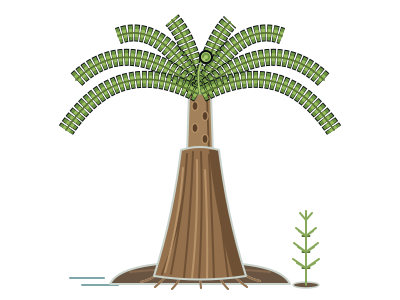
The real surprise is its family line. Fossils of this group of ferns go back more than 320 million years, long before the dinosaurs. In the coal-age swamps, its relatives were among the forest giants. One of them, Psaronius, was a tree fern up to about 8 metres tall, with its stem wrapped in a thick coat of roots. It was a relative in the same lineage, not the king fern's ancestor.
That group once had perhaps thousands of species. Today only about 90 survive, mostly in the tropics and subtropics. The king fern is one of them, growing in rainforests from Southeast Asia and the Pacific islands to northern and eastern Australia.
Leaves that move
Swollen, knee-like joints at the base of the leaf stalk and its side branches can raise and lower the whole frond.
Leathery 'ears'
Each frond starts with a pair of thick, leathery, ear-shaped flaps at its base, up to about 15 centimetres across, a little smaller than an adult's hand.
A garden escapee
It was brought to Hawaiʻi in 1927 for what became the Lyon Arboretum. It has since escaped into the wild on all the main Hawaiian islands, and Hawaiʻi's state forestry division names it one of the state's most invasive garden plants.
Next to it on the tree
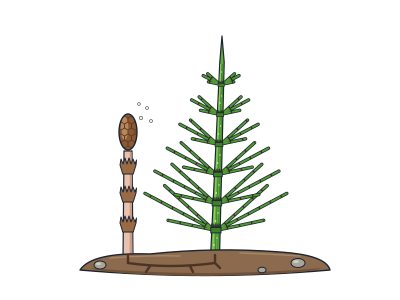
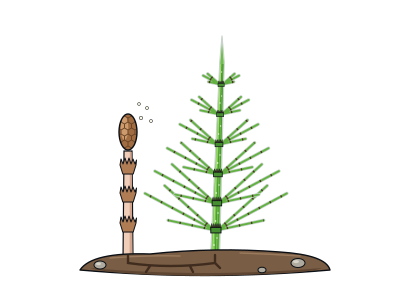
- Field horsetailA jointed, gritty stem filled with silica; people once scrubbed pots with it.
- Giant horsetailA horsetail the height of a house that grew in the coal swamps.
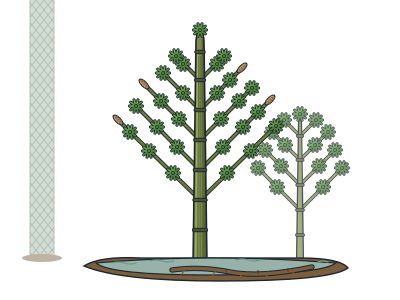
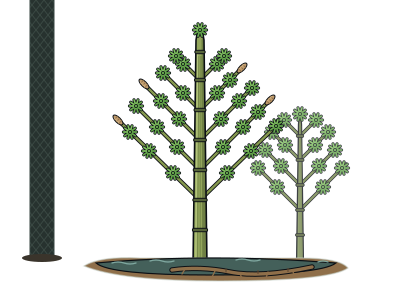
- PsaroniusA coal-age tree fern whose trunk was wrapped in a thick coat of roots.
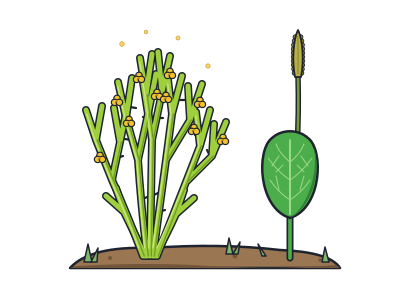
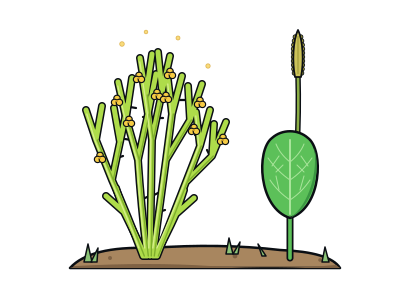
- Whisk ferns and adder's-tonguesOdd ferns with no normal fronds, holding the plant records for genome size and chromosome count.
- Typical fernsNine out of ten fern species belong here, firing spores out with a tiny spring.