A species
Fork fern
Tmesipteris oblanceolata
A tiny fern carrying more DNA than any other living thing scientists have measured
You and the fork fern meet in the Eukaryotes branch, shown at about 1.8 billion years ago (on 28 July, in a calendar from life's shared ancestor to today).
This little fern from New Caledonia, in the south-west Pacific, holds a giant record. Its genome, the full set of DNA instructions inside each cell, is the largest scientists have measured so far. It has about 160 billion base pairs, more than 50 times as many as a human.
If you unwound the DNA from just one of its cells and laid it end to end, it would stretch more than 100 metres. That is taller than the Elizabeth Tower in London, the clock tower that holds Big Ben. The DNA in one human cell would reach only about 2 metres.
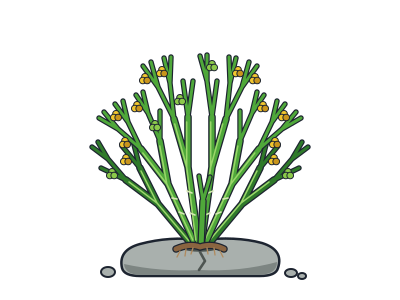
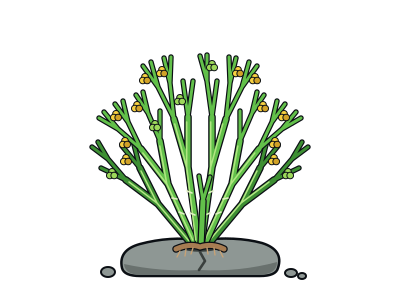
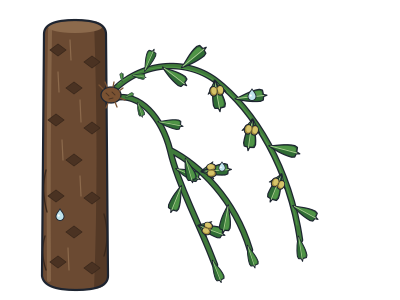
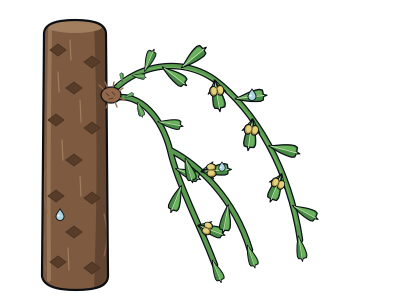
You would never guess this from looking at it. The plant is only up to about 15 centimetres long, shorter than a pencil. It grows mostly on tree trunks and branches in the forest. It has no flowers or seeds. Instead, it releases spores from little cases with two lobes.
It belongs to the same family as the whisk fern, which has more branches and spore cases with three lobes. These plants were once thought to be survivors of the very first plants with water-carrying tubes. DNA showed that they are true ferns that have lost features such as roots. DNA also revealed that the whisk-fern group's closest relatives are the adder's-tongue ferns. Scientists could not see this link from the plants' shapes.
Bigger than the lungfish
Its genome beats the marbled lungfish's. At about 130 billion base pairs, the lungfish has the largest genome of any known animal. The fern's genome is also bigger than a mistletoe's, which has about 101 billion.
Measured with glowing dye
Scientists took the centres (nuclei) of cells from the fern's leaves and stained their DNA with a glowing dye. Then they compared how brightly they glowed with plants whose smaller genomes were already known.
A hidden stage of life
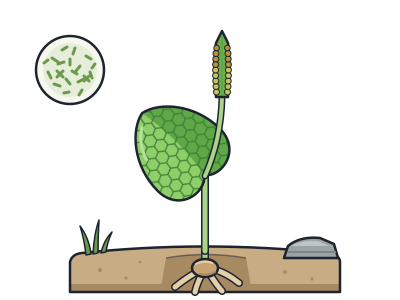
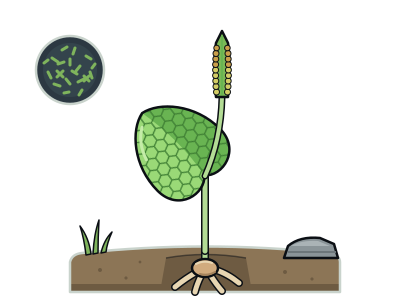
Like all ferns, fork ferns have a tiny separate stage that makes eggs and sperm. In fork ferns this stage is usually hidden inside tree-fern trunks or in the soil. It is not green and gets its food from fungi rather than sunlight.