A species
Whisk fern
Psilotum nudum
A leafless green broom that fooled botanists for decades
You and the whisk fern meet in the Eukaryotes branch, shown at about 1.8 billion years ago (on 28 July, in a calendar from life's shared ancestor to today).
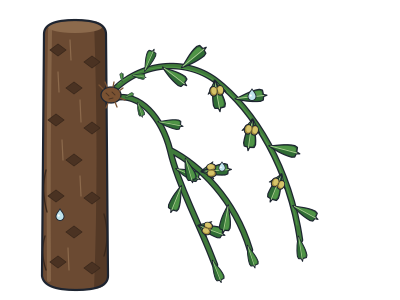
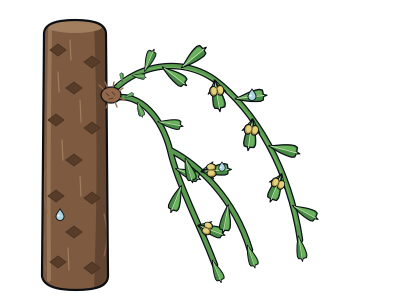
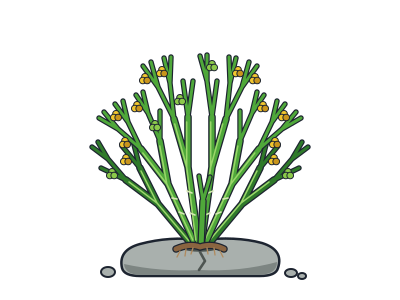
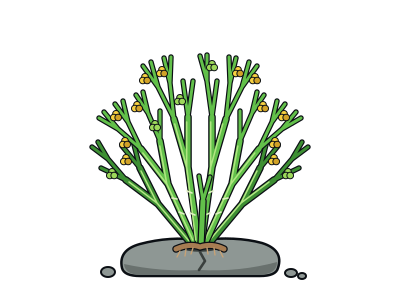
Picture a small green broom with no leaves at all. That is the whisk fern: a clump of thin green stems that split into Y-shapes again and again. It has no true roots and no true leaves, so its stems do the work of catching sunlight. People once tied bunches of it together to sweep with, which is how it got its name.
For a long time, botanists thought it was a living leftover from some of the earliest land plants. It looks a lot like fossil plants from the Rhynie chert in Scotland. This rock is about 410 million years old, and it preserved an early land ecosystem almost where it grew. Those ancient plants also had forking stems and no true leaves.
DNA told a different story. The whisk fern is a true fern, and its closest relatives are the adder's-tongue ferns and moonworts. Scientists now think its simple shape comes from losing features over time, not from never having them. So it belongs among the ferns, the same big group as bracken and tree ferns, not with those ancient fossil plants.
Tiny round knobs sit along its upper stems. Each one is made of three spore cases joined together. They start green and turn yellow when ripe. They are not flowers or seeds.
A Japanese garden favourite
In Japan it is called matsubaran, meaning 'pine-needle orchid'. About 200 years ago, gardeners there grew more than 100 different varieties. They were listed in a book from 1836.
Fed by fungi underground
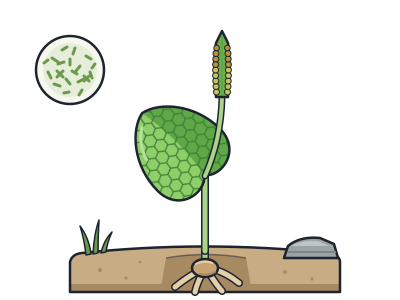
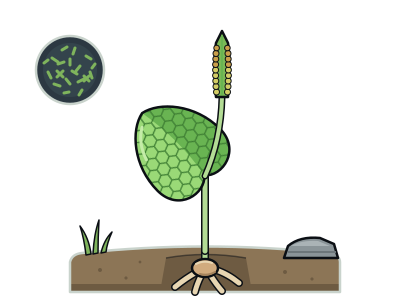
The whisk fern has a second life stage that lives completely underground and cannot use sunlight. Fungi living inside it give it food. Adder's-tongue ferns get food from fungi in the same way.
Natural talcum powder
In Hawaii, where the plant is called moa, people collected its spores to use like talcum powder. Children used the stems in games.