An extinct species
Psaronius †
Psaronius
A coal-age tree fern with a trunk made mostly of roots
Lived about 315–260 million years ago.
You and the psaronius meet in the Eukaryotes branch, shown at about 1.8 billion years ago (on 28 July, in a calendar from life's shared ancestor to today).
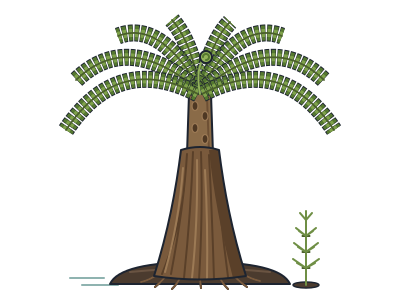
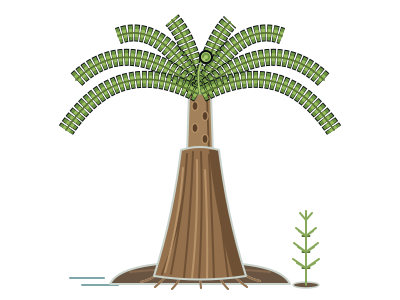
Picture a fern as tall as a three-storey building. This tree fern grew in steamy swamp forests about 315 to 260 million years ago, before the first dinosaurs. Its trunk was not made of wood. It was a slim stem wrapped in a thick, shaggy coat of hundreds of roots.
The stem got thinner towards the bottom, so near the ground the trunk was made entirely of roots. That root coat flared out like a buttress and could be more than a metre across. At the top sat a crown of big, feathery fronds, each up to about 3 metres long. Like other ferns, it spread by spores, not seeds.
It looked a lot like today's soft tree fern, but it was not that fern's ancestor. Modern tree ferns are a separate, younger group that evolved a similar shape on their own. Its own ancient branch of ferns lives on today in ferns such as Angiopteris and Marattia, some of which have giant fronds.
Fossils show its trunk in fine detail, either turned to stone or kept inside coal balls. Its colours were not preserved. Green fronds and a brown root coat are a sensible guess.
The starling stone
When the stone trunks are cut and polished, they look spotted like a starling's feathers. In Europe they were called 'starry stone' or 'starling stone', and the name comes from a Greek word for a speckled stone.
A home for other plants
Smaller climbing and perching ferns grew inside its root coat. Some of these ferns are known only from fossils found tucked inside those roots.
A forest frozen in ash
About 291 million years ago, a volcano at Chemnitz in Germany buried a whole forest in hot ash, including tree ferns like this one. Some trunks were turned to stone still standing where they grew. The site is nicknamed the 'Permian Pompeii'.
Next to it on the tree
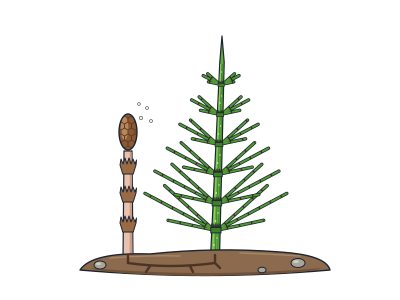
- Field horsetailA jointed, gritty stem filled with silica; people once scrubbed pots with it.
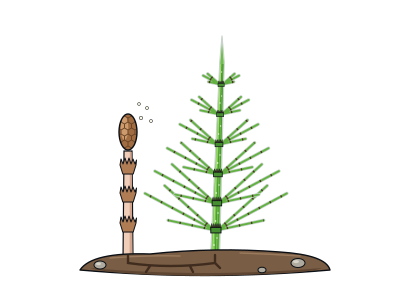
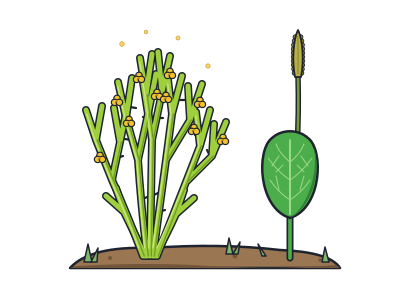
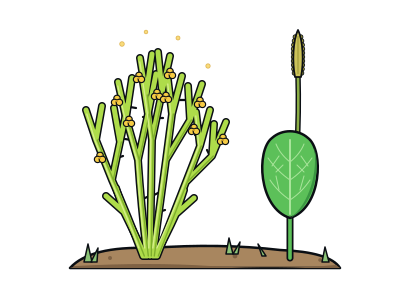
- Giant horsetailA horsetail the height of a house that grew in the coal swamps.
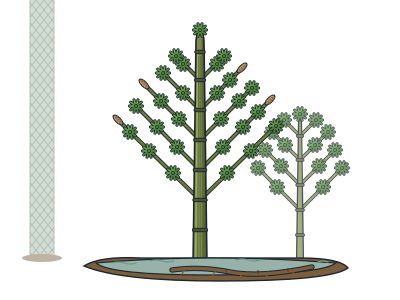
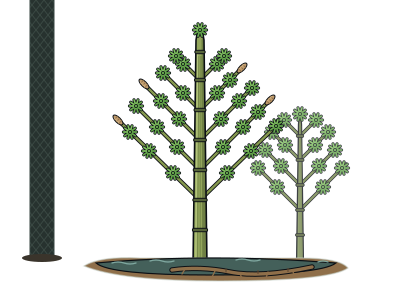
- Whisk ferns and adder's-tonguesOdd ferns with no normal fronds, holding the plant records for genome size and chromosome count.
- King fernIts fronds reach seven metres, among the longest of any fern, from a lineage as old as the coal forests.
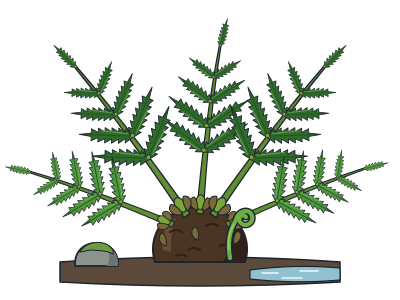
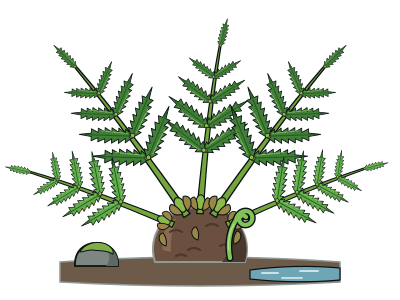
- Typical fernsNine out of ten fern species belong here, firing spores out with a tiny spring.