A group of living things
Typical ferns
Polypodiidae
The fern group that fires its spores from tiny catapults
This branch is shown at about 300 million years ago; its age is a rough estimate.
You and typical ferns meet in the Eukaryotes branch, shown at about 1.8 billion years ago (on 28 July, in a calendar from life's shared ancestor to today).
Roughly nine out of ten fern species alive today belong to this one group. It includes the ferns in shady gardens, tall tree ferns, floating water ferns and the bracken on hillsides. Their relatives on the tree include horsetails, whisk ferns and the king fern. Those relatives are small groups, though, and this branch has far more species than all of them put together.
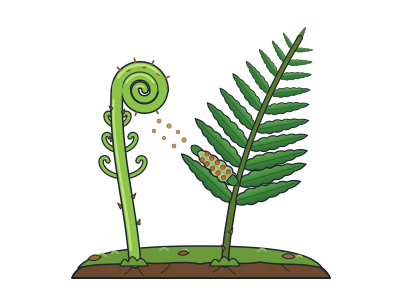
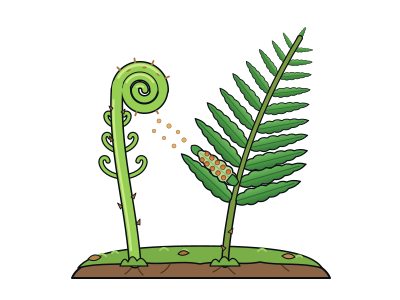
Turn a mature frond over and you may see brown dots. Each dot holds dozens of tiny spore cases. In most of these ferns, every case has a ring of water-filled cells, a bit like the crest on a Roman helmet. As the water dries out, the ring slowly bends back and pulls the case open. Then bubbles suddenly form inside the cells, and the ring snaps forward like a catapult. It flings the spores out at up to about 10 metres per second, roughly as fast as a sprinter runs.
A spore does not grow straight into a fern. It becomes a separate tiny plant, often heart-shaped and only a few millimetres wide. This plant makes eggs and sperm, and the sperm have to swim through a film of water to reach an egg. Only then does the leafy fern grow. In most of these ferns, new fronds come up as tight coils called fiddleheads, which unroll from the bottom up.
Millions from one leaf
A single frond about 60 cm long can release more than 7 million spores.
Living up in the trees
Almost a third of the species in this group grow perched on tree trunks and branches instead of in soil.
Named after a violin
The name fiddlehead comes from the scroll at the top of a violin. Another name for the coil, crozier, comes from a shepherd's crook.
Inside typical ferns
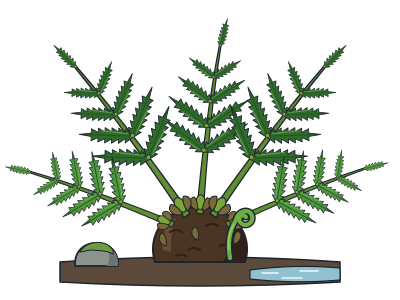
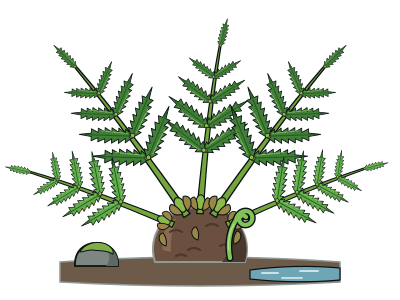
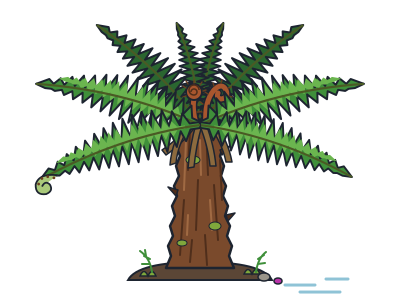
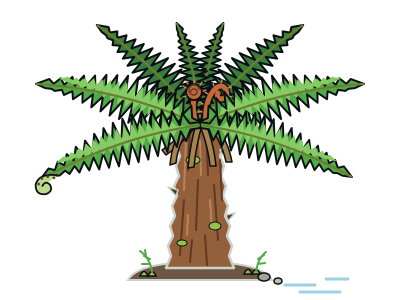
- Soft tree fernA fern with a trunk, unfurling giant fronds like a green umbrella.
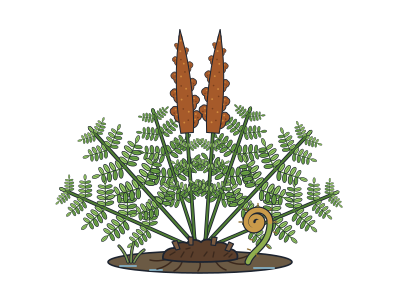
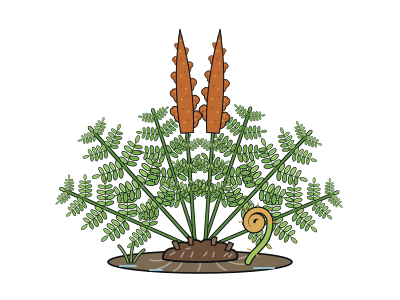
- Royal fernA stately fern whose family has barely changed in 180 million years of fossils.
- Water fernsFerns that gave up land to float on ponds or root in mud like four-leaf clovers.
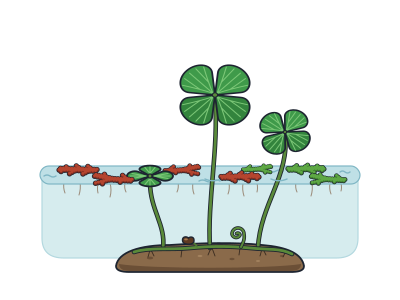
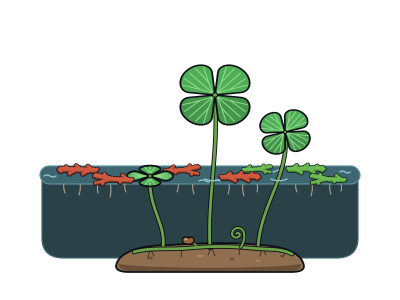
- Polypod fernsMost garden, woodland and house ferns, which boomed in the shade of flowering-plant forests.
Next to it on the tree
- Field horsetailA jointed, gritty stem filled with silica; people once scrubbed pots with it.
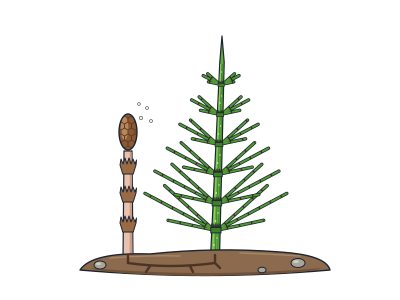
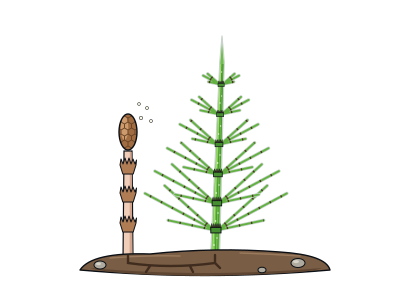
- Giant horsetailA horsetail the height of a house that grew in the coal swamps.
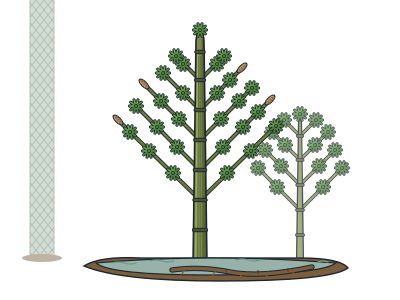
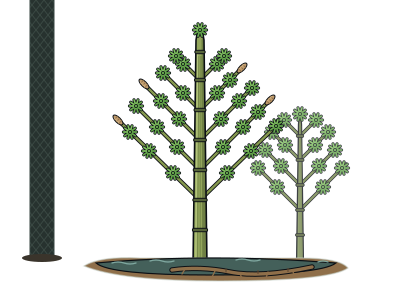
- PsaroniusA coal-age tree fern whose trunk was wrapped in a thick coat of roots.
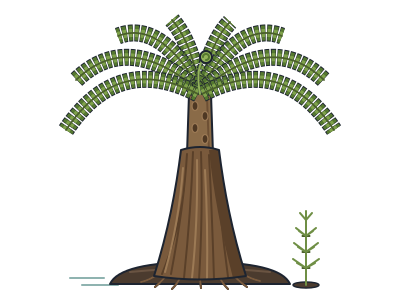
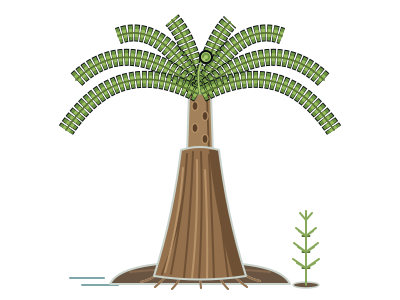
- Whisk ferns and adder's-tonguesOdd ferns with no normal fronds, holding the plant records for genome size and chromosome count.
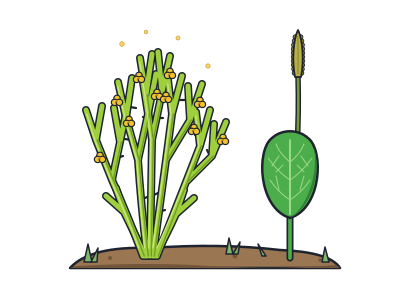
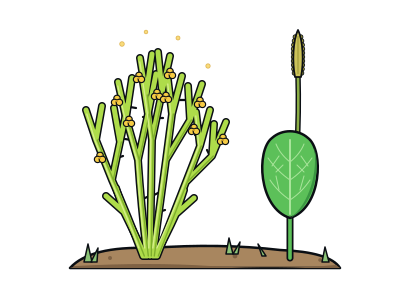
- King fernIts fronds reach seven metres, among the longest of any fern, from a lineage as old as the coal forests.