A group of living things
Water ferns
Salviniales
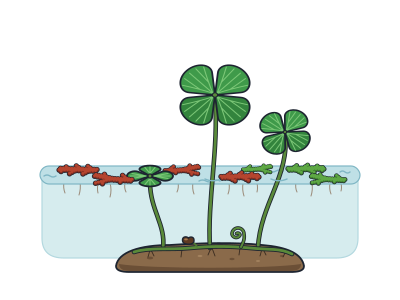
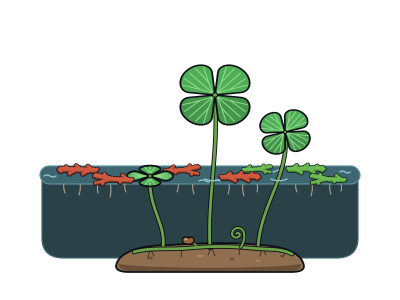
Ferns that left dry land to float on ponds or grow like four-leaf clovers in the mud.
This branch is shown at about 165 million years ago; its age is a rough estimate.
You and water ferns meet in the Eukaryotes branch, shown at about 1.8 billion years ago (on 28 July, in a calendar from life's shared ancestor to today).
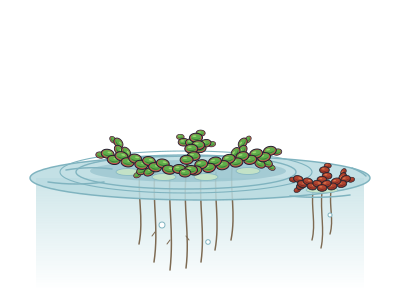
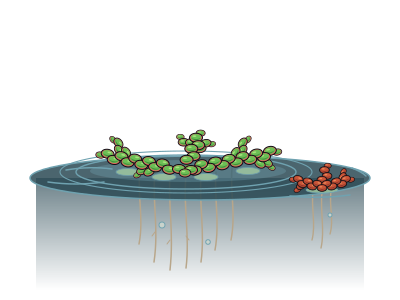
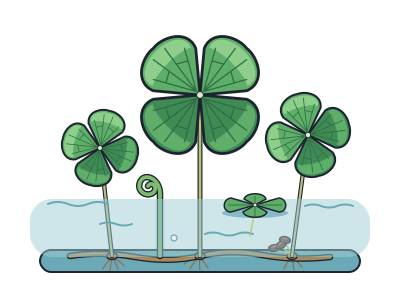
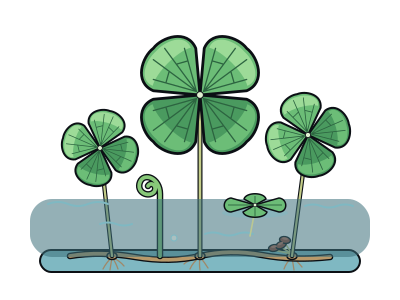
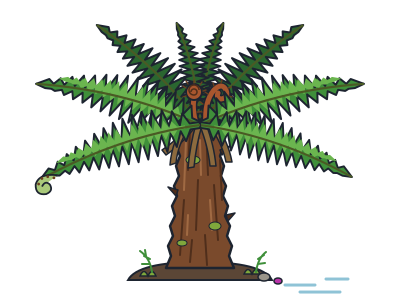
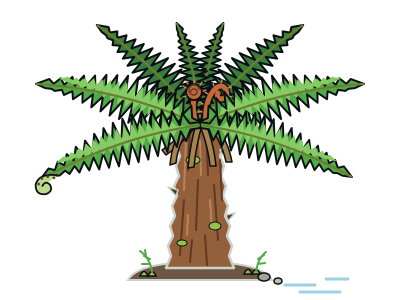
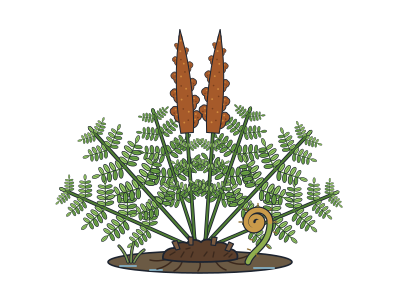
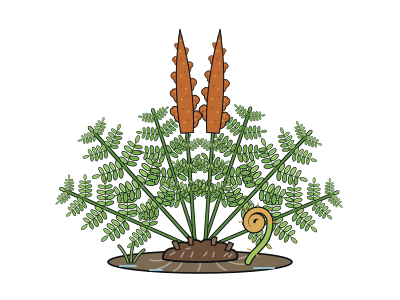
Most ferns grow on land, often in damp, shady places. These ferns took to the water instead. Some float freely on ponds, like mosquito fern, whose tiny plants pack together into a green or rusty-red carpet. Others, like water clover, root in mud in shallow water or on wet ground. Each of its leaves splits into four leaflets, just like a four-leaf clover. Despite the name, water clover is a fern, not a clover. On the tree, their relatives include tall tree ferns and the leafy ferns you see in gardens and forests.
They are also the only living ferns that make two kinds of spore: big female spores and small male spores. Other ferns alive today make just one kind. The tiny new plant that grows from a spore stays inside the spore's wall. That makes it a little more like a seed plant than like other ferns.
Mosquito fern has a hidden partner. A small pocket in the upper part of each leaf holds blue-green bacteria. They take nitrogen from the air and turn it into a form the fern can use. Fossils suggest the two have worked together for about 100 million years. Rice farmers in Southeast Asia have used the fern as a natural fertiliser for more than 1,000 years.
An Arctic fern carpet
About 49 to 50 million years ago, huge amounts of mosquito fern grew in the Arctic for about 800,000 years. Their fossils are found in mud from the Arctic seabed, and some remains reached as far as the North Sea.
Bread from a fern
Aboriginal Australians ground the dry spore capsules of nardoo, an Australian water clover, into flour and prepared it carefully for baking. In 1861 John King, a member of a failed expedition, survived on nardoo cakes made by local Aboriginal people.
Tiny genomes
A fern's full set of DNA is about 12 billion letters long on average. One floating water fern has only about 0.26 billion. When its DNA was published in 2018, it was the smallest fern genome on record.