An extinct species
Elkinsia †
Elkinsia polymorpha
One of the very first seeds, each wrapped in a little cup of fingers.
Lived about 365–359 million years ago.
You and the elkinsia meet in the Eukaryotes branch, shown at about 1.8 billion years ago (on 28 July, in a calendar from life's shared ancestor to today).
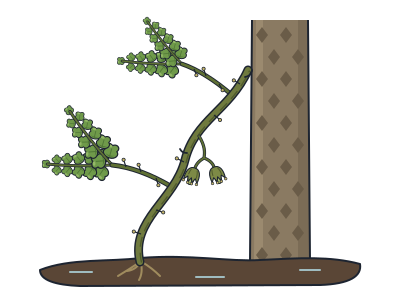
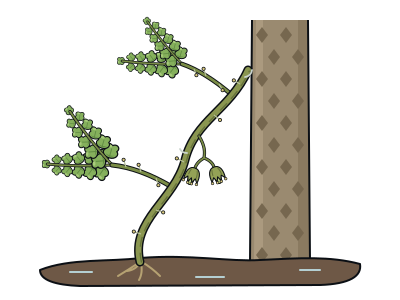
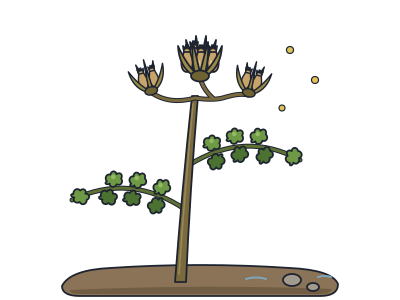
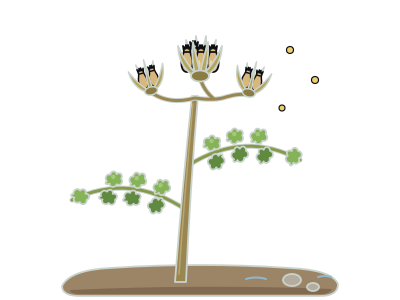
About 365 to 359 million years ago, long before the dinosaurs, this plant made some of the very first seeds we know of. There were no cones, fruits or flowers. Each seed sat in a little open cup, shaped like a tulip made of slender fingers. One cup held four tiny seeds, each only a few millimetres long, tucked among sixteen thin, finger-like tips.
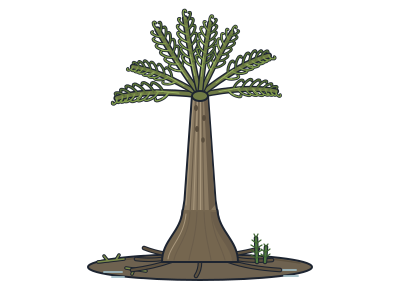
From a distance it looked like a fern. Its fronds grew in a spiral up a single stem with no branches, and they carried frilly, finely divided leaflets. But it was not a fern. It sat on the seed plant side of the family, so it was more closely related to conifers and flowering plants than to ferns.
Its fossils are broken pieces, mostly small seed-bearing shoots, but they are well preserved. They show the cups and seeds in fine detail. Some fronds carried small pollen-making parts instead of cups. Computer models suggest the cups slowed the passing air and caught pollen blowing on the wind, but the fossils cannot show this directly.
Seeds were a big step. Later, they helped plants spread into places that had been too hard to live in, and seed plants went on to fill the great coal-age forests.
Named after a town
Joseph Schwietering, a geologist, found the fossils in the late 1970s in rocks beside a highway, U.S. Route 33, near the town of Elkins, West Virginia. The plant is named after the town.
Not quite a modern seed
Its seed coat never fully closed over the inside of the seed to leave a proper little opening for pollen. Because of this, some botanists call its seeds 'preovules' instead of true modern ones.
There was an older forerunner
A plant called Runcaria, found in Belgium, lived about 20 million years earlier. It had most of the makings of a seed, but it had no solid seed coat.
Next to it on the tree
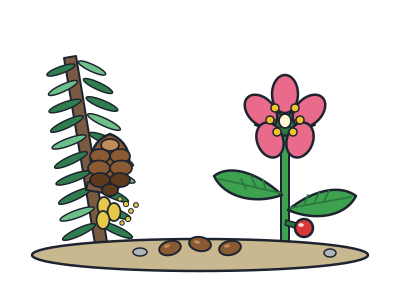
- Seed plantsThe seed: a baby plant packed with lunch, able to wait for the right moment.
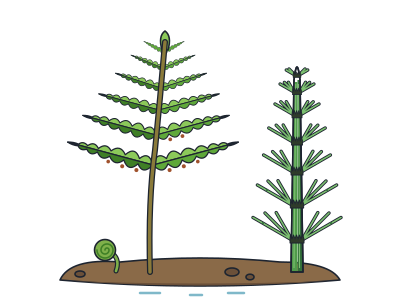
- Ferns and horsetailsLeafy plants that spread by spores, including horsetails, which turn out to be ferns.
- ArchaeopterisThe first modern-looking tree: wooden trunk and leafy branches, but it still spread by spores.
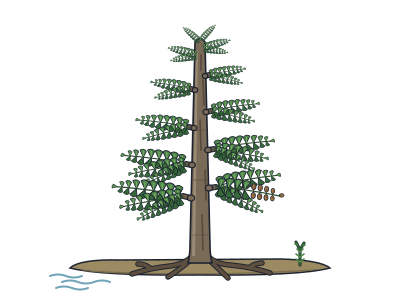
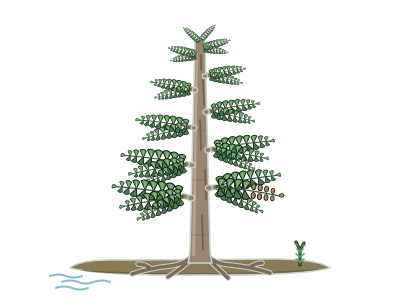
- Seed fernLooked like a tree fern but made seeds the size of hen's eggs.
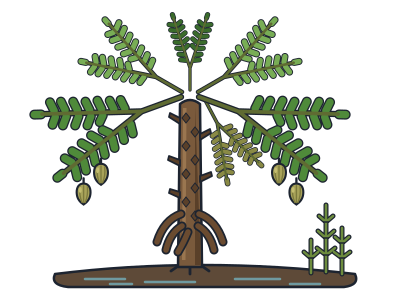
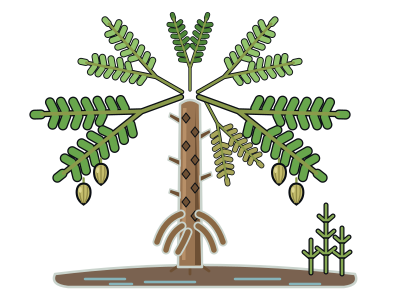
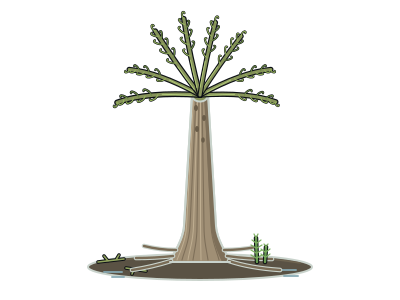
- WattiezaA palm-shaped tree from the world's oldest known forest, at Gilboa in New York.
- LyginopterisA scrambling seed fern of the coal forests, with sticky glands on its fronds.