An extinct species
Dicroidium †
Dicroidium
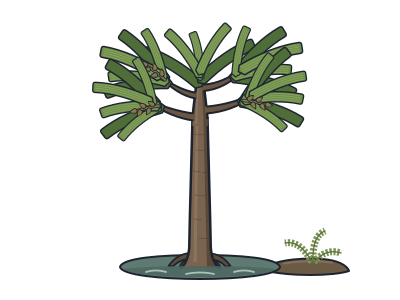
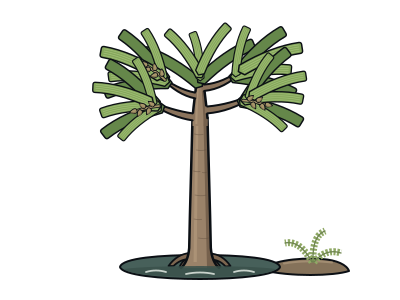
A forked-leaf tree that looked like a fern but grew seeds, filling southern forests in the time of the first dinosaurs.
Lived about 250–200 million years ago.
You and the dicroidium meet in the Eukaryotes branch, shown at about 1.8 billion years ago (on 28 July, in a calendar from life's shared ancestor to today).
Picture forests of forked, fern-like leaves spreading across the southern lands just as the first dinosaurs appeared. In Argentina, its fossils turn up in rocks about 230 million years old. The same rocks also hold some of the oldest known dinosaurs.
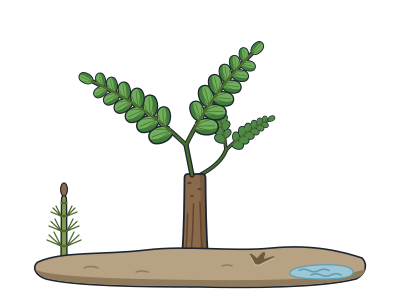
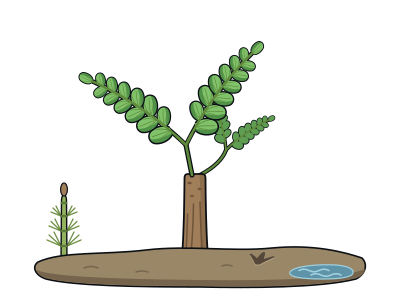
Despite its looks, it was not a fern. It made seeds and pollen, not spores, so it belongs with the seed plants. That is the same big branch as conifers and flowering plants. Its trademark was a fork near the base of each leaf, which split it into two arms like a letter Y.
It grew as a tree. Stone trunks linked to it reach about 10 metres long, nearly as long as a bus. It lived across Gondwana, the old southern supercontinent, in lands that are now Australia, South Africa, South America, India and Antarctica. It liked cool, damp places and grew almost all the way to the South Pole.
Fossils show its leaves, its wood with growth rings, and separate seed and pollen parts. Other details are inferred. It probably dropped its leaves each winter, and it was likely ordinary leaf green. It first appeared about 250 million years ago, after a huge mass extinction. Plant life recovered slowly, but by the middle of the Triassic period it had become the main tree of many southern forests. It mostly disappeared in another mass extinction about 200 million years ago.
Wind-blown pollen
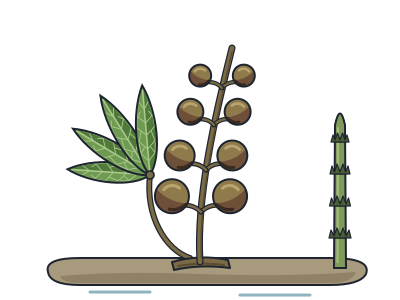
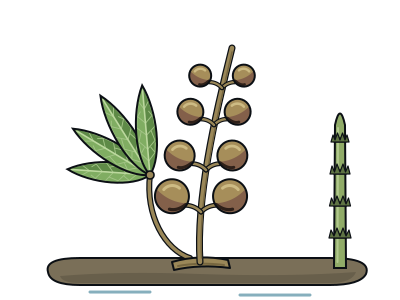
Its pollen grains had tiny wings, so the wind could carry them. Its seeds sat on curved stalks shaped a bit like a swan's neck, with one seed in each small rounded head.
Snack marks
Many fossil leaves still show damage made by insects, such as holes, chewed edges, swellings and tunnels inside the leaf. They show what was eating plants in food webs more than 200 million years ago.
Peeling bark
Fossil logs from Antarctica show the trees shed their bark in many layers. This may have helped them get rid of plants growing on them and fight off fungus, because fungus remains are found in the shed bark.
Next to it on the tree
- Flowering plantsFlowers and fruit recruited animals as couriers and took over the planet.
- GlossopterisIts tongue-shaped leaves are found in Africa, India, Antarctica and Australia, proving those lands were joined.
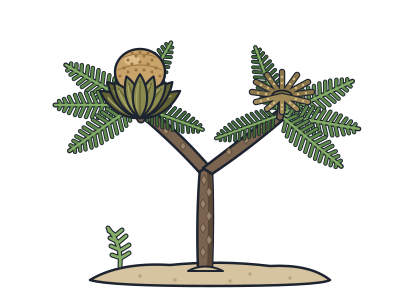
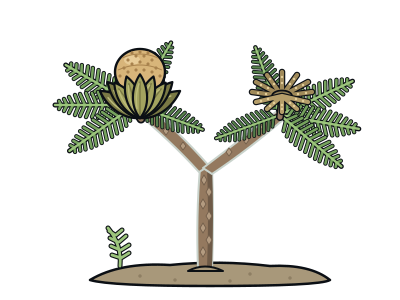
- WilliamsoniaA dinosaur-era plant with flower-like cones, an early experiment in flowers.
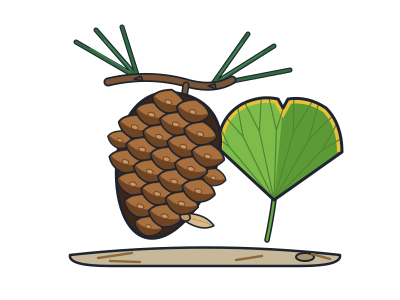
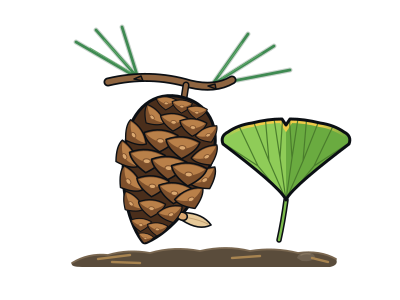
- Conifers and other gymnospermsSeed plants with naked seeds, usually in cones, from pines to the strange Welwitschia.
- CordaitesTall trees with long strap leaves that grew in coal swamps and are cousins of conifers.
- CaytoniaA Jurassic seed plant with seeds wrapped in a cup, long debated as a flowering-plant forerunner.