A group of living things
Conifers and other gymnosperms
Acrogymnospermae
Seed plants with naked seeds, from towering pines to a desert plant with only two leaves.
This branch is shown at about 310 million years ago; its age is a rough estimate.
You and conifers and other gymnosperms meet in the Eukaryotes branch, shown at about 1.8 billion years ago (on 28 July, in a calendar from life's shared ancestor to today).
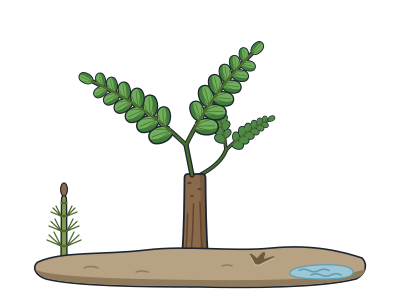
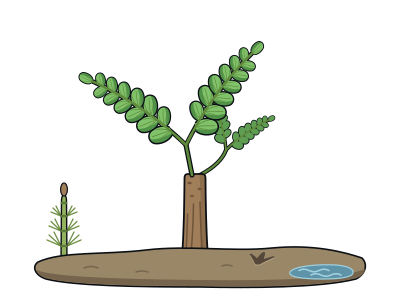
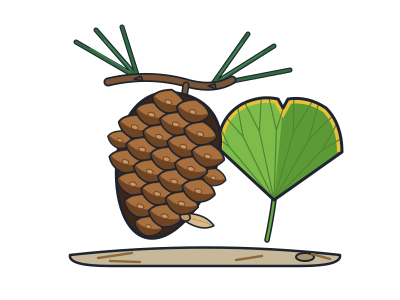
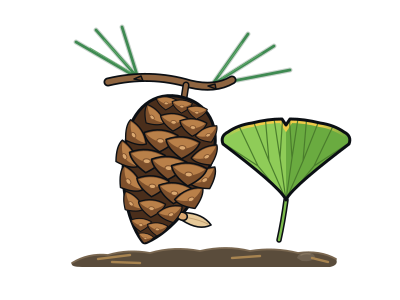
Pine trees, the ginkgo you see along city streets, the spiky 'sago palm' in garden pots and a strange desert plant with only two leaves all belong to the same group of seed plants. The group's name means 'naked seed'. Apples and peas keep their seeds sealed inside a fruit, but these plants don't. Their seeds usually sit out in the open on the scales of a cone.
There are just over 1,000 living species, split into four main groups. Conifers, such as pines, firs and redwoods, are by far the biggest. The others are the palm-like cycads, a small set of odd plants called gnetophytes, and the ginkgo. The ginkgo is the only species left of a very old line of plants.
This group holds some records. A coast redwood about 116 metres tall is the tallest known tree, taller than a 30-storey building. Some bristlecone pines are more than 4,700 years old. Welwitschia, from the Namib Desert, grows just two leaves in its whole life. The leaves keep growing from the base, reach about 4 metres long and slowly tear into curly ribbons.
Their sister group is the flowering plants, which are now the most varied plants on land. Before flowering plants spread, conifers were the main land plants for much of the age of dinosaurs.
Sperm that swim
Cycads and the ginkgo have sperm with tiny tails that swim to the egg. This is a leftover from much older plant ancestors. A Japanese botanist, Sakugoro Hirase, discovered the ginkgo's swimming sperm in 1896.
Tough survivors
In 1945, six ginkgo trees growing about 1 to 2 km from where the atomic bomb exploded at Hiroshima survived the blast.
The great northern forest
Conifer forests stretch right across the far north of the world. Together they make up the largest land habitat on Earth.
Inside conifers and other gymnosperms
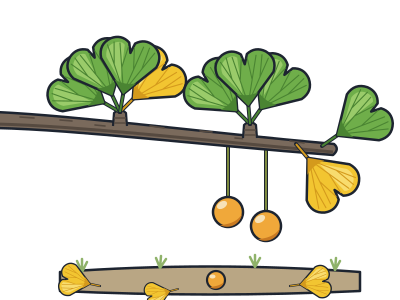
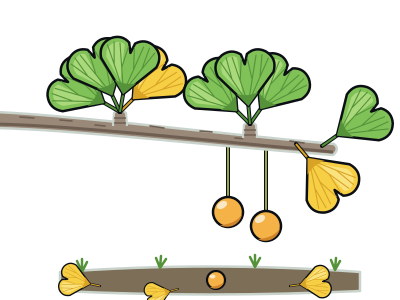
- GinkgoThe last survivor of an ancient group, with fan-shaped leaves and famously smelly seeds.
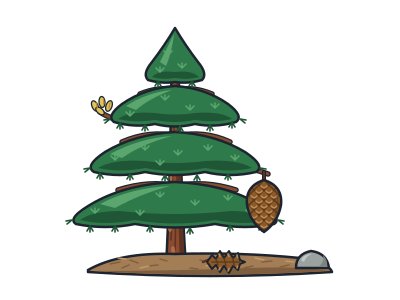
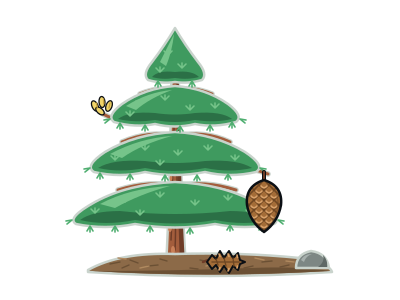
- ConifersCone-bearing trees with needles or scales, including the tallest, biggest and oldest trees.
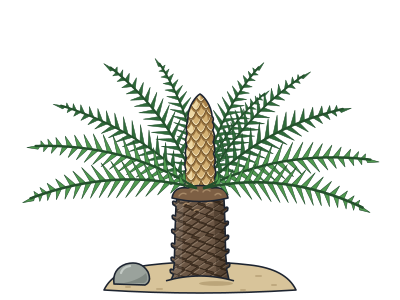
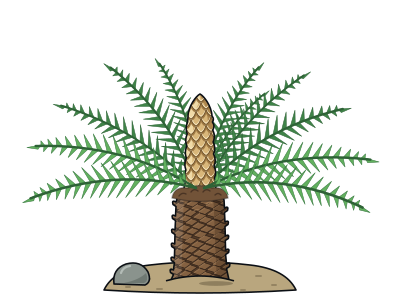
- CycadsStout palm-like cone plants that have survived since before the dinosaurs.
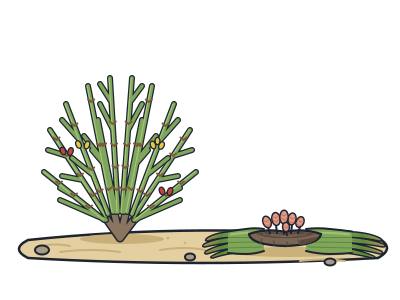
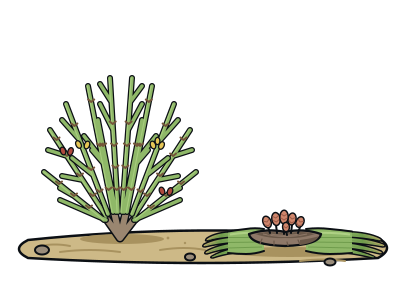
- GnetophytesThree strange cone plants: a desert two-leaf, a jointed shrub and a vine with broad leaves.
Next to it on the tree
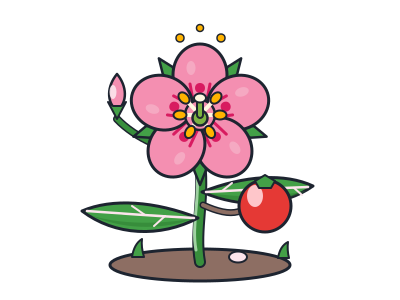
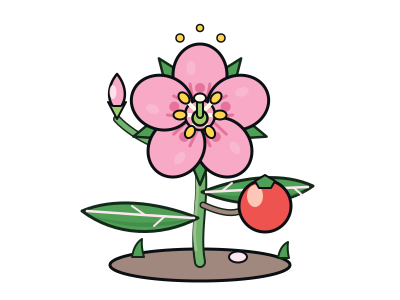
- Flowering plantsFlowers and fruit recruited animals as couriers and took over the planet.
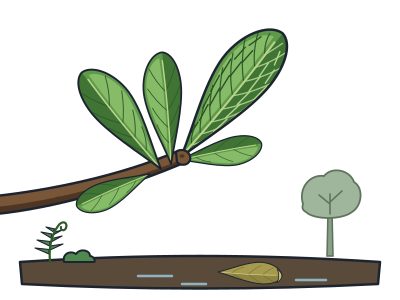
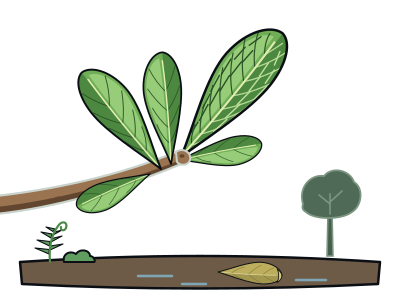
- GlossopterisIts tongue-shaped leaves are found in Africa, India, Antarctica and Australia, proving those lands were joined.
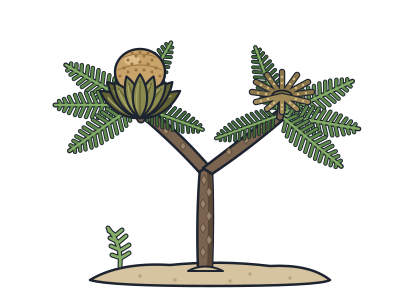
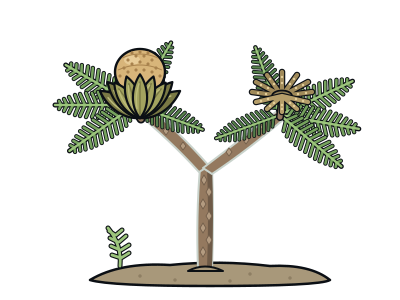
- WilliamsoniaA dinosaur-era plant with flower-like cones, an early experiment in flowers.
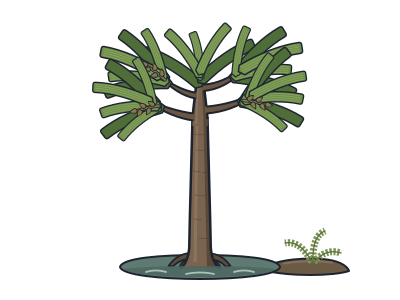
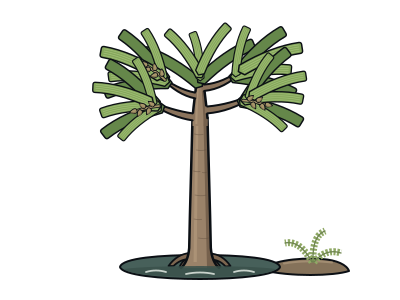
- CordaitesTall trees with long strap leaves that grew in coal swamps and are cousins of conifers.
- CaytoniaA Jurassic seed plant with seeds wrapped in a cup, long debated as a flowering-plant forerunner.
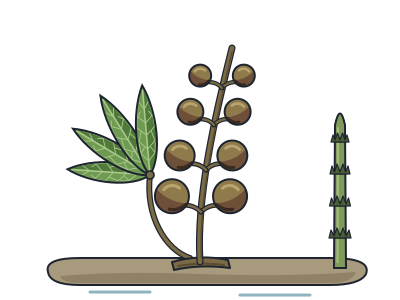
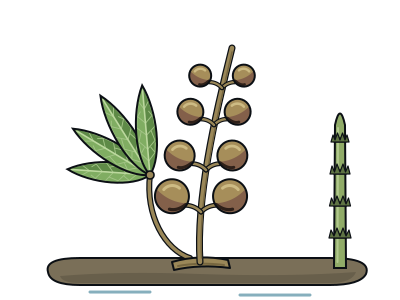
- DicroidiumForked fern-like leaves that carpeted the southern lands while the first dinosaurs walked.