An extinct species
Caytonia †
Caytonia
A Jurassic seed plant that kept its seeds in tiny cups and puzzled flower hunters
Lived about 185–100 million years ago.
You and the caytonia meet in the Eukaryotes branch, shown at about 1.8 billion years ago (on 28 July, in a calendar from life's shared ancestor to today).
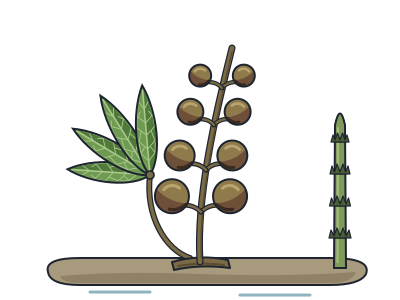
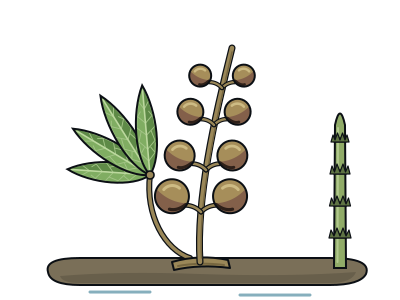
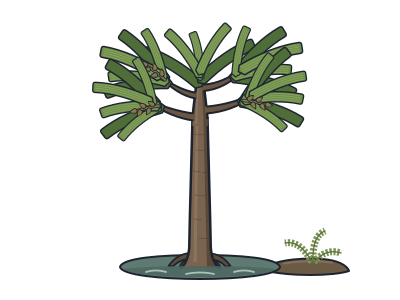
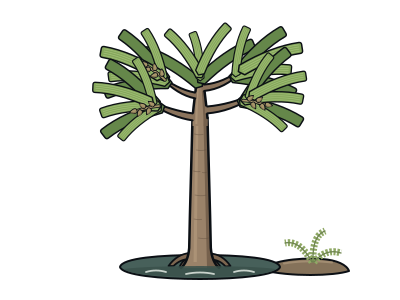
Caytonia was a seed plant that lived about 185 to 100 million years ago, and its group did especially well in the Jurassic. Its seeds sat inside tiny round cups, each about the size of a peppercorn. Those cups have made it one of the most debated fossils in the story of flowers. Some studies find its group to be the closest known relatives of flowering plants. Others see it as just one more extinct seed plant.
In 1925 the Cambridge botanist Hugh Hamshaw Thomas described it from rocks at Cayton Bay in Yorkshire, England. He wondered if it was one of the earliest flowering plants. Then, in 1933, Tom Harris found whole pollen grains inside the narrow canal leading into the seeds. So pollen reached the seeds directly, as it does in conifers. In flowering plants, pollen lands on a separate surface outside a closed seed case.
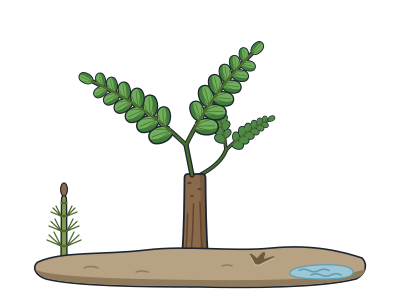
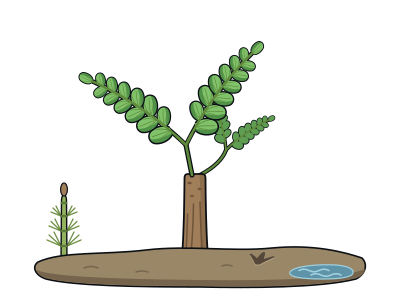
Fossils show that each cup curled back on itself, with a small lip-like opening near its stalk. Inside were several small, flat seeds. The cups grew in opposite pairs, in two rows along a flat branch. Its leaves usually had four leaflets that spread out like fingers. Some scientists think a cup like this may have become the outer seed coat of flowering-plant seeds.
Pine-like pollen
Its pollen grains were only about 25 to 30 micrometres across and had two air sacs, like pine pollen. This suggests the wind spread them.
One plant, three names
The leaves, seed cups and pollen organs are found apart, so each has its own name, though they are thought to come from one plant. The leaves are called Sagenopteris and are the most common fossils of the plant.
Last stand in the north
As flowering plants spread, Caytonia's wider group declined. By the Late Cretaceous it survived only in the far north.
Next to it on the tree
- Flowering plantsFlowers and fruit recruited animals as couriers and took over the planet.
- GlossopterisIts tongue-shaped leaves are found in Africa, India, Antarctica and Australia, proving those lands were joined.
- WilliamsoniaA dinosaur-era plant with flower-like cones, an early experiment in flowers.
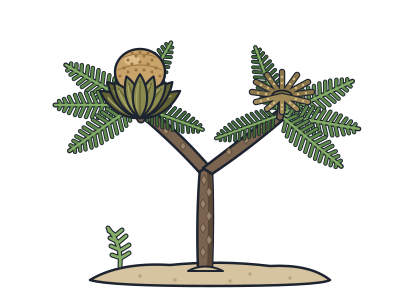
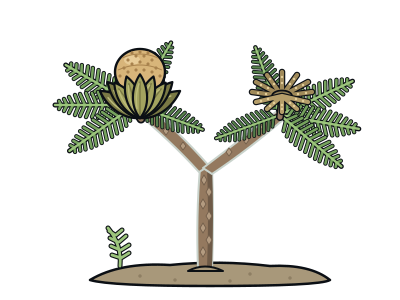
- Conifers and other gymnospermsSeed plants with naked seeds, usually in cones, from pines to the strange Welwitschia.
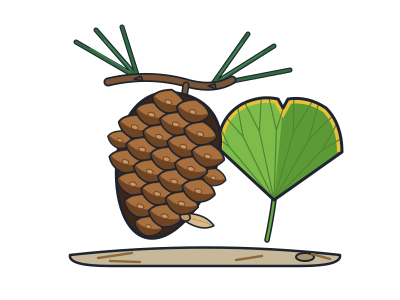
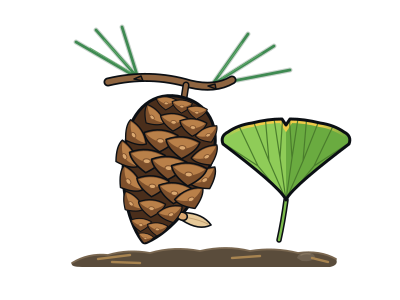
- CordaitesTall trees with long strap leaves that grew in coal swamps and are cousins of conifers.
- DicroidiumForked fern-like leaves that carpeted the southern lands while the first dinosaurs walked.