An extinct species
Glossopteris †
Glossopteris
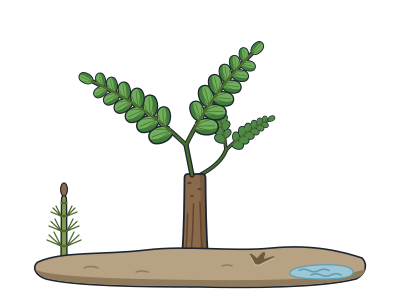
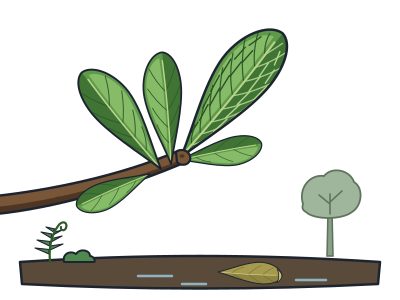
A fossil tree with tongue-shaped leaves that showed the southern continents were once joined.
Lived about 299–245 million years ago.
You and the glossopteris meet in the Eukaryotes branch, shown at about 1.8 billion years ago (on 28 July, in a calendar from life's shared ancestor to today).
About 299 to 245 million years ago, a woody plant with tongue-shaped leaves grew across the southern half of the world. Today its fossil leaves are found in South America, Africa, India, Australia and even icy Antarctica. Its seeds were probably too heavy to float across oceans or blow on the wind. So how did one plant reach all those places? The best answer is that the lands were joined together in one giant continent called Gondwana.
Alfred Wegener, the scientist who argued that continents drift, used these leaves as evidence, along with fossils of several animals. When Gondwana is fitted back together like a jigsaw, the places where the fossils are found line up in bands that run across the joins.
Fossils show leaves that were usually about as long as a child's hand, with a strong middle vein and a net of smaller veins. Despite an old nickname, 'seed fern', it was not a fern. It was a woody seed plant, like today's conifers and flowering plants. Some rock layers are packed with fallen leaves, and the leaves broke off cleanly at a weak join. Both clues suggest it probably dropped its leaves every year before winter.
Some of its forests grew close to the South Pole, with months of summer daylight and months of winter darkness. Those forests did not survive the 'Great Dying', a huge mass extinction about 251 million years ago.
Roots like a backbone
Its fossil roots were first given their own name, Vertebraria, because evenly spaced divisions make them look like a backbone.
Many kinds
The name covers a whole group of plants, not just one. Scientists have described more than 70 kinds from India alone.
Fast to sleep
Tree rings in fossil wood from Antarctica show the trees switched from summer growth to winter rest quickly, perhaps within about a month.
Next to it on the tree
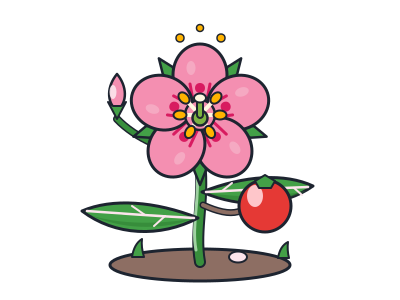
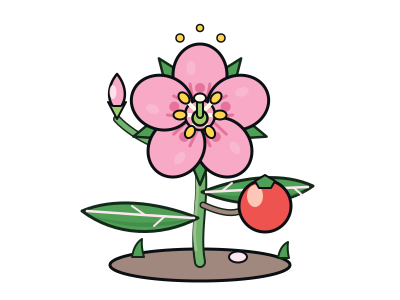
- Flowering plantsFlowers and fruit recruited animals as couriers and took over the planet.
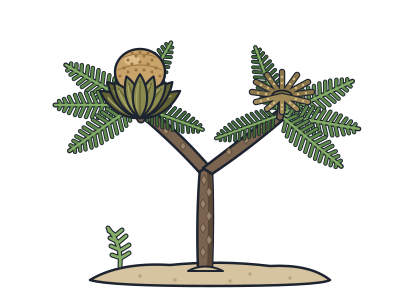
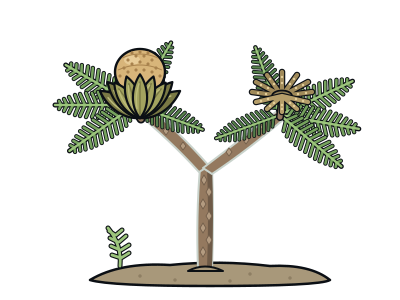
- WilliamsoniaA dinosaur-era plant with flower-like cones, an early experiment in flowers.
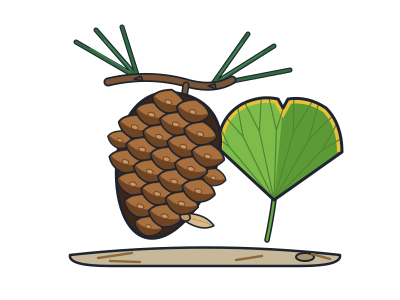
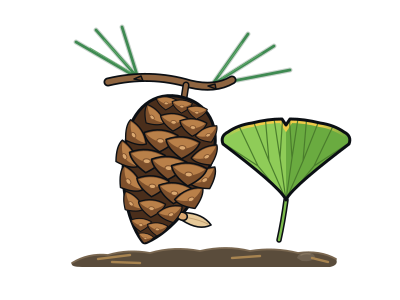
- Conifers and other gymnospermsSeed plants with naked seeds, usually in cones, from pines to the strange Welwitschia.
- CordaitesTall trees with long strap leaves that grew in coal swamps and are cousins of conifers.
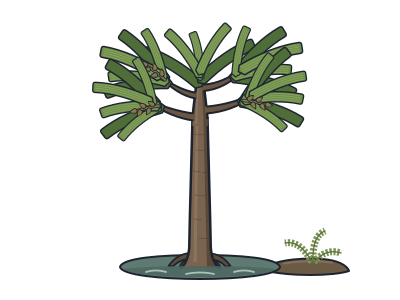
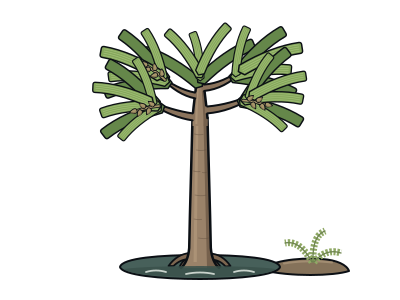
- CaytoniaA Jurassic seed plant with seeds wrapped in a cup, long debated as a flowering-plant forerunner.
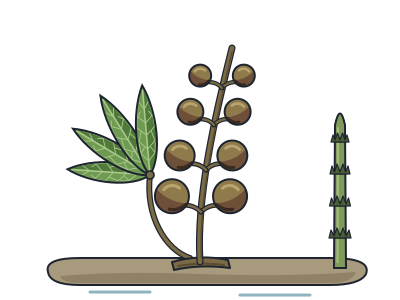
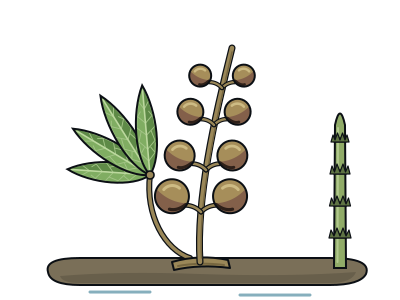
- DicroidiumForked fern-like leaves that carpeted the southern lands while the first dinosaurs walked.