A species
Ginkgo
Ginkgo biloba
The last survivor of a very old family of trees
You and the ginkgo meet in the Eukaryotes branch, shown at about 1.8 billion years ago (on 28 July, in a calendar from life's shared ancestor to today).
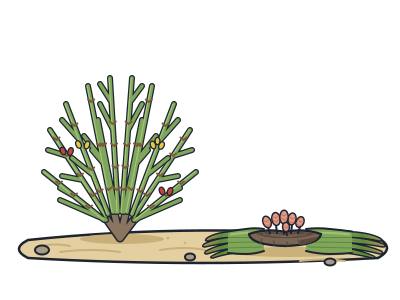
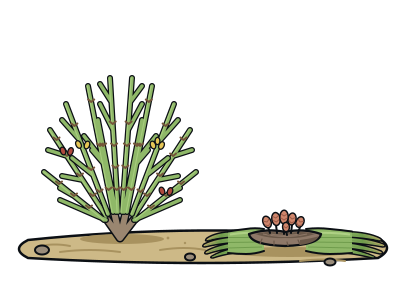
The ginkgo is the last of its kind. It is the only living species in a whole group of plants. Every other member of that group is known only from fossils. Fossils clearly related to it go back about 280 million years, which is older than the dinosaurs.
The group was once widespread, with many species across Asia, Europe and North America. Then it slowly shrank. Soon after the dinosaurs died out, very few ginkgo species were left, and one of them looked almost exactly like today's tree.
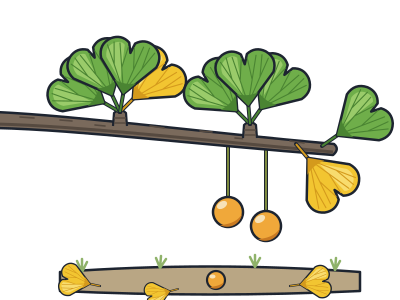
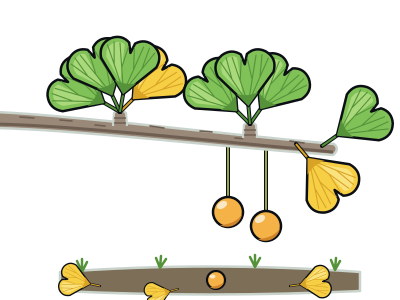
Its leaves are shaped like a small hand fan, often with a notch that splits them into two lobes. Fine veins fork again and again and never join up into a net. No other tree has this pattern. In autumn the leaves turn golden yellow and fall almost all at once.
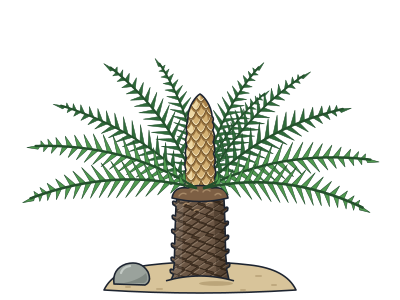
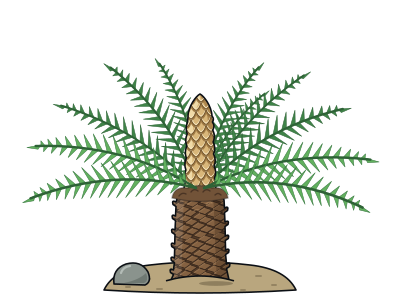
A ginkgo tree is almost always either male or female. Female trees make yellow-orange seeds about the size of a cherry. Once they fall, their fleshy coat smells like rancid butter or vomit. The smell seems to attract animals that eat the seeds and spread them, such as squirrels. Even with its flat leaves, the ginkgo has no flowers. Recent genetic studies suggest its closest living relatives are the cycads, such as the sago palm (which is not a true palm).
Swimming sperm
Ginkgo fertilises its seeds with sperm that swim, which is rare for a seed plant. Each sperm has thousands of tiny hair-like tails. A Japanese botanist, Sakugoro Hirase, discovered them in 1896.
Saved by temples
People have long cared for ginkgo trees in Buddhist temples in China and Japan. Without that care, the species might have died out completely.
Rare in the wild
Ginkgo is listed as Endangered in the wild. In the Dalou Mountains of China, some ginkgo forests look like plant communities known from fossils.