A species
Lettuce
Lactuca sativa
A mild salad leaf with a bitter, prickly wild ancestor
You and the lettuce meet in the Eukaryotes branch, shown at about 1.8 billion years ago (on 28 July, in a calendar from life's shared ancestor to today).
Your salad leaf has a wild side. Lettuce was bred from prickly lettuce, a tall, spiny weed that oozes white, milky sap when you snap it. Even the name comes from the Latin word for milk. Lettuce belongs to the daisy family, along with sunflowers and dandelions. When a lettuce plant flowers, its small yellow flower heads look like tiny dandelions.
The milky sap is called latex. It holds bitter chemicals that help keep insects and other plant-eaters away. Garden lettuce has much less of these bitter chemicals than wild lettuces, so it tastes far milder. Prickly lettuce has another trick. In strong sun, its upper leaves twist to stand edge-on, pointing roughly north and south. That is why it is nicknamed the compass plant.
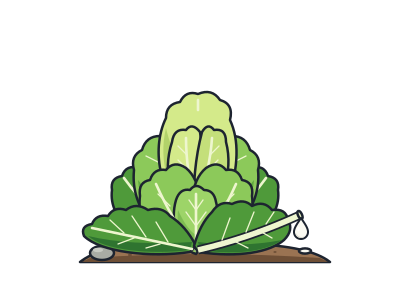
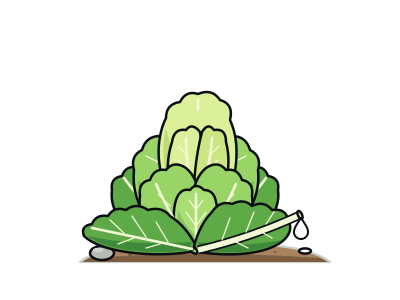
A DNA study from 2021 suggests that people first farmed lettuce about 6,000 years ago, probably in the Caucasus region, between the Black and Caspian Seas. The first farmers seem to have grown it for its seeds, which they pressed for oil, rather than for its leaves. Over thousands of years, people bred out the spines and grew leafier plants. Today there are about seven main types, including iceberg, cos and butterhead.
Food for a god
Ancient Egyptian pictures of lettuce growing date back to about 2680 BC. Lettuce was linked to Min, the Egyptian god of fertility. It was offered to him, then eaten by men who hoped it would help them have children.
Why lettuce turns bitter
When lettuce bolts, it sends up a tall flower stalk and its leaves turn bitter. Long summer days are the main trigger, and hot weather adds to it. Lettuce grows best in cool weather, at about 16–18 °C.
A world of salad
In 2023 the world grew about 28 million tonnes of lettuce and its relative chicory together. China grew just over half of it.
Next to it on the tree
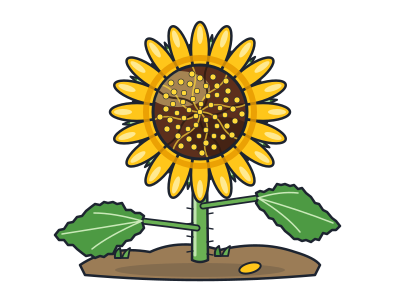
- SunflowerEach 'flower' is really hundreds of tiny flowers arranged in a perfect spiral.
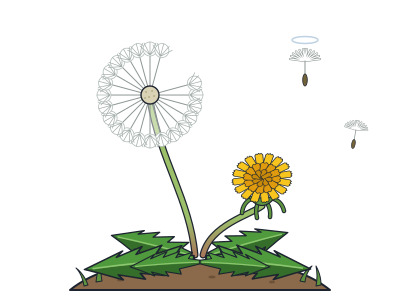
- DandelionEach seed flies on its own parachute, and plants clone seeds without pollination.
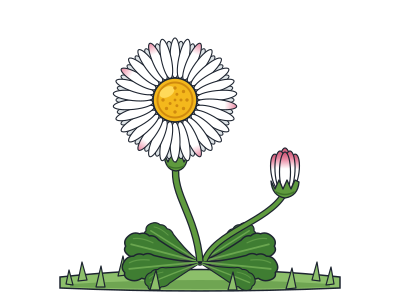
- Common daisyIts name comes from 'day's eye', because it opens at dawn and closes at dusk.
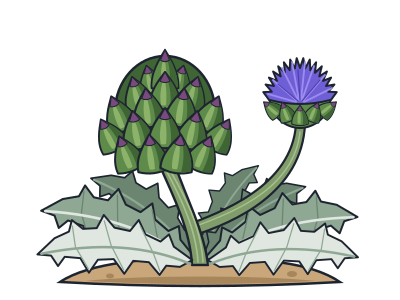
- Globe artichokeWe eat the flower bud of a giant thistle before it blooms.
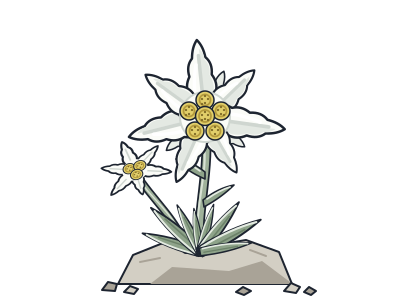
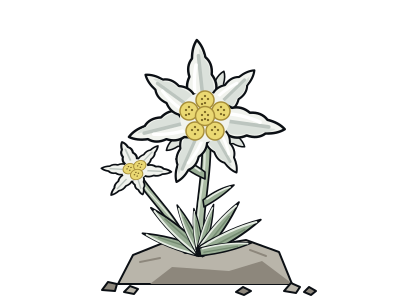
- EdelweissA woolly white alpine flower, a symbol of the Alps.
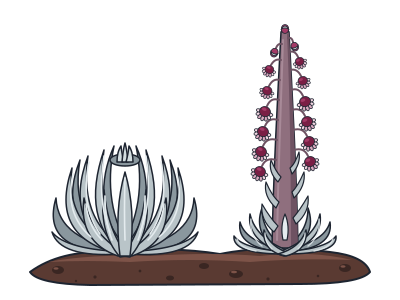
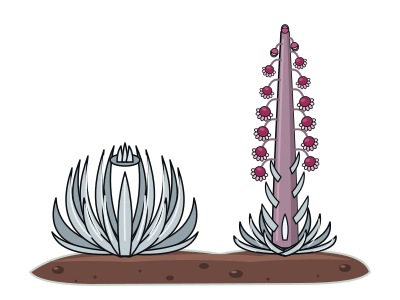
- Haleakalā silverswordA silver ball of leaves on a Hawaiian volcano that flowers once and dies.