A group of living things
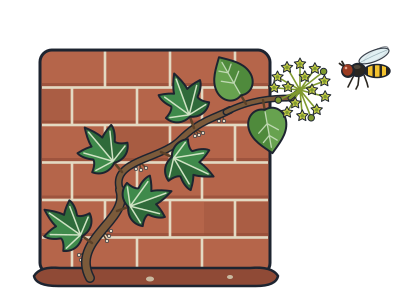
Carrots, parsley and ivy
Apiales
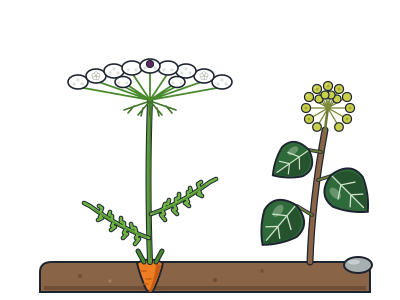
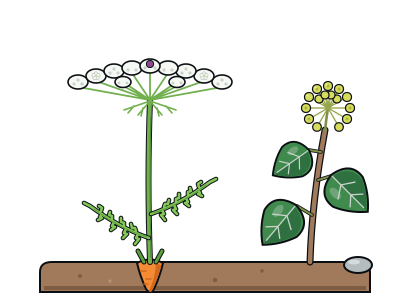
Umbrella-shaped flower clusters link carrots and coriander to ivy.
This branch is shown at about 85 million years ago; its age is a rough estimate.
You and carrots, parsley and ivy meet in the Eukaryotes branch, shown at about 1.8 billion years ago (on 28 July, in a calendar from life's shared ancestor to today).
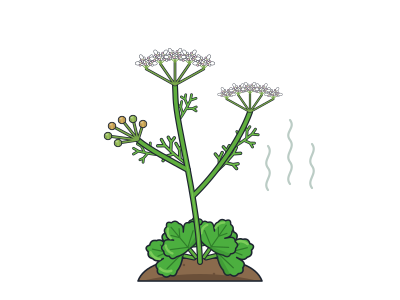
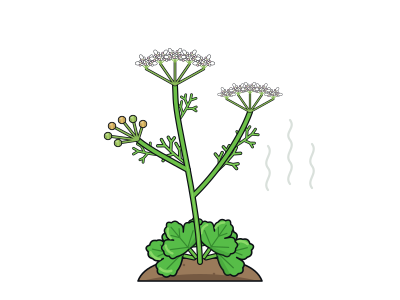
What do a carrot, a bunch of coriander and the ivy climbing an old wall have in common? Look closely at their flowers. Most plants in this group carry them in umbels. In an umbel, many little stalks spring from one point at the top of a stem, like an upside-down umbrella. Each flower is tiny, usually with five small white or yellow petals.
The group has two big families. The carrot family mostly grows in cooler, temperate places. Its flower heads are often made of many small umbrellas joined into one big one. The ivy family, which also includes ginseng, is mainly tropical, and its umbrellas are usually single. A smaller family, the pittosporums, is centred on Australia and its neighbours.
Packing tiny flowers together pays off. A big crowd of flowers draws in more visitors, and one insect can pollinate lots of flowers in a single trip. In the carrot family, the flat top of the flower head makes a good landing spot for many kinds of insects, from bees to beetles. The group feeds us too, with carrots, celery, parsley, coriander, cumin and dill. But some members are deadly, such as the hemlock said to have killed the Greek thinker Socrates. Never eat a wild plant just because it looks like a carrot.
Carrots weren't always orange
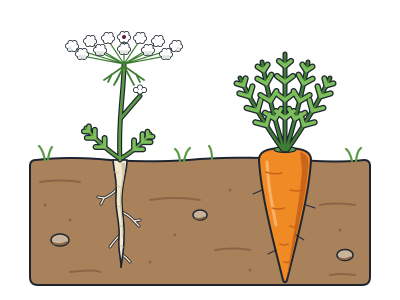
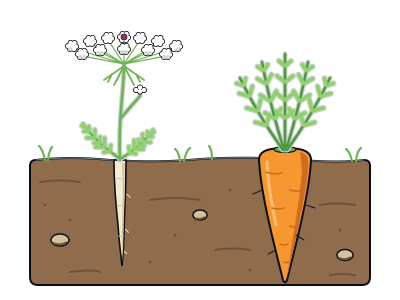
Carrots were probably first grown for their roots in Central Asia, around today's Afghanistan or Iran, about 1,000 to 1,500 years ago. The first ones were purple and yellow.
Seeds in two halves
A carrot-family fruit is dry and splits into two halves. Each half holds a single seed.
Berries that ration themselves
Ivy berries contain toxic chemicals that are thought to stop birds eating too many at once. That may help spread the seeds to many places instead of dropping them all in one spot.
Inside carrots, parsley and ivy
Next to it on the tree
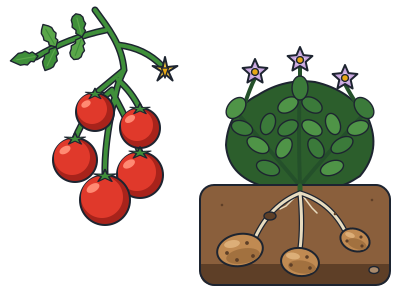
- Nightshade familyTomatoes and potatoes are close cousins in a family that also includes deadly nightshade.
- Daisy familyOne of the two biggest flowering-plant families, with over 32,000 species from lettuce to dandelions.
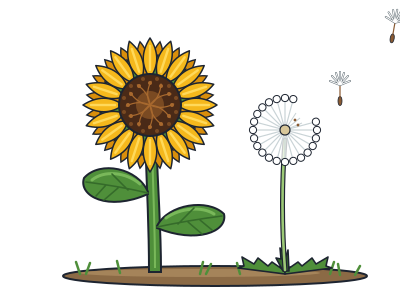
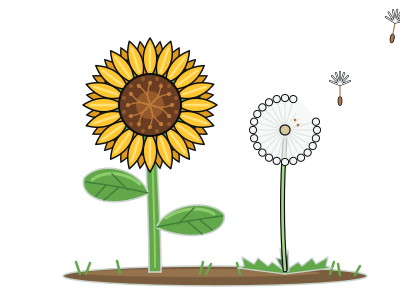
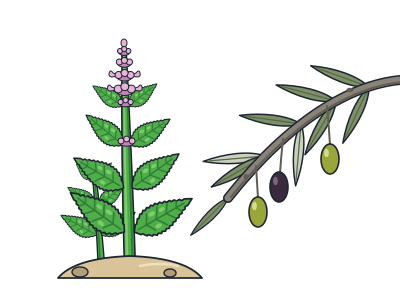
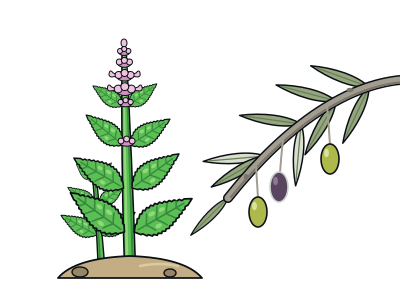
- Olives, mints and kinOlives, mint, lavender, basil and lilacs are all relatives.
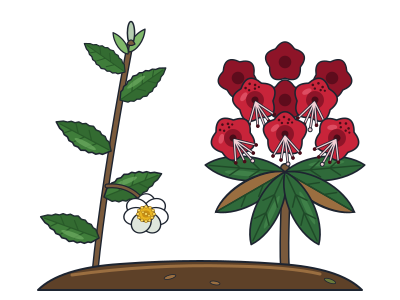
- Heathers, tea and kinTea, blueberries, kiwifruit, Brazil nuts and pitcher plants share one ancestor.
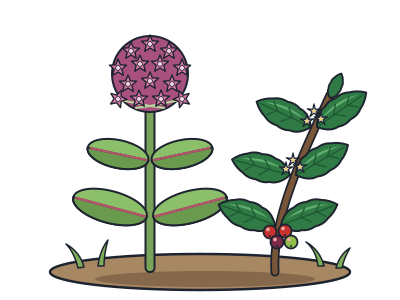
- Coffee and milkweedsCoffee, milkweed and gentians are relatives, many with powerful natural chemicals.
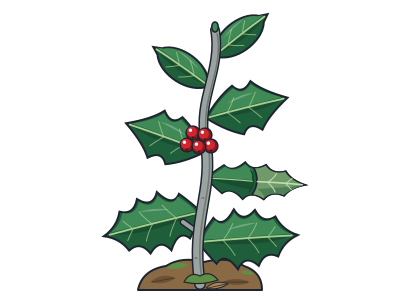
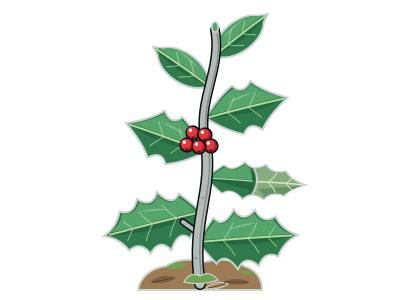
- HollyPrickly lower leaves deter deer, while higher leaves are often smooth.
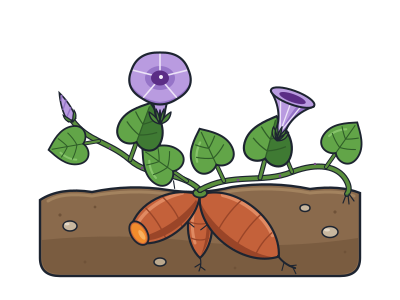
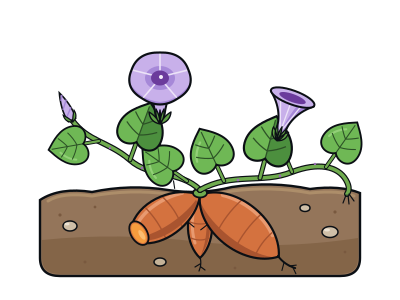
- Sweet potatoA morning glory with a sweet root, which reached Polynesia long before Europeans.