A species
Carrot
Daucus carota
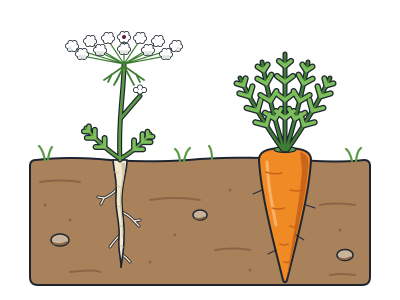
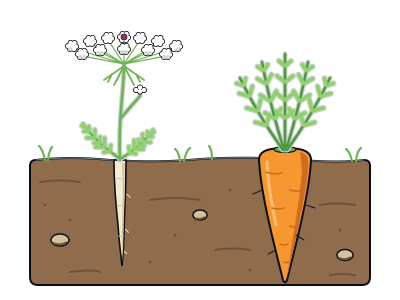
The wild ancestor of the orange carrot has a thin white root.
You and the carrot meet in the Eukaryotes branch, shown at about 1.8 billion years ago (on 28 July, in a calendar from life's shared ancestor to today).
Picture a carrot and you probably see orange. Wild carrots look nothing like that. Their roots are thin, whitish and woody, and they taste bitter. The earliest good written record of farmed root carrots comes from around Iran and Afghanistan, about 1,100 years ago. Farmers there bred them to be sweeter and less bitter, and those early carrots were purple and yellowish, not orange.
Orange came later. In the 1500s and 1600s orange carrots spread through the Netherlands. In the early 1700s, Dutch growers bred a variety called 'Long Orange', which helped make orange the normal carrot colour. The orange comes from large amounts of pigments called carotenes. When scientists read the carrot's genes, they found that at least two genes were behind the change from white roots to orange ones.
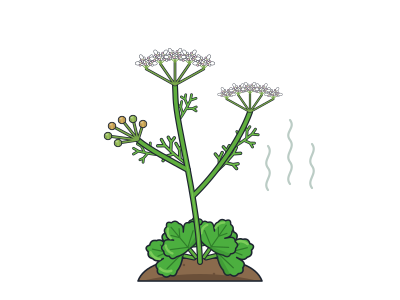
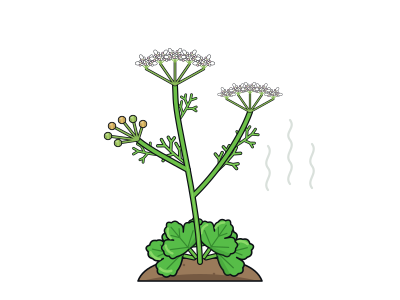
The wild plant still grows today, on roadsides and in meadows. In North America it's often called Queen Anne's lace. It has flat, lacy heads of tiny white flowers. As the seeds ripen, the head curls inward into a cup that looks like a bird's nest. On the tree of life, the carrot sits among the asterids. This large group of flowering plants also includes coffee, tea, blueberries, daisies and the nightshade family. So your carrot is a distant relative of your morning cuppa.
A two-year plan
In its first year, a carrot stores energy in its root. If you leave it in the ground for a second year, it uses that stored energy to flower and make seeds.
One dark flower
In the middle of a white wild carrot flower head there's often a single dark purplish flower. Scientists still debate what it's for.
Packed with tiny flowers
A large carrot flower head can have up to about 50 small clusters, and each cluster can hold up to about 50 flowers.