A group of living things
Rosids
Rosidae
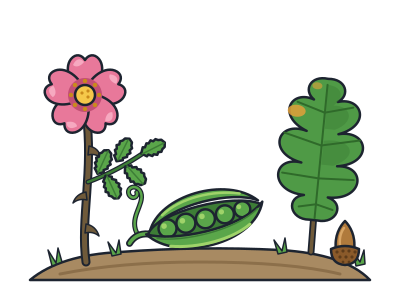
Roses, beans, oaks, cabbages and gum trees all belong to one huge plant branch.
This branch is shown at about 115 million years ago; its age is a rough estimate.
You and rosids meet in the Eukaryotes branch, shown at about 1.8 billion years ago (on 28 July, in a calendar from life's shared ancestor to today).
A rose in a vase, peas on your plate, an oak in the park and a gum tree in the bush all belong to one huge branch of the plant family tree: the rosids. That is surprising, because they look so different. Inside the group, roses, beans and oaks sit on one big branch, and cabbages, cotton and citrus sit on another.
There are about 70,000 kinds of rosid, which is roughly a quarter to a third of all flowering plants. They grow almost everywhere, from Arctic and alpine areas to tropical forests, deserts and even water. Most of the trees in today's broadleaved forests are rosids.
They come in every size. Some are tiny herbs only a few centimetres tall, such as cress and clover. Others are giants like the mountain ash of Victoria and Tasmania. At about 100 metres, roughly as tall as a 30-storey building, it is the tallest known flowering plant on Earth.
Fossils show that rosids were already growing in the age of dinosaurs. Scientists think the new rosid-rich forests gave other living things new places to live. Groups such as ants, amphibians, ferns and the mammal group that includes us may later have branched out into many new kinds there.
Free fertiliser
Some plants in the branch with beans, roses and oaks grow little lumps on their roots. Bacteria living inside them turn nitrogen from the air into plant food. Only some members of about ten plant families do this.
Hidden relatives
Four groups were once thought to be only distant relatives: the legumes, the rose group, the oaks and birches, and the gourds. They are now known to sit together on one branch.
Lots of families
Scientists sort rosids into about 16 to 20 orders and roughly 140 families.
Inside rosids
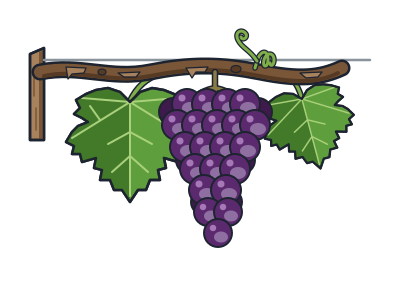
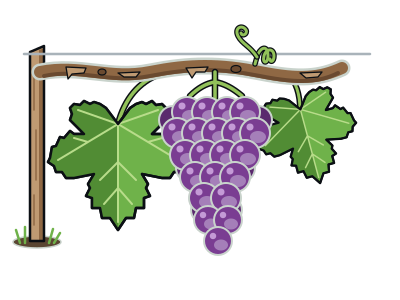
- GrapevineA climbing vine grown for wine for 8,000 years, from the sister group of all other rosids.
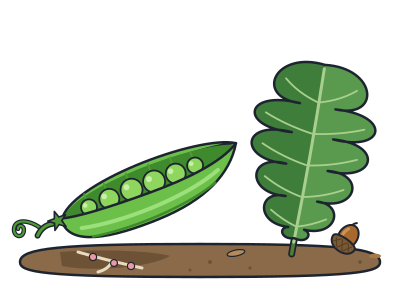
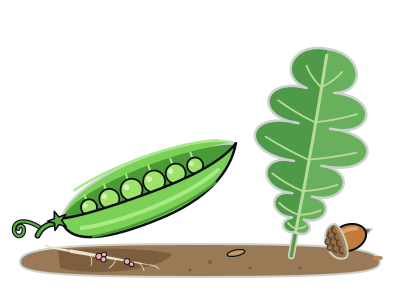
- Roses, beans and oaksRoses, peas, oaks, figs and pumpkins share one ancestor, many with root-nodule partners.
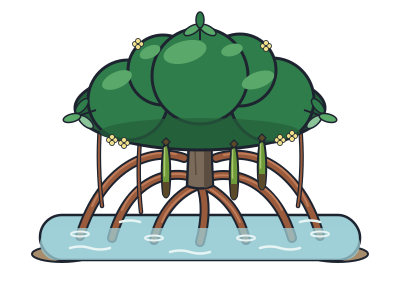
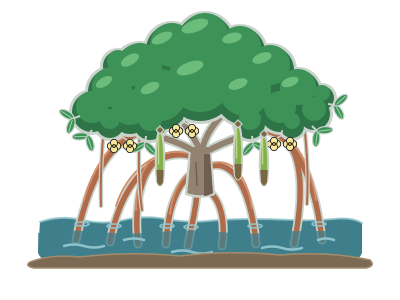
- Willows, rubber trees and kinA huge order that holds willows, poplars, rubber trees, mangroves and the largest flower.
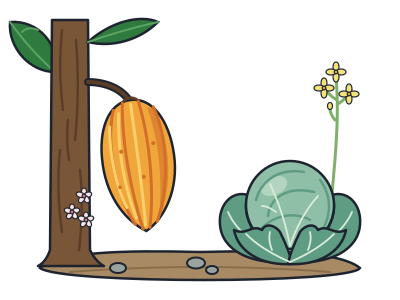
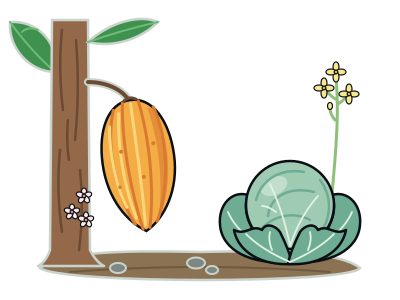
- Cabbages, cotton and citrusCabbages, cocoa, cotton, oranges and maples share one branch.
Next to it on the tree
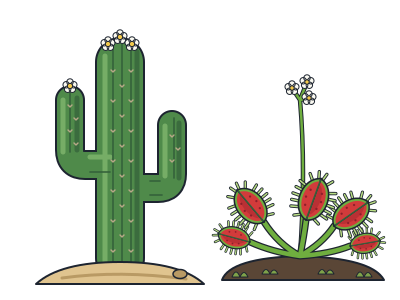
- Cacti, carnations and carnivoresOne branch holds cacti, beetroot and carnations, and also most meat-eating plants.
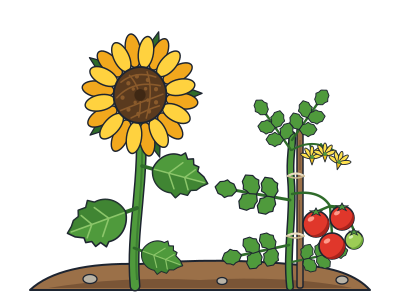
- AsteridsSunflowers, tomatoes, mint and coffee all belong to this big branch.
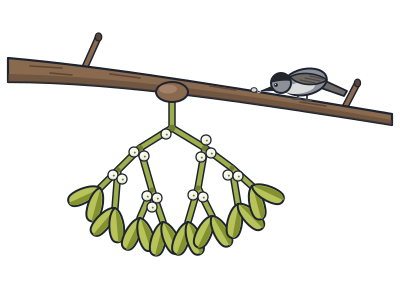
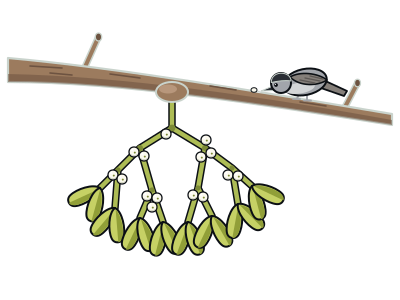
- MistletoeA half-parasite that grows on tree branches, planted there by birds wiping their beaks.
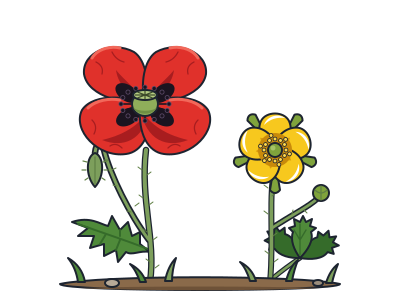
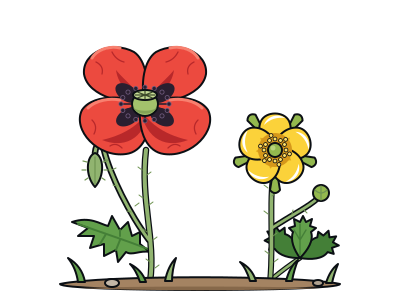
- Buttercups and poppiesThe earliest branch of the eudicots, with buttercups, poppies and columbines.
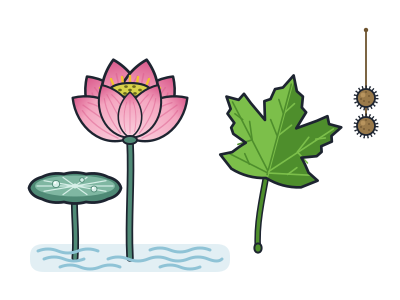
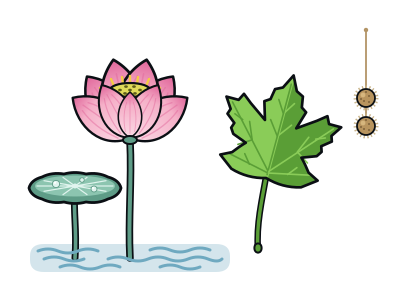
- Lotuses, proteas and planesA water lotus, a South African protea and a city plane tree turn out to be cousins.
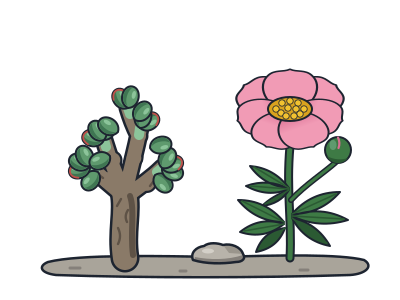
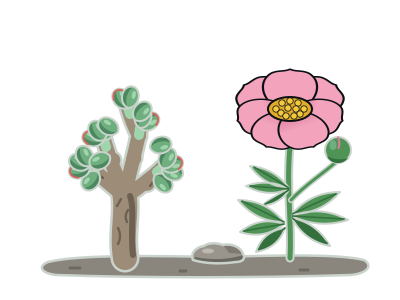
- Stonecrops and peoniesJade plants, peonies and currants: a branch rich in succulents and rock plants.
- Giant rhubarbLeaves big enough to shelter under, with partner microbes living in its stems.